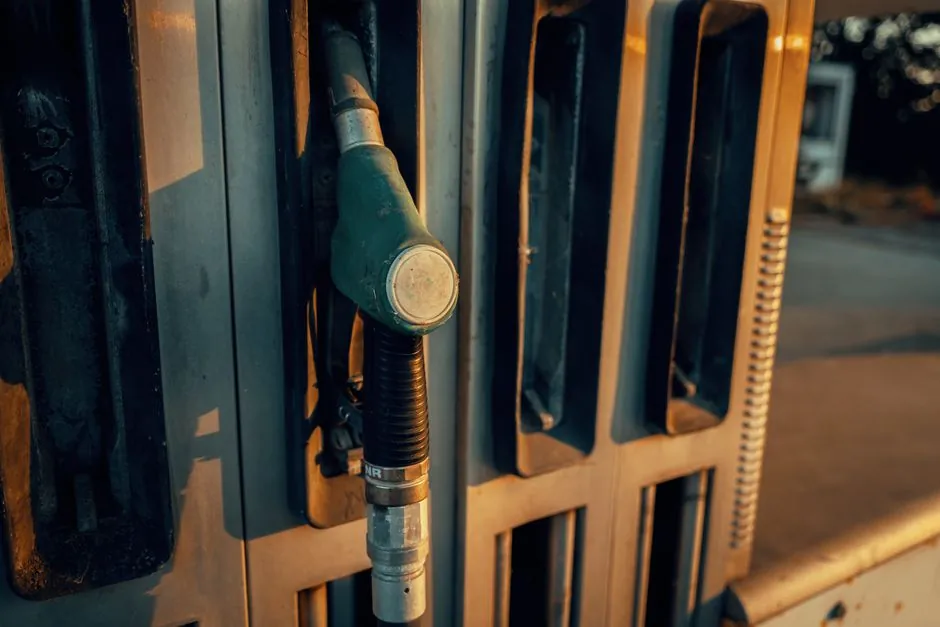
Silicone rubber (VMQ) is an elastomer with a Si–O–Si backbone and organic side groups, giving it a useful temperature window of –85°C to +230°C (–120°F to +450°F) and strong ozone/UV resistance [S1]. In oil and gas, that window does not save you: standard VMQ swells and degrades in contact with petroleum-based oils and fuels [S3][S6].
The practical choice for hydrocarbon service is NBR (acrylonitrile–butadiene), with HNBR, FKM, FFKM and AFLAS (TFEP) covering the heat, sour and chemical edges. FVMQ (fluorosilicone) exists as a niche bridge for fuel/dilute-acid systems that also need low-temperature flexibility, but it costs more and still does not match FKM in pure hydrocarbon resistance [S1][S2].
Why Standard Silicone Fails in Petroleum Service
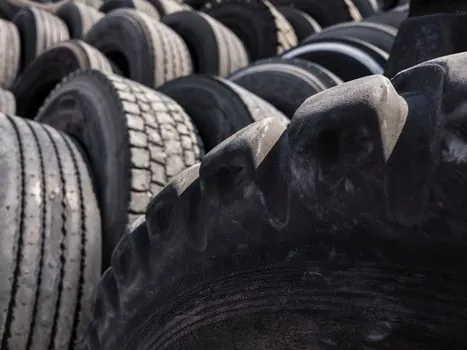
VMQ's polydimethylsiloxane (PDMS) backbone, with a glass transition around –123°C and Si–O bond length near 1.64 Å, gives flexibility and thermal endurance but poor interaction with non-polar hydrocarbons [S4]. Multiple industry sources put the same verdict on it: silicone swells on contact with petroleum oils or fuels, making it unsuitable for fuel system seals, tires, and heavy-duty conveyor belts that are routinely exposed to hydrocarbons [S3][S6].
The Si–O–Si backbone of silicone rubber lacks the polar nitrile groups that give nitrile rubber (NBR) its resistance to petroleum oils and fuels, so silicone swells in contact with petroleum oils or fuels. Even phenyl-silicone variants, which are promoted for turbocharger hoses with low-temperature and moderate-fuel duty, only give a balance, not full resistance [S4]. High-permeability gas behavior at room temperature reinforces that VMQ is a soft-constraint material, not a barrier elastomer [S2].
The Workhorse Stack: NBR, HNBR, FKM, FFKM
NBR (acrylonitrile–butadiene) is described in current industry literature as the most widely used elastomer in the seal industry for petroleum fluids, with a typical service window of –40°C to +212°C (short-term 250°F) and tensile strength near 14 MPa at 70 Shore A [S3]. ACN content, usually 18% to 50%, is the tuning knob: higher ACN improves oil and chemical resistance at the cost of low-temperature flexibility [S3][S5].
HNBR (hydrogenated nitrile) extends the heat ceiling, while FKM (fluoroelastomer, e.g. Viton™) and FFKM (perfluoroelastomer) push into 200–325°C service and aggressive chemical/sour (H₂S) exposure. AFLAS (TFEP) is the established alternative for amine-based corrosion inhibitors, steam, and H₂S/brine mixes where FKM underperforms. A useful side-by-side, with silicone shown for context only:
Material, oil resistance, useful temperature window, and where it fits in oil and gas: VMQ, poor, –85°C to +230°C, static instrument air/HVAC/glycol [S1][S3]. NBR (mid-ACN), excellent, –40°C to +212°C, wellhead seals, pipeline valves, hydraulic actuators [S3][S5]. HNBR, excellent, –40°C to ~150°C, downhole tools, high-pressure gas [S3]. FKM, excellent, –20°C to ~230°C, topside chemical injection, hot oil [S3]. FFKM, near-universal, 0°C to ~325°C, sour service, severe chemicals [S3]. AFLAS (TFEP), very good, 0°C to ~200°C, steam/H₂S, amine inhibitors [S1].
FVMQ: the Niche Bridge Material
Fluorosilicone (FVMQ) substitutes fluoroalkyl groups (5–50 mol% methylfluoroalkylsiloxane) into the siloxane backbone, adding fuel and oil resistance while keeping the Si–O–Si thermal stability [S4]. It is the documented choice where both low-temperature flexibility and hydrocarbon exposure appear together, and where VMQ would swell but FKM would be too stiff in the cold [S1][S2].
The trade-off is price and mechanical strength. FVMQ still has lower tensile and tear performance than NBR/HNBR, and the cost multiplier over standard VMQ is meaningful. For most upstream seals, the better answer is to move to HNBR or FKM rather than chase a fluorosilicone compromise. The detailed material-selection logic in [S4] reinforces this: phenyl and fluoroalkyl modifications are case-specific, not universal upgrades.
Selection Criteria for Oil and Gas Seal Engineers
Four numbers drive the decision before any brand or compound discussion: continuous operating temperature, peak temperature, fluid family (hydrocarbon type, water cut, H₂S/CO₂ partial pressure, chemical injection), and mechanical duty (static gasket vs dynamic rod seal). On temperature, VMQ's –85°C to +230°C envelope is the widest of the family, but it is wasted if the medium is crude, diesel, or condensate [S1][S3].
For static, non-fuel service where temperature swings and ozone exposure dominate (instrument air manifolds, glycol heating loops, outdoor control panels, HVAC on the platform), VMQ is genuinely the right call. For everything that touches produced fluids, NBR covers the bulk, HNBR covers hot gas and high-pressure gas, and FKM/FFKM cover the heat-and-chemical corners. Choosing the wrong family by ignoring fluid compatibility is the single most common root cause of elastomer seal failure cited in current engineering literature [S5].
Standards and Qualification Anchors
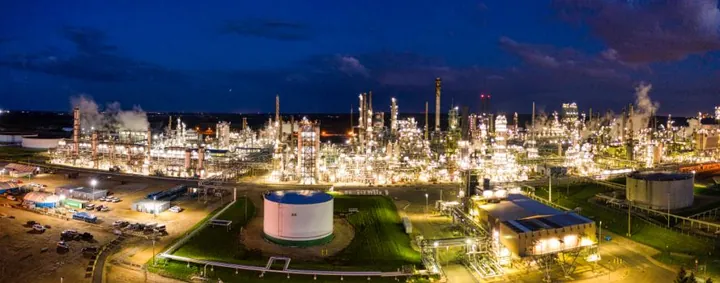
Specifying an elastomer for oil and gas is rarely a free-text exercise. NACE MR0175 governs material resistance to sulfide stress cracking in sour service; API 6D and API 6A set valve and wellhead requirements that cascade into seal testing; ISO 10423 and ASME standards cover related pressure and leak-rate envelopes. For elastomer production quality, tensile, elongation, hardness, compression set, and specific gravity typically follow ASTM D2000 line-callouts, while fluid aging uses ASTM D471 (IRM 901/903 oils) and ASTM D573 for heat aging [S5].
Reinforcement and processability come from ASTM D926-08 (Williams plasticity ≥30 mm/100 for adequate molding flow) and from fumed-silica filler specifications (BET 150–400 m²/g) when the silicone grade is justified at all [S4]. For dynamic applications, expect a pre-qualified compound list tied to the OEM's qualified manufacturer list (QML), not a generic datasheet pull.
Where Silicone (and its cousins) Actually Earn Their Slot in O&G
Silicone stays in the picture on the boundary, not in the produced-fluid path. Field-typical placements: instrument air and nitrogen distribution, control-panel enclosure gaskets exposed to UV and salt spray, HVAC and pressurization ducting, low-voltage cable penetrations, and low-temperature startup circuits where NBR would go glassy. For a broader material context, see the silicone rubber reference page and the oil seal reference page. [S2]
Where petroleum is present and the temperature stays under about 150°C, NBR and HNBR are the default. Push past 200°C, or into amines, sour service, or hot oil injection, and the path goes to FKM, FFKM, or AFLAS. A useful adjacent reference is the silicone rubber selection map for construction joints, which covers the non-fuel side of the same polymer family; for marine exposure the silicone rubber selection map for marine engineering gives a closer offshore parallel.
Failure Modes and Field Watch-outs
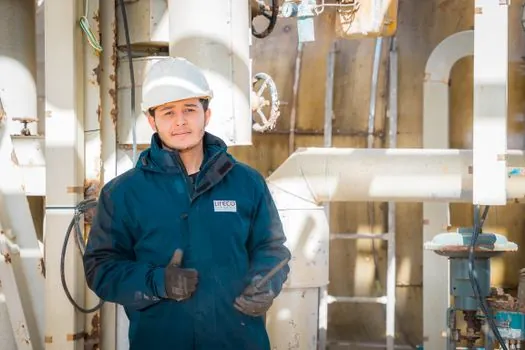
Three failure patterns dominate when silicone is misapplied in hydrocarbon service: volume swell that drops seal preload below the contact-stress threshold, extrusion under pressure cycling once the swollen cross-section no longer matches the gland, and chemical attack by additives (amine inhibitors, H₂S, methanol) that the siloxane backbone does not resist [S5]. Each one shows up as leakage first, then as accelerated wear if the duty is dynamic.
The reverse failure also shows up: NBR or HNBR specified for a high-temperature exhaust or steam line, then hardening, losing elongation, and cracking at the heat-affected zone. The lesson is the same in both directions: the elastomer family is chosen on the dominant constraint (fluid, temperature, or ozone/UV), then the compound is qualified inside that family.
For an oil and gas specification cycle, the practical next step is to lock the fluid and temperature envelope first, request ASTM D2000 line-callouts and ASTM D471 aged-property data from the compound supplier, and require a sour-service statement (NACE MR0175) where H₂S partial pressure is non-zero. Two trackable signals to watch in 2026: tighter integration of NACE MR0175 with ISO 15156 updates, and continued migration of high-temperature static seals from FKM to FFKM in subsea chemical-injection skids [S5].
The underlying component specifications are covered under lamps and light fittings.