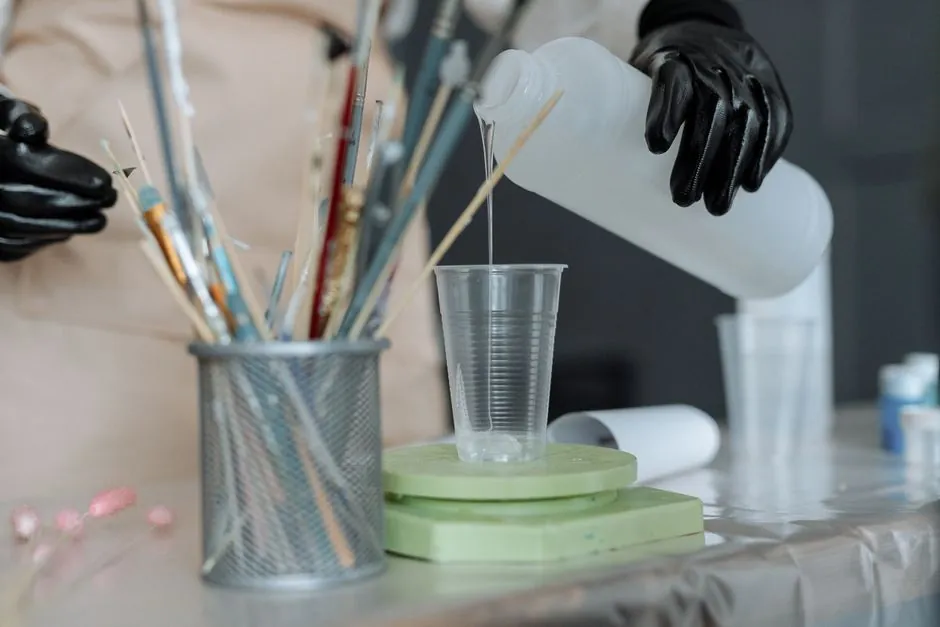
Silicone rubber for mold and die making is selected across two material forms (Liquid Silicone Rubber / LSR and High-Consistency Rubber / HCR) and three core processes (injection, compression, transfer), with platinum-cure addition chemistry favored for near-zero shrinkage and tin-cure condensation chemistry used where cost and pot life dominate [S1][S3][S4].
The decision matters because each family changes tooling cost, cycle time, and achievable tolerance: injection molding is the high-volume, tight-tolerance default, compression molding is the lowest-tooling-cost route for large/simple geometries, and transfer molding sits between them for parts with fragile metal inserts [S2][S4].
Process Map: LSR Injection vs. HCR Injection vs. Compression/Transfer
Standard HCR and LSR injection molding require entirely different equipment and tooling, even though both end in a vulcanized elastomer part [S2]. HCR is fed as a continuous strip into a heated screw barrel (160–200°C cure), plasticized by mechanical shear, then injected under high pressure into a closed heated mold; LSR is a two-part, platinum-cured liquid pumped and metered into a heated mold in a 1:1 mix ratio [S2][S5]. Cold-runner LSR systems significantly reduce material waste versus HCR runner systems, which is the single largest economic lever on long LSR runs [S4].
Compression molding loads solid silicone compound directly into the cavity, omitting runners and sprues, which keeps tooling cost low but extends cycle time to minutes-to-hours and restricts it to low-to-medium volume [S2][S6]. Transfer molding forces pre-heated material through a gate from a transfer pot, balancing tooling complexity with faster cure and is most often specified for parts requiring fragile metal inserts or complex overmolding [S2][S4]. For high-volume, automated scalability, injection molding remains the default; for low-volume, extremely large, or highly viscous compounds, compression molding is still the most cost-effective starting point [S2].
Silicone vs. Polyurethane Mold Rubber: Direct Comparison
Polyurethane mold rubber costs roughly 40–60% less per pound than silicone, achieves very high tear strength of 80–200+ pli, and offers exceptional abrasion resistance, but it caps heat resistance near ~250°F and demands release agents for most casting media [S3]. Silicone mold rubber runs higher in unit cost, hits 80–160 pli tear (platinum grade), and tolerates up to ~500°F in service, with near-zero shrinkage on cure (platinum-cure) and natural release against most casting resins, wax, and low-melt metals [S3].
Shrinkage on cure is the other decisive cut: polyurethane sits at roughly 0.15% while platinum-cure silicone is functionally near zero, and silicone is unaffected by ambient moisture during cure where polyurethane is highly moisture-sensitive [S3]. For high-volume abrasive casting runs (concrete, plaster), polyurethane is the workhorse; for resin casting, wax, life casting, and food-safe or medical work, platinum-cure silicone is the precision default [S3]. Material-form families for industrial elastomer sourcing are surveyed in the broader FKM Fluororubber Selection for General Fabrication: 2026 Spec Map for adjacent fluoroelastomer spec work.
Cure Chemistry: Platinum (Addition) vs. Tin (Condensation)

Platinum-cure (addition) silicones deliver near-zero shrinkage, longer library life, and are the only choice for skin-contact, medical, and food-contact molds because they do not release cure byproducts [S1][S3]. Tin-cure (condensation) silicones are lower cost, offer workable pot life for brush-on mold making, and are the standard for decorative concrete and plaster molds, but they will be inhibited by sulfur-containing clays, latex, and tin-cure residue already in the mold [S3].
Both cure systems share the same siloxane (Si-O-Si) backbone that gives silicone its high temperature ceiling and UV/ozone resistance [S1]. That same backbone is the reason silicone rubber is preferred over organic elastomers where compression set, aging, and biocompatibility are the gating specs [S1][S4].
Operating Window and Tooling Specs
Most rubber vulcanization systems run in a 160–200°C mold temperature band, and LSR grades typically deliver a service range of roughly -50°C to +250°C depending on formulation [S2][S4]. Silicone molded parts are routinely specified above 100°C in service where natural rubber, latex, and most polyurethanes would fail compression set, which is the core justification for selecting silicone over cheaper elastomers in engine, sealing, and electrical insulation work [S1].
Mold materials for production silicone work are typically pre-hardened or hardened tool steel and cast iron, selected for repeatability, durability, and tight dimensional tolerance over thousands of cycles [S1]. For prototype or short-run work, the same LSR chemistry runs in aluminum prototype tooling, but the trade-off is cycle time and tool life rather than chemistry. The casting mold reference page covers broader tool-material choices for foundries pairing with silicone patterns.
Defect, Tolerance, and DFM Rules for Silicone Tooling

Rubber mold design must accommodate tearing during ejection and the flash behavior of low-viscosity LSR; aggressive undercuts and sharp internal corners are the most common root causes of part rejection [S2]. Because rubber is a poor thermal conductor, thick-walled sections need explicit cure-time calculation to ensure the core vulcanizes without scorching the outer skin, a calculation that does not exist in thermoplastic mold design [S2].
LSR tooling is the most demanding of the three: it requires precision metering and 1:1 mixing, tight mold sealing and micro-venting, and stable mold temperature control within a narrow window [S4]. Insert and overmolding work (rubber-to-metal dampers, bushings, rubber-coated brass inserts) depends on the bonding system and insert positioning accuracy, with delamination, leakage, and stress concentration the three named failure modes if any of those drift [S4]. For shops scaling up rubber production, the broader Automatic Molding Line Selection for Pump and Valve Production: Spec Bands, Marking covers adjacent automated line trade-offs.
Selection Criteria: What to Match Against the Part
For buyers and process engineers, the decision tree is: (1) pick the cure chemistry (platinum for medical/food/near-zero shrinkage; tin for low-cost brush-on work); (2) pick the material form (LSR for thin-wall, high-cleanliness, automated volume; HCR for EPDM/NBR-style oil- and weather-resistant industrial parts); (3) pick the process (injection for high volume tight tolerance, compression for low-volume large/simple, transfer for insert-heavy) [S1][S2][S4].
Volume and tolerance together pick the process: injection molding handles high-volume, tight-tolerance precision parts such as automotive O-rings and medical seals; transfer molding covers medium-volume insert-heavy parts; compression molding is the lowest-tooling-cost route for low-volume, very large, or highly viscous compounds [S2]. Formulation determines the upper property limit, while mold venting and runner design determine yield, and curing time window determines performance consistency, so all three must be specified at the RFQ stage [S4]. Selection criteria for adjacent elastomer and mold families are catalogued in the mold base and sand casting mold reference pages.
Application Domains and Where Silicone Is the Wrong Choice
Silicone is the right call for medical device seals, food-grade components, automotive connector seals, high-temperature elastomers, and resin/wax casting where detail reproduction and chemical resistance dominate [S1][S3][S4]. It is the wrong call for high-abrasion concrete or plaster production runs where polyurethane outperforms it on cost-per-part and on tear life, and for any application where the upper temperature stays under ~200°F, where cheaper organic elastomers will do the job [S3].
Buyers evaluating silicone mold and die work should ask the molder three concrete questions at RFQ: platinum or tin cure, mold material and surface treatment, and the runner system (cold-runner LSR vs. conventional HCR runner), because each one changes part cost, cycle time, and achievable tolerance independently [S1][S2][S4]. For shops cross-shopping mold components and standard parts, the broader lighting equipment and electric lamps and lamps and light fittings categories sit elsewhere on the spec map.
Trackable signals to watch: (a) cold-runner LSR tooling becoming the default for medical-grade LSR over the next 12 months as cycle-time and waste economics pull demand; (b) wider use of post-curing ovens for regulatory-volatile-emissions compliance on food-contact silicone parts; (c) growth of insert/overmolding rubber-metal composites in EV battery damping and thermal management, where silicone's temperature headroom justifies the unit-cost premium.