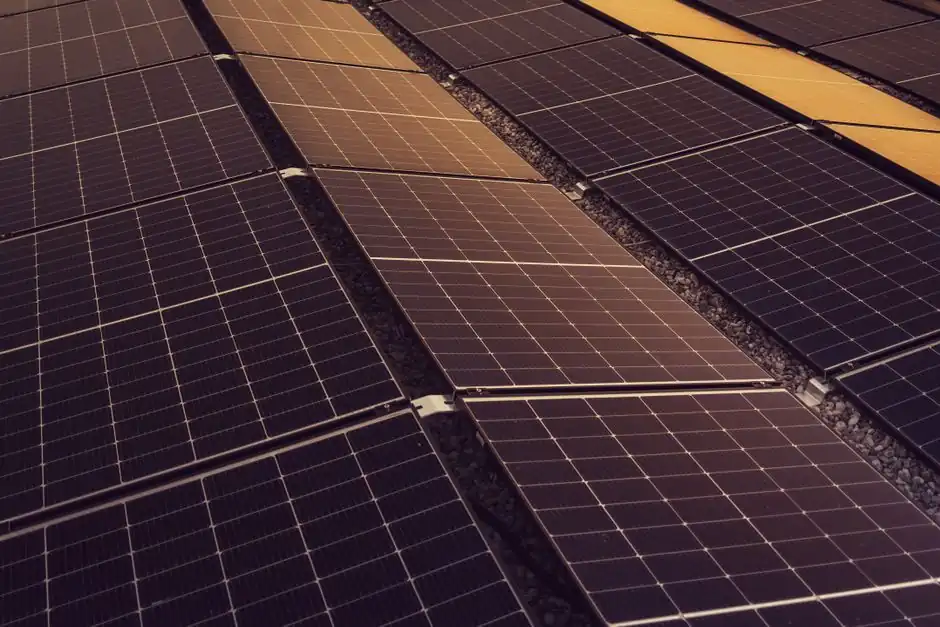
Single-axis solar trackers are projected to account for 86.81% of the global solar tracker market in 2026, making them the dominant architecture for utility-scale photovoltaic installations [S3].
Market scale and the single-axis advantage
The global single-axis solar tracker market was valued at USD 37.98 billion in 2026 and is forecast to reach USD 96.31 billion by 2031, a 20.45% compound annual growth rate [S1]. A separate market study estimates a much smaller 2026 value of USD 8.17 billion, illustrating how definitions and scope materially change tracker-market sizing [S6].
The single-axis solar tracker market is estimated at USD 37.98 billion in 2026 and is expected to reach USD 96.31 billion by 2031, at a CAGR of 20.45% during the forecast period (2026–2031) [S1]. These estimates are directional rather than interchangeable: project economics, drive architecture, component scope, and whether engineering, installation, or services revenue is included can move the reported value sharply.
Single-axis equipment is not a niche alternative to dual-axis tracking. Its advantage is mechanical and commercial simplicity, while dual-axis systems add a second rotational axis to follow the sun more closely. For most utility-scale projects, the incremental energy gain from that added complexity does not justify the additional structure, actuators, controls, maintenance, and land-geometry burden.
Horizontal versus vertical single-axis systems
The comparison is not cosmetic: horizontal trackers rotate around a north-south axis to follow solar elevation, whereas vertical trackers rotate around an east-west axis to follow solar azimuth.
Horizontal single-axis tracking generally fits a conventional utility plant layout with modules arranged in long rows. Vertical tracking can capture favorable diffuse-light and orientation conditions, but it changes row spacing, structural requirements, shading rules, and the relationship between the mechanical system and site geometry. The engineering specification should therefore be selected from site-specific yield and structural analysis rather than from orientation share alone.
These figures describe high-irradiance applications and should not be transferred directly to temperate, cloudy, or heavily shaded sites.
Active and passive drives compared
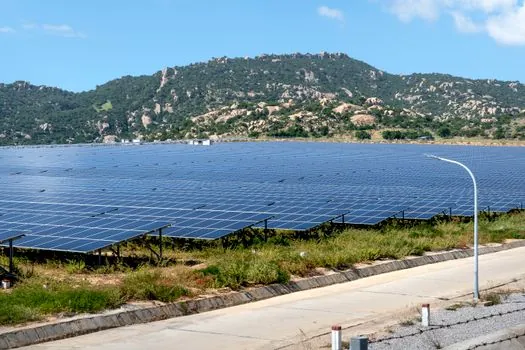
Active tracking systems captured 84.9% of the single-axis tracker market in 2025, and active architectures are also positioned to dominate the wider tracker market in 2026 [S1][S3]. An active tracker uses a powered actuator and control system to move the mechanical axis, allowing it to follow a programmed solar position and respond to operating limits.
A passive tracker has no powered drive and relies on a mechanical balancing mechanism or fluid actuator. It can reduce electrical and control-system complexity, but it offers less operating control and fewer opportunities for active stow, condition monitoring, or predictive maintenance.
The selection depends on project economics, terrain, wind exposure, module geometry, local irradiance, and maintenance capability. Active tracking is the stronger default for utility-scale plants where control precision and operating availability materially affect energy yield. Passive equipment can be defensible in smaller or simpler installations where its lower complexity offsets lower control authority.
Utility-scale demand drives the installed base
This mix confirms that tracker procurement is primarily a utility-scale infrastructure decision, with smaller commercial systems forming a faster-growing but less dominant segment.
North America is identified as the largest single-axis solar tracker market [S1]. The North American market was estimated at USD 4.2 billion in 2025 and is forecast to rise from USD 4.3 billion in 2026 to USD 6.4 billion in 2035 at a 3.9% CAGR [S2].
Asia Pacific is identified as the fastest-growing single-axis solar tracker market [S1], while the United States is the largest country market and Canada is the fastest-growing country in North America [S2].
Project fit, land use, and operating constraints
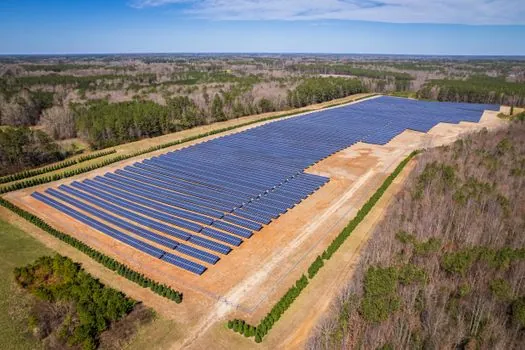
Single-axis trackers are suited to utility-scale and commercial photovoltaic plants where developers can optimize row pitch, structural loading, active-backtracking requirements, and annual energy yield. Their lower mechanical complexity than dual-axis tracking reduces failure modes, but trackers still require wind-stow strategy, torque-tube design checks, corrosion protection, and a site-specific foundation solution [S1][S4].
Single-axis systems usually support ground-coverage ratios of approximately 30% to 50%, allowing more megawatts to be installed per acre than many dual-axis layouts [S7]. Higher GCR can increase energy capture and land productivity, but it also raises row-to-row shading and structural wind-load constraints. A GCR selected from a vendor average can produce poor results when terrain, row geometry, module orientation, and irradiance patterns differ from the reference site.
Single-axis tracking is not the right choice for every project. Rooftop installations with limited mechanical access, small residential arrays, sites with severe irregular shading, and developments constrained by weight or structural loading can favor fixed-tilt systems. Fixed supports eliminate moving parts and simplify inspection, while trackers add actuator, controller, gearbox or hydraulic, wiring, and maintenance interfaces.
Suppliers, shipment data, and market concentration
The global tracker supplier ranking for 2026 is based on shipped capacity during 2025, providing a shipment-based benchmark separate from the revenue forecasts used in market-size studies [S5]. In North America, Nextpower held more than 25% of the 2025 market, while Array Technologies, GameChange Solar, PV Hardware, Arctech Solar, and Nextpower collectively held 70% [S2].
North America therefore shows meaningful supplier concentration, but concentration does not guarantee identical products or procurement outcomes. Engineers still need to compare tracker-row spacing, module compatibility, wind-load design, bearing or damper architecture, drive strategy, control protocol, stow behavior, warranty scope, and field-service support.
The single-axis value chain runs from raw-material suppliers through component manufacturers and system integrators to service providers. Utility-scale buyers therefore assess more than tracker hardware price: foundation compatibility, controls integration, installation sequence, spare-parts strategy, and long-term maintenance cost all affect lifetime project performance [S4].
How to interpret the 86.81% share figure
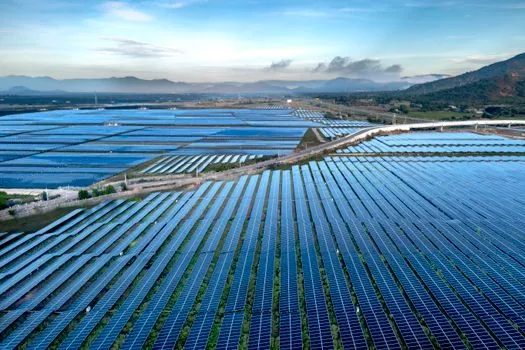
The 86.81% figure is a forecast segment share for 2026, not a universal installed-capacity statistic covering every solar technology, project size, or geography [S3]. It answers a defined market question: how much of the broader solar tracker market is expected to use single-axis technology during that year. A buyer or investor should retain the segment definition and forecast date whenever using it in a sizing model.
Market estimates also diverge. Mordor Intelligence puts the 2026 single-axis market at USD 37.98 billion [S1], while Research Nester places the 2026 single-axis solar PV tracker market at USD 8.17 billion [S6]. The difference cannot be resolved by selecting the larger number without checking whether each study includes the same hardware, project value, services, and regional scope.
The defensible conclusion is narrower: single-axis technology is the leading tracker architecture, horizontal units dominate within that architecture, and active drives and utility-scale projects account for the majority of demand. The next procurement checkpoint is the project-specific comparison of annual yield, GCR, wind loading, stow behavior, mechanical availability, and life-cycle cost rather than a market-share percentage.