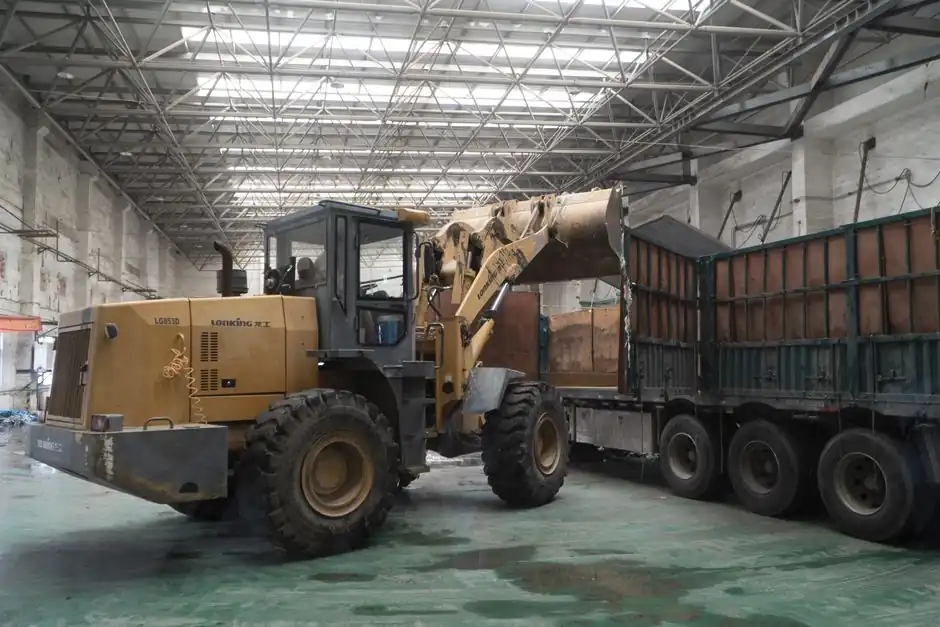
A 10-cell truck scale divides the maximum gross vehicle weight across ten sensors, and a correctly sized cell for a 40-ton (80,000 lb) GVW truck lands in the 20,000 to 30,000 lb per-cell range after impact and safety factors are applied [S1][S2].
Most weighbridges ship with 8 to 12 cells, one near each corner of each deck section, and the cells are wired in parallel through a junction box (or a digital network) so the indicator sums their outputs into a single weight reading [S3][S4]. A 10-cell layout is common for a two-module concrete or steel deck where five supports per side share the load evenly.
Start with Gross Vehicle Weight, Not Truck Empty Weight
The sizing target is the worst-case combined load the deck will ever see, not the tare of the truck alone. Net payload plus chassis plus any expected snow, ice, or mud loading on the structure has to be summed first, then divided by the cell count to set the per-cell working load [S1].
For a 36,000 kg (80,000 lb) GVW rating, ten cells would carry 3,600 kg (8,000 lb) each at static full scale, but that is the unfactored number. Real installations add a 20 to 50 percent dynamic factor for braking, cornering, and uneven deck loading, and a further 1.5 to 2.0 safety factor so the cell never operates near its rated maximum [S1]. On that basis, 5,000 to 6,000 kg (11,000 to 13,000 lb) per cell is a typical landed specification, which lines up with the 1,000 to 200,000 lb double-ended shear beam range offered by most weighbridge OEMs [S2][S6].
Double-Ended Shear Beam vs Canister vs Rocker Column
Three cell geometries dominate 10-cell truck scales, and they trade off capacity, accuracy, and maintenance cost in different ways. Picking the wrong one usually shows up as corner-loading error or premature mount wear, not as an obvious capacity miss. [S2]
Double-ended shear beams span 1,000 to 200,000 lb, are bolted at both ends, and are the workhorse for the 10,000 to 50,000 lb per-cell range that most 10-cell truck scales fall into [S2][S6]. Canisters cover 20,000 to 500,000 lb, take vertical force directly, and are used where very heavy or high-impact loads are expected, at the cost of more demanding maintenance [S2]. Rocker columns are cheaper to buy but need bumper bolts and check rods, and the higher lifetime maintenance has pushed most new builds toward double-ended shear beams [S2].
Apply the Working-Load Formula in the Right Order
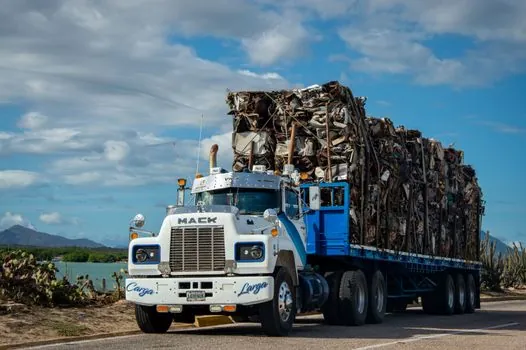
The arithmetic is straightforward, but the order of operations matters because a factor applied to a number that is already inflated compounds the error. Use gross weight, divide by cell count, then apply impact and safety factors on the per-cell result. [S1]
Per-cell working load = (GVW / n_cells) x dynamic factor x safety factor. A worked example for a 40,000 kg GVW truck on 10 cells at 1.3 dynamic and 1.5 safety gives 7,800 kg per cell, which steps to a standard 10,000 kg (22,000 lb) cell [S1]. The same formula expressed in pounds for an 80,000 lb GVW at 1.3 and 1.5 yields 15,600 lb per cell, which lands on a standard 20,000 lb (10,000 kg) double-ended shear beam [S1][S2]. Going the other direction, an oversized cell still works mechanically but loses usable resolution in the lower measurement range, which is why choosing too large is as common a mistake as choosing too small [S1].
Match Cell Output, Material, and Mounting to the Site
Capacity is only one of four selection axes; the cell must also match the indicator input, the local corrosion profile, and the deck's mechanical geometry. Skipping any of these usually surfaces as a calibration drift or a premature seal failure rather than a sudden overload. [S1]
Analog 4-wire cells (mV/V summed through a junction box) remain the lowest-cost path, but digital network cells such as the POWERCELL PDX architecture eliminate the junction box entirely, which is the most common truck-scale downtime contributor because of moisture ingress [S3]. On the material side, alloy steel covers most general sites, stainless steel (often 17-4PH) is specified for corrosive, high-moisture, or road-salt environments, and multi-layer coated steel sits between them for cost-sensitive but mildly corrosive sites [S1][S2]. Mounting hardware (rocker pins, elastomer bearings, self-checking G-Force style assemblies) controls how corner load and side load reach the cell, and a mismatched mount is the single most common source of in-service accuracy complaints [S2].
Who a 10-Cell Scale Is For, and When 8 or 12 Cells Fit Better
Ten cells is a design sweet spot, not a universal rule, and matching the cell count to the deck layout avoids the corner-load errors that show up in legal-for-trade certification. A cell count that is wrong for the geometry will read correctly under a centred test load and drift badly under an off-centre truck. [S5]
10 cells suits a two-section deck (five supports per side) on a typical Class 8 truck, while 8 cells is more common on shorter single-section concrete decks and 12 cells tends to appear on longer multi-axle or full-length weighbridges where load is shared across more supports [S3][S4]. A double-ended shear beam cell of the same capacity and mounting fits all three configurations, so the cell selection is governed by per-cell load and environment, while the deck geometry drives the cell count [S2][S3]. Sites in the Nordic region typically add 15 percent capacity headroom for ice loading and prefer 17-4PH stainless to resist road-salt corrosion, while Southeast Asian sites usually mandate IP68 or IP69K sealing for monsoon humidity plus a 2 to 5 percent moisture allowance on top of the static calculation [S1].
Common Sizing Mistakes and How to Avoid Them
Most under-spec'd cells do not fail on day one; they drift, lose corner-load agreement, and slowly push the legal-for-trade verification out of tolerance. Building the safety and impact factors in up front is much cheaper than recalibrating every quarter or replacing cells inside five years. [S1]
The three errors that come up most often are: ignoring dynamic impact and using only GVW divided by cell count, choosing a cell so large that the live load sits in the bottom 20 percent of the cell's output (where combined error and creep dominate), and under-budgeting for moisture, ice, or mud mass on outdoor decks [S1][S8]. A regularly exercised maintenance routine (debris clearance, cable inspection, physical-damage checks, and prevention of overload events) extends the service life of the cell set and protects the 5 to 10 year life expectancy that correct sizing buys [S1][S9]. For a deeper look at how the cells are mounted into the deck structure, the reference on truck scale load cell mounting systems walks through the load-path and mount hardware details.
Limits, Failure Modes, and What the Numbers Cannot Tell You
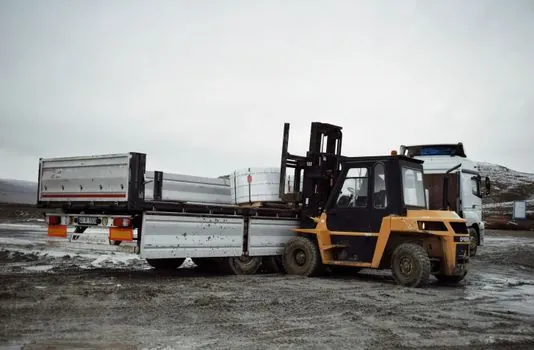
The capacity calculation is necessary but not sufficient; a cell that passes the math can still fail in service if the load path introduces side load, eccentricity, or thermal gradient. Treat the formula as a sizing floor and verify the full mechanical envelope before purchase. [S1]
Combined error on a typical truck-scale cell is on the order of 0.02 to 0.05 percent of full scale, so a 20,000 lb cell with a 5,000 lb empty truck is operating near the limit of useful resolution for legal-for-trade work; this is the argument for sizing to the truck and payload envelope, not to the worst-case GVW alone [S1][S8]. Side load, thermal expansion across a long steel deck, and corner lift from uneven foundations are failure modes that no capacity formula captures, and they are the reason most OEMs publish both a recommended and a maximum cell count for each deck length [S3][S9]. For reference on how the cell feeds the rest of the weighing chain, the entry on electronic load indicators and signal summing covers the indicator side of the same problem.
Track the next two signals: revised OIML R76 and NTEP Handbook 44 guidance on safety-factor floors for weighbridge cells (currently left to OEM practice), and the broader shift from analog junction-boxed cells to digital networked cells such as the POWERCELL PDX architecture, which removes the most common truck-scale downtime contributor [S3]. A practical walk-through of how cell choice interacts with truck scale deck geometry and module layout is worth a read before locking in a 10-cell specification.
Related analysis: How to Design Pipe Diameter for a Pneumatic Conveying System.