
A smart positioner closes the valve-position loop, and digital models can reduce deadband to ≤0.5% while adding auto-calibration and health diagnostics [S1].
Selection must cover pulping, bleaching, stock preparation, papermaking, recycling, and chemical recovery, where fiber, chemicals, steam, pressure changes, and cycle duty affect control performance [S3][S4].
Positioner duty and process scope
A smart positioner compares the commanded position with measured travel and adjusts actuator pressure until the error is corrected, making it a localized controller rather than a passive signal converter [S1][S9]. This feedback can counter packing friction, stem stiction, hysteresis, and changes in differential pressure that otherwise leave a pneumatically actuated valve in open-loop operation [S1].
The smart-positioner choice is suitable for control duties in pulp and paper, including stock-consistency control, chemical dosing, steam-header control, and other applications where the pneumatic valve actuator must follow a controller output reliably [S2][S3]. The positioner does not make an unsuitable isolation valve into a control valve, nor does it replace pressure-, temperature-, material-, and leakage-rated valve construction [S3].
Linear, rotary, and lever architectures
Choose a linear positioner for a reciprocating stem, a rotary positioner for a quarter-turn spindle, and a lever or rotary configuration for actuators where the required movement is neither a simple linear stroke nor a standard quarter turn [S7]. Lever-operated and rotary positioners are used across pulp and paper, food and beverage, and wastewater service, while digital valve controllers also cover water, fine chemicals, power, biofuels, metals, mining, pulp, and paper [S2][S7].
The actuator architecture and travel must agree before protocol, output pressure, and position feedback are compared. Positioners act as high-capacity air boosters that deliver the flow rates needed to overcome changing differential pressures, accelerate response times, and stabilize control loops [S1]. Position sensing and linkage selection must also match the actual valve travel; the general operating principle is continuous comparison of command and actual position [S9].
Pneumatic output versus electric actuation
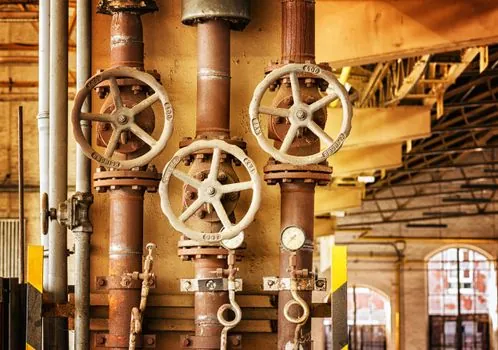
A pneumatic smart positioner typically receives a process signal, evaluates position error, and changes actuator supply or exhaust pressure, whereas an electric actuator converts electrical command energy into mechanical motion [S1][S9].
Process severity and application fit
Pulp and paper valves must be selected against fiber concentration, freeness, scale tendency, pressure, temperature, chemical compatibility, seat leakage, valve velocity, cycle rate, and maintenance access [S3][S4]. Stock consistency is defined by fiber concentration in pulp slurry, while freeness describes the dewatering rate and influences the hydraulic load seen by a control element [S4].
For papermaking, control performance depends on the complete valve, actuator, and positioner package rather than positioner resolution alone [S3][S4].
A mainstream smart positioner is a poor shortcut for simple manual isolation duty, emergency isolation, or a valve whose packing, actuator, or trim cannot deliver the requested movement. Smart positioning adds value where the valve must modulate continuously under friction, changing pressure, or repeated cycling; it does not remove the need for appropriate rack-and-pinion actuator sizing, packing selection, or mechanical maintenance [S3][S5].
Accuracy, calibration, and diagnostics
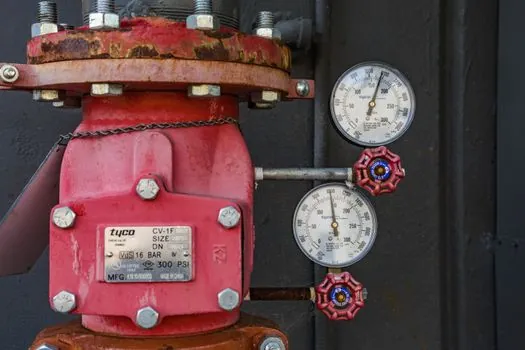
Digital positioners can reduce valve deadband to ≤0.5%, support auto-calibration, and provide predictive health diagnostics through HART or fieldbus-capable designs [S1]. Some product families advertise a spool tested to 2 billion cycles, while other smart-positioner models specify IP65 dust and water protection [S6][S7]. These figures describe particular products, not a universal selection threshold.
High digital output resolution has limited value if the valve assembly cannot hold position within approximately 0.5% of travel, because packing friction, tightening practices, air-supply quality, venting, positioner size, sticky fluids, and flow forces can dominate the result [S5]. Specify a measurable end-to-end acceptance criterion, including travel error, deadband, response time, and repeatability, rather than accepting a resolution claim alone [S1][S5].
Upgrading to digital positioners enables auto-calibration [S1]. Digital positioners provide predictive health diagnostics via HART/Fieldbus [S1].
Communications, feedback, and hazardous-area construction
Select the signal architecture at the instrument-loop level: a 4–20 mA positioner with digital communication, a conventional analog positioner, or a digital fieldbus positioner are different engineering choices [S1][S5]. Foundation Fieldbus is a digital bus, while HART communication is overlaid on a 4–20 mA analog loop; protocol capability must therefore match the installed controller and I/O rather than the model name [S5].
The basic positioner elements are the input connection, position sensor or mechanical linkage, control logic, and actuator output [S1]. Specify whether feedback is mechanical, electronic, or another supported arrangement, and verify that the claimed communication method supports the required setpoint, readback, alarms, and maintenance information [S1][S8].
Pulp mills can contain classified areas because the process includes flammable chemicals and gases, but the installed positioner, actuator, and associated equipment must be assessed against the site classification and applicable hazardous-area rules [S3]. For installations with washdown, moisture, dust, or outdoor exposure, ingress protection is a selection constraint, not a cosmetic accessory; IP65 is specified for one lever or rotary smart-positioner family [S7].
Commissioning and procurement shortlist

A complete purchase package should identify the valve type, actuator motion, stroke or rotation, travel direction, required response, minimum and maximum supply conditions, process pressure and temperature, fluid chemistry, packing arrangement, positioner output, feedback method, communications, electrical classification, ingress protection, diagnostic functions, and maintenance access [S1][S3][S7].
Shortlist a pneumatic smart positioner for an existing pneumatic control loop that needs active correction under changing load, a rotary smart positioner for a compatible quarter-turn valve, and an electric actuator only where electric infrastructure and duty requirements support it [S1][S2][S7]. During factory and site acceptance, verify full-stroke movement, command-to-position error, deadband, response, calibration, alarm or diagnostic behavior, and repeatability with the final valve, actuator, packing, and supply conditions [S1][S5][S9].
For related application-specific selection criteria, compare this decision framework with Valve Positioner Selection for Pulp and Paper.