
A smart valve positioner for irrigation must match the valve stroke, actuator action, air supply, command signal, and field conditions; valve travel feedback provides the controlled variable.
The selection applies to electrically or pneumatically operated irrigation valves that require more than a simple open-close command, including main shutoff, variable-flow, and remotely supervised installations.
Define the irrigation control duty before choosing a positioner
An irrigation controller and a smart valve positioner perform different functions. A standard controller sends an open-and-close signal to a solenoid valve, while a positioner compares a requested position with measured valve travel and adjusts actuator output until the error is reduced [S1][S4].
Choose between an actuator for an individual irrigation zone and one for the main water supply based on the control job required, while recognizing that a stuck valve can allow water to continue flowing into a zone. A motorized actuator on a manual quarter-turn ball valve may suit remote main isolation, but it is not interchangeable with a solenoid-operated sprinkler valve [S5].
The irrigation design should answer five measurable questions before a model is selected:
For a broader view of the local feedback loop, see the distinction between a conventional valve positioner and a microprocessor-based smart valve positioner.
Match position feedback to the valve and actuator
Travel feedback is the core selection requirement because a command alone does not establish actual stem or shaft position. Linear valves need a positioner suitable for linear travel, while quarter-turn valves require a rotary arrangement and the corresponding mounting kit [S1][S3].
The complete package must include the valve, actuator, positioner, pneumatic supply, mounting hardware, and host controller. Poor linkage alignment, mechanical play, packing friction, restricted air supply, an undersized actuator, or damaged valve internals can still limit movement even when the positioner operates correctly [S1].
Do not use the pipe diameter alone as the sizing criterion. Record valve type, body material, connection, pressure rating, actuator style, available clearance, minimum operating torque, and required break-to-open torque. An old or mineral-encrusted ball valve can require more operating force than a new valve, but that condition should be corrected rather than concealed by oversizing the actuator [S5].
Compare pneumatic, electric, and open-close control
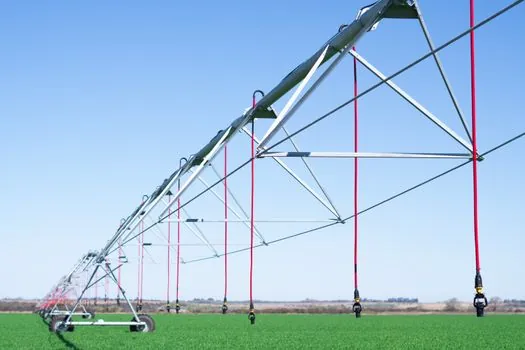
A smart positioner is justified when the installation needs proportional positioning, repeatable shutoff, stroke confirmation, or diagnostics. A standard low-voltage solenoid system remains appropriate where the only requirement is to open one zone for a scheduled duration [S4][S5].
For irrigation applications where proportional flow control or tight shutoff matters, a pneumatic hydraulic valve actuator is not interchangeable with a pneumatic positioner. The positioner is the feedback controller; the actuator supplies the force. Similarly, an electric valve actuator needs a compatible electronic positioner if actual travel confirmation is required.
Set pressure, torque, and environmental limits
Select the positioner as part of the complete valve, actuator, positioner, air-supply and host-system package, with attention to changing differential pressures and the required air supply. A positioner is intended to control displacement, but it cannot compensate for an undersized actuator or a valve whose required opening force exceeds the mechanism's capacity. [S2]
Selection guidance identifies tight-control applications above 5 bar differential pressure for single-seated valves and above 10 bar for double-seated valves, and identifies springless double-acting actuators as a positioner application [S2]. Those figures are selection prompts, not blanket requirements for every irrigation valve. Actual sizing remains valve- and actuator-specific.
Outdoor equipment must also be checked for the installation environment. Record the minimum and maximum ambient temperature, enclosure rating, direct-sun exposure, condensation, dust, fertilizer and pesticide exposure, vibration, and possible flooding.
Confirm the valve's pressure rating and connections as part of the package selection.
Choose communications and supervisory control
A 4–20 mA command with HART provides an analogue control signal and a superimposed digital communication function over the same pair of conductors when the positioner, wiring, and host support HART. Fully digital PROFIBUS PA or FOUNDATION Fieldbus systems require compatible positioners, controllers, cable infrastructure, and configuration tools; an analogue 4–20 mA loop is not their substitute [S1][S3].
Smart valve positioners may add bidirectional communication, stored operating data, pressure or travel monitoring, diagnostic tests and alarms, depending on the model.
For irrigation sites without dependable field wiring, a wireless smart valve can receive open-and-close commands through radio rather than a buried conductor. This solves reachability rather than precision positioning: the wireless unit is a command and communications layer, while the valve still needs a compatible actuator and sufficient hydraulic force [S4][S7].
Remote supervision adds value only when the selected model actually supports the required feedback. Confirm whether the host can display open and closed position, detect a failed command, timestamp events, or issue an alarm. A received command is not proof that the valve moved [S5].
Use diagnostics as evidence, not as a substitute for commissioning
Smart diagnostics depend on installed sensors, model-specific firmware, software licensing, host integration, and the mechanical condition of the valve. A positioner without the required pressure sensor cannot provide the same pressure information as one fitted with that sensor, and stored event data is not interchangeable across architectures [S1].
Auto-calibration can configure travel limits and response parameters, but it does not verify packing condition, mounting alignment, actuator capacity, air quality, or valve sealing. Commissioning should therefore include stroke verification in both directions, local open and closed indication, command-response testing, and a deliberate power or signal interruption check.
The quoted commissioning rule is direct: “Auto-calibration does not complete commissioning” [S1]. Maintain records of the calibrated stroke, signal direction, failure position, supply pressure, and observed response at the actual valve. Where water conservation is critical, add an independent flow or pressure check because position feedback does not directly prove that the closed valve is leak-tight [S1][S5].
For deeper valve-level selection, Control Valve Selection for Irrigation Systems provides the hydraulic starting point before final actuator and positioner sizing.
Commission the installed package and define failure behavior
Commissioning should begin with a mechanical check: verify valve model, size, connection, travel, linkage, mounting clearance, and actuator orientation. Confirm that the positioner's rotary or linear configuration matches the installed valve before applying supply pressure or electrical power [S1][S3].
Then verify at least five operating outcomes: commanded open, commanded closed, movement under minimum supply conditions, response after a signal loss, and restoration after a power interruption. A single successful travel cycle does not prove that the valve can close from every process condition or that the local end limits are calibrated.
Define the required failure state before procurement. For main-line control, spring-return or fail-closed behavior may be required to limit leakage. For zone control, fail-closed behavior can protect downstream piping, while fail-open behavior may be chosen for specific operational priorities. Smart electronics must not be assumed to provide the mechanical fail action; it depends on the actuator arrangement [S1][S2].
Replacement parts should be recorded by model, firmware, mounting kit, sensor configuration, and actuator type. Spare electrical or pneumatic positioners are not automatically interchangeable because calibration, travel limits, action, and diagnostic functions are model-dependent [S1].
Apply a procurement shortlist and evidence checklist
The preferred irrigation package is the one with documented fit, not the one with the longest feature list. A defensible shortlist requires the valve type, pressure rating, flow capacity, actuator torque or air requirement, travel range, signal protocol, environmental rating, failure action, and host compatibility to be stated in the purchase specification [S1][S3][S5][S8].
Use three acceptance gates before ordering:
Do not select a smart positioner for a simple scheduled zone unless proportional control, closed-position confirmation, remote diagnostics, or another specified function justifies the added air, power, commissioning, and maintenance burden [S1][S4]. For a main or branch isolation duty, prioritize remote shutoff, confirmed closed position, weather protection, and a proven failure action.
The next trackable evidence is the completed datasheet and vendor quotation: confirm model, actuator action, travel limits, command range, protocol, supply requirements, environmental approvals, diagnostic outputs, mounting kit, and spare-part configuration before the package is released.