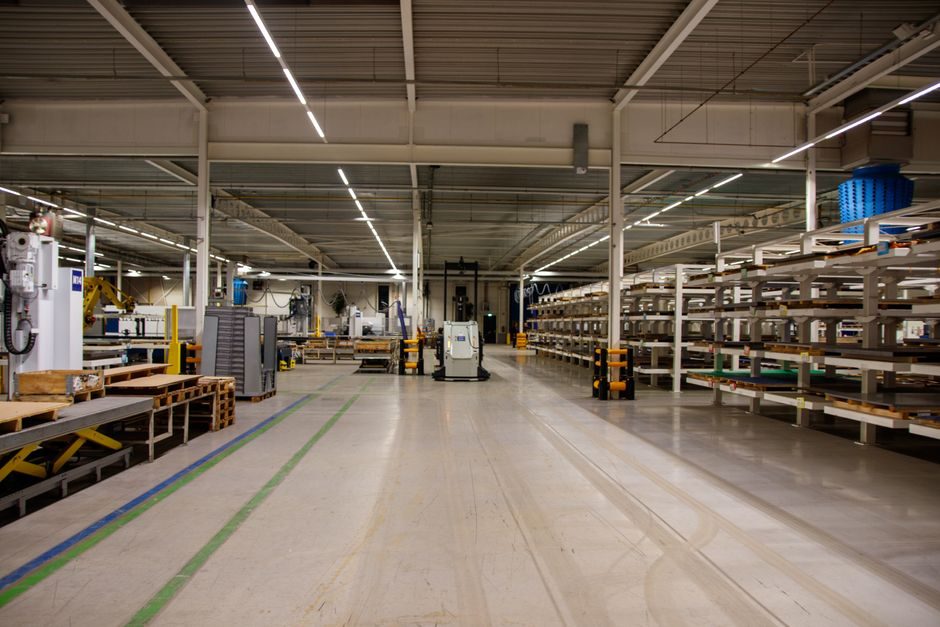
Standalone sorting systems (the sorter is the machine) and conveyor-integrated sorting lines (a sorter bolted onto a longer belt backbone) carry the same production mandate — route items by size, weight, color, SKU, or barcode to a defined lane per [S1][S2][S7] — but they handle the divert impulse in two different load paths. Pneumatic paddle and pusher cells are documented for low to mid throughput, varying sizes, and irregular shapes per [S4]; the impulse is reacted entirely by the local divert frame, so mechanical strength is concentrated at one station. A conveyor sorting line instead offloads the same impulse onto a longer belt and frame, which lowers peak stress at the divert point but raises cumulative fatigue at the splice where a base standard conveyor meets the sorting conveyor per [S8].
Both architectures end up depending on the same supporting hardware stack: a PLC for sequencing, a servo motor or DC motor for belt or divert actuation, a pressure sensor or load cell for weight-based sort keys, and an industrial valve bank for pneumatic diverts (paddles, pushers, shoe lifts) per [S2][S3][S4][S5][S6]. The mechanical question is not "which is stronger" in absolute terms — it is "where is the load reacted, and which component sees the fatigue cycle count."
Load Architecture: Fixed-Frame Sorter vs Distributed Conveyor Spine
A sorter as a standalone cell sits on its own steel frame; the divert impulse — a paddle stroke, a pusher rod extension, a shoe lift — is reacted by that frame's local stiffness, so mechanical strength is concentrated around the divert station per [S4]. Designers can over-spec the local frame and accept a heavier, taller machine, which trades floor space for a known stress envelope per [S4].
A conveyor sorting line instead embeds the sorter in a continuous belt loop; the divert impulse is reacted by the conveyor's longitudinal frame and by the transition where the base standard conveyor bolts to the sorting conveyor per [S8]. This architecture distributes stress along the belt, but introduces a new fatigue site at the splice and at the transition idler where standard and sorting conveyors meet per [S2][S8]. For heavy parcels or metal-edged cartons, that splice is the most common mechanical-failure origin on integrated lines per [S8].
Divert Mechanisms: Paddle, Pusher, Shoe, and DC-Driven Belt
The paddle sorter uses a pneumatic-powered paddle with no clearance underneath, so the entire width of the belt is swept into the divert lane on each stroke; the paddle rod, the cylinder mount, and the pneumatic cylinder all see the full lateral load per [S4]. The pusher sorter is mechanically different — a transverse pusher pushes one item off the line — so its peak load is lower but its cycle count per item is higher, and the pusher face is the wear part per [S4].
Motor-driven shoe sorters and DC-motor-driven belt sorters — for example the linear belt, push rod, light-sensitive sensor, and inductive proximity sensor sorting modules documented for color and material sortation per [S6] — spread the lateral load over a longer actuation window. That lowers peak stress on any single component but raises cumulative wear on the belt cover and on the servo motor gearbox per [S6]. Photo eyes, inductive proximity sensors, and color sensors mounted on these mechanisms add mass and bending load to the sensor bracket, a documented fatigue site on divert mechanisms per [S2][S6].
Throughput Ceiling vs Mechanical Wear
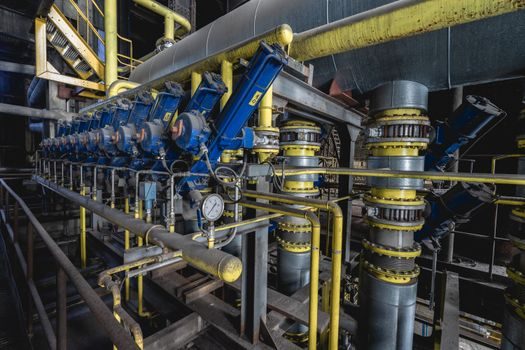
Paddle and pusher sorters are documented as best suited to varying sizes, irregular shapes, and low to mid throughput per [S4]. The mechanical reason is direct: pneumatic actuators have a finite cycle rate, and every stroke loads the divert frame; pushing the cycle rate higher raises the fatigue count on the rod end, the cylinder mount, and the belt edge in equal measure per [S4].
High-speed omni wheel conveyor sorters, PLC-controlled per [S5], are documented as the response to mechanical wear, design rigidity, and the inability of traditional sorting mechanisms to handle complex or high-throughput material handling requirements per [S5]. The omni wheel architecture splits the load between wheel actuators and the cell frame, so per-station wear is low, but the control and servo load is high, and the PLC I/O plus the servo motor amplifiers become the throughput-limiting components rather than the divert frame per [S5][S6].
Weight and Photo Sensing: Where the Mechanical Coupling Lives
When sorting by weight, the weighing mechanism is built within the conveyor beneath the belt, and the product's mass is measured during transportation on the belt per [S3]. This is the most mechanically sensitive sort architecture: the load cell — a force or pressure sensor under the belt — must be decoupled from belt tension and from the frame twist caused by an adjacent divert station, otherwise measurement noise and structural fatigue couple together per [S3][S9].
Non-contact sorters — barcode scanners, photo eyes, and color sensors per [S2][S6] — avoid the structural coupling problem but add mass to the sensor bracket and introduce a different failure mode: lens contamination, which forces regular cleaning access and bracket-removal cycles. Inductive proximity sensors used for metallic-object sortation per [S6] are mechanically robust but require a precise stand-off distance, which tightens the frame tolerance at the divert point and reduces the allowable frame deflection under load per [S6].
Selection Criteria: A Side-by-Side on Mechanical Strength
Selection for mechanical strength comes down to three load-path questions: where the divert impulse is reacted, how the belt and frame carry cumulative load, and which sensor mass is bolted to the moving structure per [S2][S4][S8]. The four architectures line up against four decision criteria as follows.
Standalone paddle or pusher sorter — best for low to mid throughput, irregular shapes, heavy individual items, and applications where the sort station is the rate-limiting step per [S4]. Mechanical strength is localized at the divert; the frame is easy to over-spec; the pneumatic cycle rate is the throughput cap per [S4].
Conveyor-integrated sortation line — best for continuous flow, mixed SKU, and shipping lane routing across many destinations per [S2][S7]. Mechanical strength is distributed along the belt; fatigue concentrates at the splice and at the idler junction where the base standard conveyor meets the sorting conveyor per [S8].
PLC-controlled omni wheel high-speed sorter — best for complex or high-throughput material handling per [S5]. Mechanical strength is split between wheel actuators and the cell frame; PLC and servo motor load is high, but per-station mechanical wear is low per [S5].
Weight sorter with built-in conveyor scale — best when mass is the primary sort key, including box-volume and weight grading per [S3][S9]. Mechanical strength is constrained by the need to isolate the pressure sensor or load cell from belt tension and from frame twist caused by nearby divert stations per [S3].
Failure Modes and What the Maintenance Crew Sees
Three failure modes dominate these architectures. First, divert actuator fatigue — rod end, cylinder mount, and pneumatic seal wear on paddle and pusher sorters, and gearbox wear on shoe sorters per [S4]. Second, belt edge and splice damage on conveyor sorting lines, with damage concentrated at the transition where the base standard conveyor meets the sorting conveyor per [S8]. Third, sensor mount loosening on photo eye, proximity, and color sensor brackets, especially on DC-motor-driven belt sorters where bracket mass is high per [S2][S6].
For weight sorters, a fourth mode appears: load cell drift caused by frame twist from a divert impulse delivered close to the weighing module per [S3][S9]. The mechanical fix documented in the research is to space the divert station and the weighing module by at least one belt pitch — a design rule of thumb in the source material, not a named standard — and to mount the weigh frame on a separate structure isolated from the main conveyor frame per [S3]. Pneumatic diverts in this architecture are typically fed through an industrial valve bank, which adds a maintenance node but no structural load per [S2][S4].
Standards, Controls, and Sensor Stack in Scope
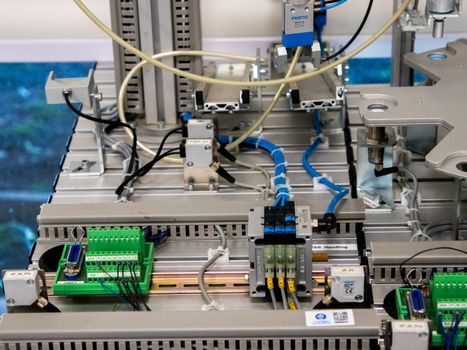
Both architectures lean on the same control and sensor stack: a PLC for sort logic, a servo motor or DC motor for belt or divert actuation, a pressure sensor or load cell for weight-based sort keys, and an industrial valve bank for pneumatic diverts (paddles, pushers, shoe lifts) per [S2][S4][S5][S6]. No named IEC or ISO mechanical-strength standard is cited in the research for the sorter frame itself; design is by load case and finite-element analysis, not by a prescriptive rule from a standard body in the source material.
Next-trackable signals to watch: (1) the migration of sorter designs toward PLC- and servo-driven omni wheel architectures, as documented in [S5] (published 2025-11), and away from pure pneumatic-paddle cells; (2) the standardization of the base-standard-conveyor to sorting-conveyor interface per [S8], which controls how easily divert stations can be swapped between vendors without re-engineering the splice; (3) the growing use of volume and weight as joint sort keys per [S9], which raises the bar for load-cell isolation in the conveyor frame and may push more designs toward separate weigh frames.