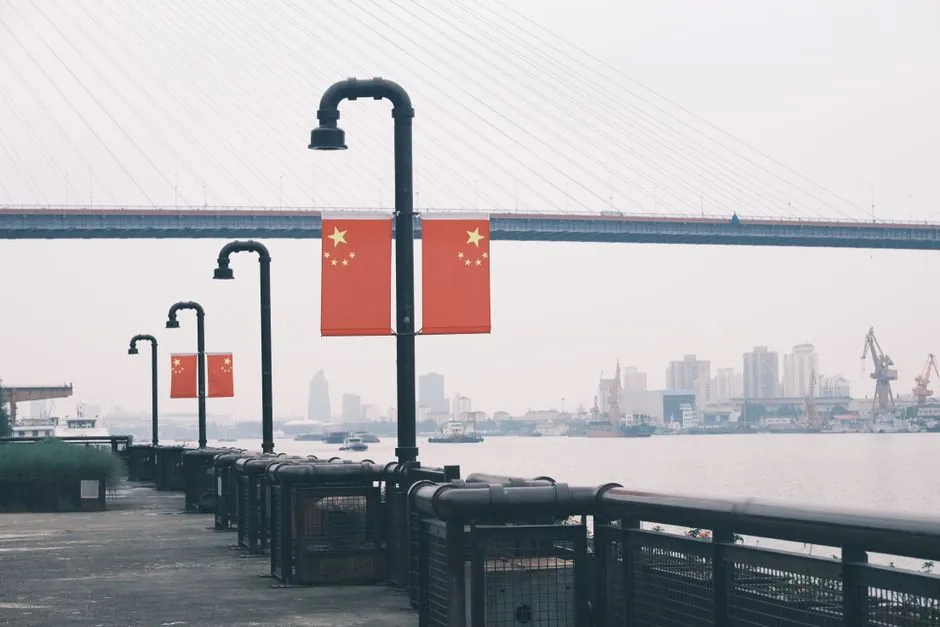
China refines 96% of the spherical and synthetic graphite that feeds lithium-ion battery anodes, a concentration that defines the global sourcing decision in 2026 [S2].
The active anode material (AAM) market remains dominated by graphite, with hard carbon scaling for sodium-ion, silicon-carbon composites pushing capacity, and lithium metal reserved for solid-state development; the US has stacked a 93.5% Section 301 tariff on Chinese graphite, while the ITC's March 12, 2026 negative determination blocked AD/CVD rates of 160–170% on Chinese AAM [S3][S4][S5].
Graphite Anode Grades: Natural, Synthetic, and Silicon-Carbon
Synthetic graphite anode delivers higher lot-to-lot consistency at higher cost, while natural flake graphite wins on price once spherical purification is complete; the two are routinely blended in production cells to balance tap density, specific capacity (typically 340–360 mAh/g for graphite), and first-cycle coulombic efficiency above 90% [S4].
Silicon-carbon composites push specific capacity past 1,000 mAh/g in blended form, but require binder and electrolyte reformulation to manage 200–300% volume expansion during lithiation; expect to see 5–20% SiOx blends in premium consumer cells, with pure-silicon anodes still pre-commercial at industrial scale [S4].
For comparison: natural graphite (sourced and purified in Heilongjiang and Inner Mongolia) carries the lowest $/kg but the widest impurity spread; synthetic graphite (Henan, Sichuan, Inner Mongolia clusters) is the workhorse for EV cells; hard carbon (Shandong, Jiangsu) is the default for sodium-ion; silicon-carbon is a premium additive rather than a stand-alone anode. Tap density typically lands at 0.8–1.1 g/cm³ for graphite, 0.7–0.9 g/cm³ for hard carbon, and 0.5–0.7 g/cm³ for silicon-carbon blends.
China's Refining Concentration and the 2026 Tariff Stack
China's 96% share of refined graphite production is the structural reason a 93.5% US tariff on Chinese graphite, effective January 2025, has not redirected significant volume: there is no equivalent refining capacity outside China at present, and the US DOC and ITC duopoly determines which duty layers actually stick [S2][S3].
The Department of Commerce's February 2026 final determination assigned separate-rate Chinese AAM exporters (including Tesla Manufacturing Brandenburg SE and Panasonic Global Procurement China) a 93.50% dumping margin, with the China-wide entity at 102.72% under adverse facts available; aggregate AD/CVD rates published by Commerce ran 160–170%, but the ITC's 3-2 negative final determination on March 12, 2026 stopped those orders from taking effect [S5].
What remains enforceable: a 25% Section 301 tariff plus a 10% temporary global import duty, stacking to roughly 35% on Chinese AAM during the current period, on top of which a separate 30% baseline Section 301 tariff on Chinese goods and 50% steel/copper tariffs continue to hit cell and pack components [S3][S5]. Specifying engineers should model landed cost on the 35% baseline plus FEOC compliance drag, not the headline 93.5% rate, until policy shifts.
Hard Carbon, Sodium-Ion, and the Second-Order Sourcing Shift

Hard carbon first-cycle coulombic efficiency has improved from roughly 70% to 85–90% over the past three years, and full-cell sodium-ion energy density now reaches 140–160 Wh/kg, sufficient for stationary storage, two-wheelers, and low-speed EVs where $/kWh beats Wh/kg [S1].
Chinese suppliers have replicated the lithium-ion supply chain for sodium-ion in roughly five years, with over 80% of lithium-ion production equipment adaptable with minimal modification, a fact that has pulled hard carbon, layered oxide cathodes, and NaPF₆ electrolyte into a single integrated procurement channel [S1].
For sourcing, this means a hard-carbon anode qualification done in 2026 can be re-used for sodium-ion cells without rebuilding the incoming-QC stack.
Inbound Quality Controls: Battery-Grade vs Industrial-Grade
Battery materials are not commodities: two NMC shipments with identical spec sheets (Ni-Co-Mn ratio, tap density, PSD) can deliver 98% first-cycle coulombic efficiency and 2,000+ cycles, or 92% efficiency with capacity fade by cycle 500, driven by ppm-level metallic impurities, surface morphology, and moisture that never appear on a typical COA [S4].
China's lead in battery materials is downstream of a vertically integrated ecosystem linking precursor synthesis, cathode and anode production, electrolyte formulation, and cell testing inside a single geographic cluster; that concentration enables rapid process feedback loops that multi-continent supply chains struggle to replicate [S4].
Supplier Selection: Integrated vs Single-Material Vendors
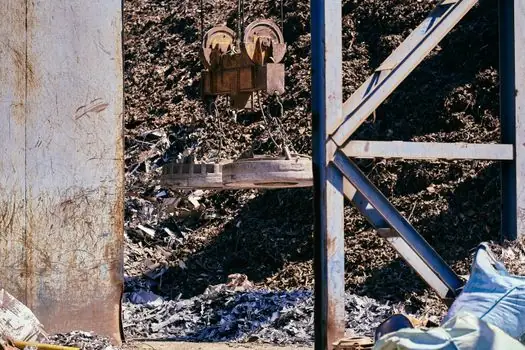
Integrated Chinese suppliers covering cathode, anode, electrolyte, separator, and ancillary materials from a single source have become the default for cell-makers building pilot lines through mass production, because the co-location cuts qualification cycles and logistics steps [S4].
For comparison on sourcing strategy: (1) an integrated full-stack vendor (cathode + anode + electrolyte + separator) suits new entrants and fast-scaling cell programs that need one contract, one QA loop, and one logistics chain; (2) a specialty anode maker (graphite-only or hard-carbon-only) suits mature cell-makers chasing lowest $/kg and willing to qualify the rest of the materials stack separately; (3) a trading house with multiple sub-suppliers is the lowest-friction entry but the weakest traceability for ppm-level impurities and lot recalls.
Engineers should weigh three decision criteria: material traceability (single-site production vs aggregated lots), in-house cell-test validation by the supplier before shipment, and dual-source qualification for at least one non-Chinese anode feed (Syrah Resources, Novonix, Anovion) to manage FEOC exposure for IRA-adjacent programs [S4][S5].
Compliance, FEOC, and the 2026 Regulatory Layer
Foreign Entity of Concern (FEOC) regulations began applying to battery supply chains in 2026, creating compliance obligations around Chinese-sourced battery materials that go beyond cost into legal risk territory for any program touching US federal incentives [S3].
On the non-tariff side, an Integrated cathode material sourcing decision map follows the same FEOC logic: Chinese-dominant upstream, US/EU alternatives under construction, and the same FEOC audit trail that anode buyers now have to maintain.
For sodium-ion diversification, see how cathode procurement strategy is being structured around layered oxides and hard carbon co-sourcing, since the two chemistries share most of the same equipment base and supplier pool. For a more general view of how carbon-rich feedstocks are qualified, the carbon fiber spec map for automotive is a useful parallel on lot-level validation and incoming-QC rigor, even though the chemistry is different.
Failure Modes and Specification Pitfalls
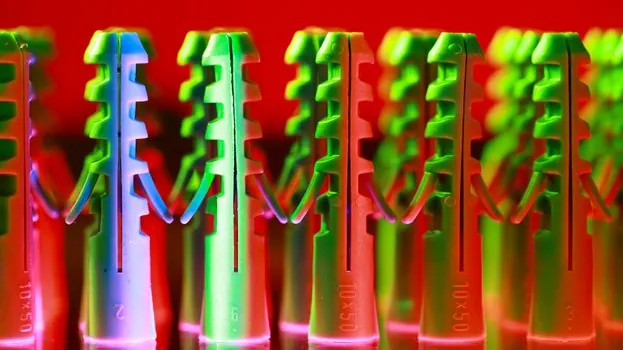
Common specification pitfalls on Chinese graphite AAM shipments: missing lot-level first-cycle efficiency data, D90 particle size drift above 30 μm (causes coating streaks), magnetic iron content above 100 ppb (causes self-discharge spikes), and moisture rebound above 500 ppm after ocean transit (causes gas generation in formation cycling) [S4].
Hard carbon failure modes specific to sodium-ion: low tap density below 0.7 g/cm³ (slashes volumetric energy density), excessive surface area above 8 m²/g (consumes electrolyte in SEI formation), and batch-to-batch variability in pore-size distribution (drives inconsistent rate capability); require SK-grade test reports with three consecutive lots before signing [S1].
Silicon-carbon failure modes: insufficient binder compatibility (use CMC/SBR rather than PVDF for SiOx blends), electrolyte additive package (FEC and VC at 5–10% are typical), and calendar-life collapse above 45°C; plan a 6–12 month qualification cycle for any SiOx blend above 10% by weight.
What to Track Through Year-End 2026
Three verifiable signals to watch on the anode sourcing side: (1) the appeal status of Syrah Resources following the ITC's March 12, 2026 negative determination, which could reopen the AD/CVD case and snap tariffs back to 160–170% [S5]; (2) commissioning timelines for the Yanbu graphite anode plant in Saudi Arabia, positioned as the first major non-Chinese AAM source at industrial scale; (3) any Section 232 outcome on battery-related imports, which would stack a fourth tariff layer on top of the existing 35% effective AAM rate [S3][S7].
For sourcing teams, the actionable next node is the August 2026 round of integrated-supplier qualification RFQs out of Fujian and Henan, where bundled cathode + anode + electrolyte contracts are being tendered for 2027 cell volumes [S4].
Spec-level background on the components involved: linear guide, crossed roller guide, and advanced material.