
Carbon-fiber-reinforced polymer (CFRP) is specified for automotive body, chassis, and powertrain parts where a 10% mass reduction delivers a documented 6-8% fuel-economy improvement, per U.S. Department of Energy figures cited in March 2026 [S2]. The 2024 market for automotive carbon fiber composites sat at USD 7.12 million and is forecast to reach USD 14.35 million by 2035 at a 6.58% CAGR through 2025-2035 [S3].
Eight suppliers dominate the qualified-vendor list: Toray Industries, SGL Carbon, Teijin Limited, Hexcel Corporation, Mitsubishi Chemical, Solvay, BASF SE, Zoltek, and Formosa Plastics [S3]. North America holds the largest regional share, while Asia-Pacific is the fastest-growing, and structural components remain the dominant application segment, with chassis components growing fastest [S3].
CFRP vs Fiberglass vs Kevlar vs Steel vs Aluminum
Carbon fiber leads the three fiber composites on specific stiffness because its crystalline carbon chains align along the fiber axis and resist deformation under covalent bonding, beating both amorphous silica-based fiberglass and hydrogen-bonded aramid (Kevlar) on modulus per unit weight [S1]. The practical ranking in automotive applications: carbon fiber for stiffness-critical structural parts, fiberglass for cost-sensitive semi-structural panels, and Kevlar reserved for impact absorption zones where its lower stiffness and higher toughness matter more than rigidity [S1][S2].
Against metals, CFRP trades raw cost (typically USD 14-25/kg vs USD 0.8-1.2/kg for cold-rolled steel) for a specific tensile modulus roughly 5x that of steel and a density near 1.55-1.6 g/cm3 versus 7.85 g/cm3 for steel [S2][S4]. Aluminum sits between at 2.7 g/cm3 with lower modulus than CFRP, making it the default mid-cost choice for body panels; carbon fiber is reserved for the highest-mass-leverage parts such as roof, hood, trunk lid, and select chassis nodes [S2]. Engineers tune ply orientation so fibers carry load along engineered stress paths, something neither stamped steel nor extruded aluminum can match without secondary forming [S2].
Selection Criteria: Modulus, Layup, Resin, and Production Volume
Standard-modulus PAN-based fiber (tensile modulus ~230-240 GPa) covers most automotive programs; intermediate-modulus (~290 GPa) and high-modulus (>350 GPa) grades are reserved for driveshafts and suspension links where stiffness per gram dominates the design [S1][S6]. Tow size drives both cost and process: 3K (3,000 filaments) and 12K fabrics suit cosmetic and small structural parts, while 24K-50K heavy tows are the economic route for larger semi-structural panels in additive manufacturing material and compression-molded programs [S6].
Resin choice sets the upper service temperature and the cure cycle. Epoxy is the default for structural parts, offering strong adhesion and long-term stability in the 120-180°C glass-transition range, while polyester and vinylester cover lower-temperature decorative and semi-structural parts at lower cost [S5][S6]. Polyurethane competes in foam-core sandwich panels and select elastomeric zones, but does not match CFRP on specific strength for primary load paths [S4]. Production volume dictates tooling: 3D-printed molds suit prototypes and single parts, fiberglass molds handle small-to-medium runs, and CNC-machined steel or aluminum molds are mandatory for OEM repeatability on parts above a few thousand units per year [S5].
Process Routes: Hand Layup, RTM, Compression Molding, and Autoclave

Hand layup is the lowest-capex route and dominates prototype and short-run programs but yields the lowest fiber-volume fraction (~40-45%) and the widest part-to-part variability [S3][S5]. Resin transfer molding (RTM) and vacuum infusion push fiber volume to 50-55% with better thickness control and lower void content, the typical process for structural components and the segment that MRFR flags as the dominant automotive application [S3]. Compression molding of carbon-fiber-reinforced sheet molding compound (C-SMC) is the throughput route, with cycle times commonly in the 2-5 minute range versus 8-15 minutes for autoclave-cured prepreg layups [S3][S5].
Autoclave cure remains the quality ceiling for prepreg parts, achieving fiber volumes of 55-60% and void content below 1%, but the capital cost (USD 1-5 million for a production autoclave) and the long cycle restrict it to motorsport, aerospace derivatives, and low-volume premium programs [S5][S6]. Sandwich construction with foam or honeycomb cores is the standard move for hood, roof, and trunk panels where bending stiffness, not just tensile strength, governs the part [S5]. The choice between carbon fiber and glass fiber reinforcement follows the same logic on a cost-vs-stiffness axis used in the broader fiber converter selection workflow.
Where Carbon Fiber Wins and Where It Loses
CFRP is commonly used in automotive parts such as roof panels, hoods, trunk lids, aerodynamic elements, driveshafts, and select suspension control arms, as flagged in automotive applications guides [S2][S7]. It also wins on vibration damping, with damping ratios 3-5x higher than aluminum in comparable panel geometries, which improves NVH on body panels [S2]. For high-volume structural frames and crash structures, the same guides point to carbon steel and aluminum as the cost-effective baseline, with CFRP reserved for nodes where the specific-stiffness premium justifies the raw-material spend [S2][S4].
The drawbacks are well documented and unchanged through 2026: high raw-material cost, long cure cycles, difficulty repairing crash damage (the part is usually replaced, not fixed), UV-driven surface degradation without coating, and limited recyclability at end of life [S2]. Cost parity with aluminum is not expected on raw material, only on a total-system basis when the mass savings let an OEM downsize the battery, brakes, or engine [S4].
2026 Market Signals Worth Tracking
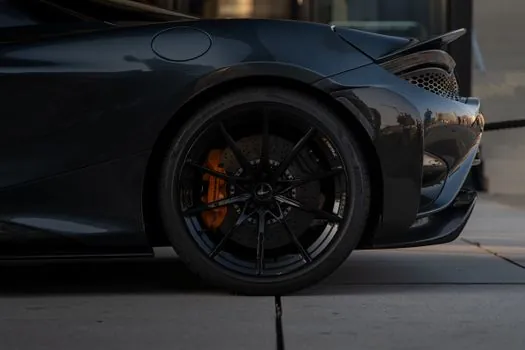
Three signals are worth flagging for any specifier working an automotive CFRP program. First, MRFR's 2025-2035 forecast pegs 6.58% CAGR with chassis components named as the fastest-growing application segment, a direct response to EV range-extension pressure and to the need to offset battery mass [S3]. Second, concrete fiber and other discontinuous reinforcement routes are pushing into semi-structural panels as a lower-cost compromise, an emerging option that does not displace primary CFRP but eats into fiberglass and SMC share [S3][S4]. Third, BASF and Toray both appear on the 2026 qualified-vendor list with sustainability initiatives, a signal that recycled-fiber and bio-resin routes are moving from R&D into commercial quotation [S3].
The most relevant peer process on a factory floor is the broader V-Process vacuum molding line selection workflow, which addresses the same throughput-vs-surface-finish trade-off that compression-molded CFRP programs face in 2026.