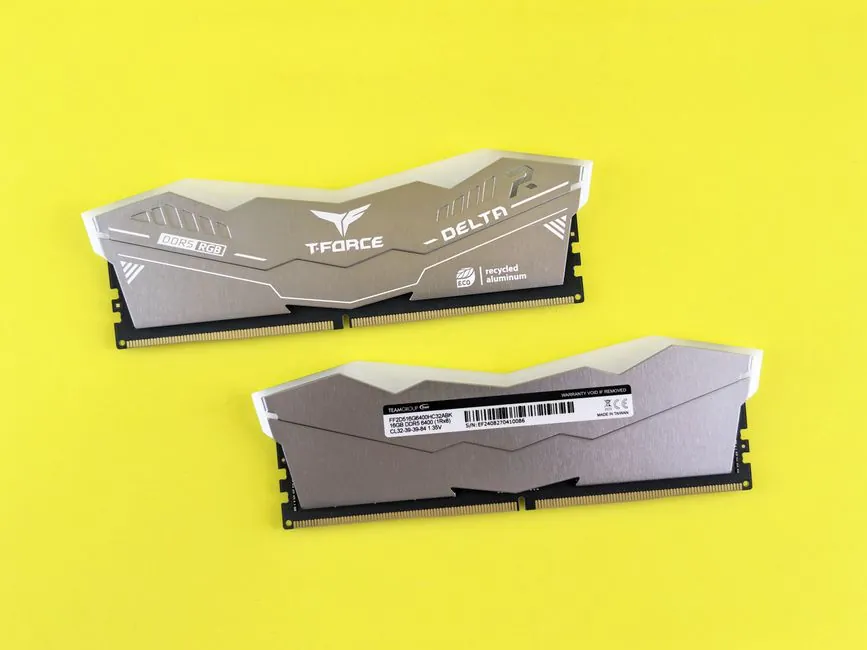
CXMT (Changxin Memory Technologies) is the only China-domiciled DRAM manufacturer at mass-production scale for DDR4 and DDR5, with a public DDR5-6000 commercial module already qualified on motherboard QVLs and validated to JEDEC spec by TechInsights, per a March 2026 sourcing report [S7].
For B2B buyers, the practical China DRAM stack is three layers: CXMT for DDR4/DDR5 wafers, Xi'an UniIC (Tsinghua Unigroup subsidiary) for Known Good Die and modules, and Guangdong/Hong Kong distribution channels (Mingjiada, Loongtion) for industrial-grade screening, long-lifecycle supply, and wide-temperature bins [S1][S2][S3].
DRAM Generation and Density Matrix for China Sourcing
CXMT's commercial product lines cover DDR4, DDR5, DDR5 modules, and LPDDR families, with the 16Gb A-die class as the mainstream DDR5 building block; commercial CXMT DDR5-6000 kits use dies validated against the JEDEC-compliant "1z" class manufacturing node [S4][S7]. SK hynix's 16Gb A-die reference chips are documented at 8000 MT/s, while the 24Gb M-die pairs higher density with comparable speed, setting the commercial benchmark CXMT is measured against [S3].
Xi'an UniIC's DRAM KGD portfolio spans SDR, DDR, DDR2, DDR3, DDR4, LPDDR, LPDDR2, LPDDR3, and LPDDR4, with concrete data-rate ceilings: 4266 Mbps LPDDR4X, 2133 Mbps LPDDR3, 1066 Mbps LPDDR2, 1600 Mbps DDR3, 1333 Mbps DDR2, 400 Mbps DDR, and 166 Mbps SDR [S2]. Industrial DRAM channels through Loongtion add DDR3, DDR4, DDR5, and LPDDR4X with wide-temperature screening, ball-map cross-reference (FBGA78 / FBGA96 / FBGA200), and 4-8 week lead time on industrial orders [S1].
Industrial Cluster Geography and Lead-Time Map
China's DRAM supply chain is geographically split: Hubei (Wuhan) hosts Wuhan XMC for 19 nm DDR4 and a pilot 17 nm node, Chongqing anchors the former Tsinghua Unigroup DDR4/LPDDR4 line, Yangtze River Delta (Jiangsu/Shanghai/Zhejiang) supplies process R&D and equipment, and Guangdong (Shenzhen, Dongguan) handles back-end packaging, testing, and module assembly [S5]. Lead times differ by role: Hubei 8-12 weeks, Chongqing 10-14 weeks for standard module orders [S5].
Industrial module assembly is concentrated in Guangdong, where Shenzhen-Hong Kong dual-warehouse distributors (Mingjiada) provide sample-to-million-unit fulfilment of Samsung, SK hynix, Micron, and CRN Memory, including DDR4/DDR5, LPDDR5X, HBM, and 3D NAND [S3]. This geographic split is the single biggest reason why a buyer who wants a "China DRAM" quote must first decide whether they need a wafer, a KGD, an industrial module, or a redistribution lot.
Selection Criteria: When CXMT Fits and When It Does Not
CXMT is reviewed as a cost-driven, second-source option when global brand DRAM is allocated, when China-side assembly is mandated, or when a DDR4/DDR5/LPDDR validation cycle can be funded, per SourceMemoryChips' sourcing framework [S4]. The right fit depends on memory type, density, speed, module form factor, system design, and buyer-side validation, not on automatic brand substitution [S4].
For a like-for-like replacement check, the comparison gate is: density (16Gb/24Gb class), speed grade (MT/s), package organisation (×8 vs ×16), voltage domain (1.1 V / 1.2 V for DDR4, 0.6 V-class for LPDDR5X), module form factor (UDIMM, SODIMM, RDIMM), PMIC and SPD contents, and platform QVL presence [S1][S4][S8]. A part-number cross-reference is required when displacing Micron, Samsung, SK hynix, CXMT, ISSI, or Winbond incumbents, and the datasheet is the final authority for timing and screening [S1]. Automotive-grade (AEC-Q100) Micron LPDDR4X parts such as MT53E1G32D2FW-046 cover -40 °C to 125 °C with explicit EMI and vibration ratings, setting the spec bar for in-vehicle, PLC, and outdoor-survival designs [S3].
Industrial and AEC-Q100 vs. Consumer DRAM
Industrial DRAM and embedded industrial memory are graded against consumer DRAM on three axes: temperature range, lifecycle, and supply continuity. Loongtion's industrial offering is positioned with a 5-year supply commitment, 12-month EOL notice, MOQ from 1 piece, BOM review on request, 5-year warranty, and 4-8 week lead time [S1]. Wide-temperature bins and solder-down paths (DDR3, DDR4, DDR5, LPDDR4X) target SoCs, PLCs, edge gateways, and long-lifecycle controllers [S1].
For automotive and harsh-environment designs, AEC-Q100 qualification is the non-negotiable spec, and Micron's LPDDR4X family (e.g. MT53E1G32D2FW-046) is a benchmark example with -40 °C to 125 °C operation, automotive-grade screening, and ADAS/IVI use cases [S3]. Buyers mixing commercial and industrial lines should treat the temperature grade, the ECC DRAM option (UniIC ships ECC across DDR/DDR2/DDR3/LPDDR4/LPDDR4X), and the supply-continuity clause as three independent gates [S1][S2].
KGD, Modules, and HBM: Choosing the Right Form Factor
DRAM KGD (Known Good Die) is the right route when the buyer is a chip-level customer that needs wafer-level memory for in-package integration, and UniIC (Tsinghua Unigroup) is the dominant domestic KGD supplier with mass-production coverage across SDR, DDR, DDR2, DDR3, DDR4, LPDDR, LPDDR2, LPDDR3, LPDDR4, plus SRAM, PSRAM, and RRAM R&D [S2]. UniIC's module family spans SO-DIMM, U-DIMM, R-DIMM, and NV-DIMM with 40+ mass-produced models globally [S2].
For AI and high-bandwidth workloads, the HBM3E and HBM4 supply chain is dominated by SK hynix (largest HBM3E monthly capacity), Samsung (HBM4), and Micron (HBM3E), all redistributed through Shenzhen/Hong Kong channels [S3]. Mingjiada's portfolio explicitly covers HBM3E, DDR5 16Gb/32Gb, LPDDR5X, and 3D NAND (including Samsung V10 high-stacked and SK hynix 321-layer QLC), making it a practical one-stop shop for AI server and consumer-SSD builds that mix global and China-side components [S3].
Sourcing Risks, Export Controls, and Validation Gate
China-DRAM procurement carries documented risks: geopolitical scrutiny, export controls, IP concerns, slower yield ramp on sub-1X nm nodes, and limited high-yield advanced-node capacity at the cluster level [S5]. CXMT itself is positioned as a "qualified second-source," not a blind substitute, and a case-by-case validation gate is required across density, speed, package, voltage, timing, module form factor, and system compatibility [S4].
The practical validation gate is four files: a JEDEC timing compliance report, a motherboard QVL entry or platform-level test, an organisation and ball-map cross-reference (×8 vs ×16, FBGA78/96/200), and a temperature-grade certificate for industrial or automotive builds. For buyers comparing a DRAM procurement 2026 spec map, the same four-gate logic applies; for buyers pulling memory into an AI server build that also needs advanced packaging, the advanced packaging procurement gate can be run in parallel. The CXMT LPDDR mobile line, in particular, must be checked against platform compatibility before design-in, because LPDDR generation, die capacity, speed, power profile, and package all change board-level power and routing [S4].
Trackable Signals for the Next Six Months
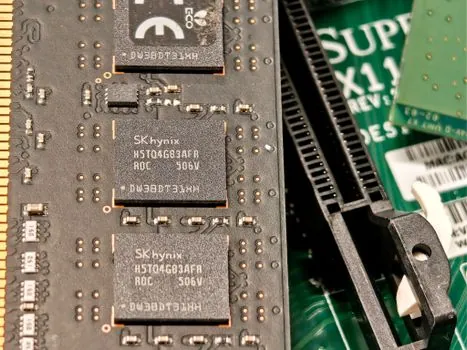
Two signals will move the China DRAM sourcing picture: CXMT's 17 nm pilot output in Wuhan XMC transitioning from pilot to volume, and the next CXMT DDR5 speed-bin release beyond DDR5-6000, which would set a new domestic ceiling against the SK hynix 16Gb A-die 8000 MT/s reference and the 24Gb M-die generation [S3][S5][S7]. Buyers should also watch UniIC's module roadmap for LPDDR4X/5 industrial SKUs and any AEC-Q100 entry from a domestic fab, which would be the first domestic alternative to Micron's automotive LPDDR4X line [S2][S3].
Spec-level background on the components involved: linear guide, crossed roller guide, and pressure transmitter.