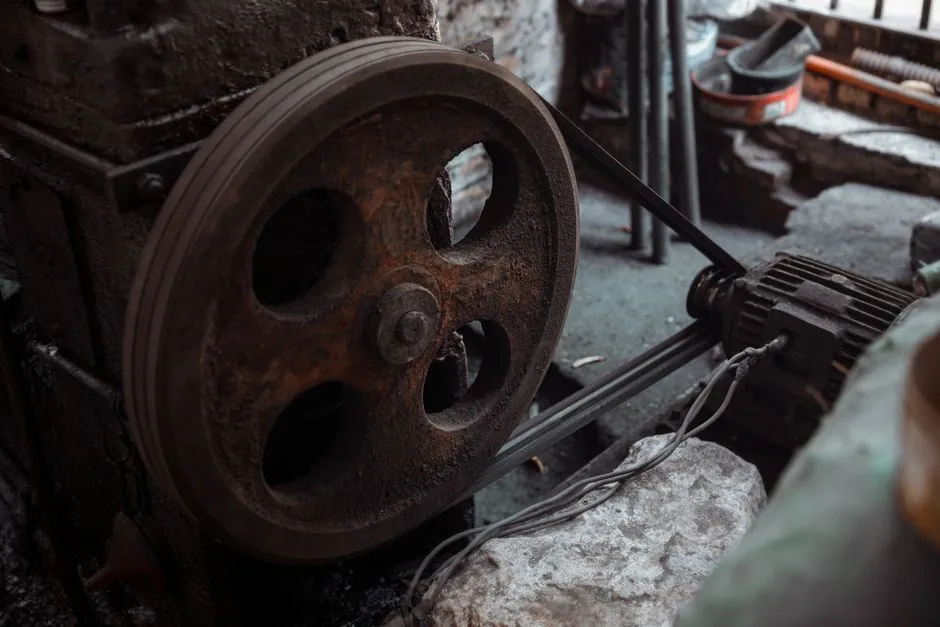
China's electric motor industry exceeds 800 billion yuan in annual output, and global OEMs including ABB, WEG, SEW, Siemens/Innomotics, NORD, VEM, and TECO operate large manufacturing facilities inside China [S1][S2]. Motors from these facilities are the same factory output as units sold through official overseas distribution, with the practical difference being pricing, lead time, and configuration flexibility [S1].
For buyers who verify, the supply chain is real and competitive. For buyers who skip verification, the failure modes are well documented: an estimated 10–30% of certifications from Chinese motor suppliers are fake or misleading, and less than 30% of small and medium-sized Chinese motor manufacturers can consistently produce high-efficiency IE3 or above units [S2]. This spec-first playbook covers what to lock down before the first PO is cut.
Scope and Definitions: What "Sourcing a Motor from China" Actually Buys
Most Chinese-sourced industrial motors fall into three categories: original-equipment units from global brands manufactured in Chinese plants, OEM/ODM builds from Chinese factories, and white-label units from smaller domestic workshops [S1][S2]. Sourcing through an authorized distributor of a global brand typically returns the original product, in original factory packaging, with manufacturer documentation and Certificate of Conformity [S1].
For electric two-wheeler applications, the relevant category is a Chinese electric motorbike factory, which combines motor, controller, and battery assembly under one roof, often across facilities of 45,000–50,000 m² with annual output above 100,000 units [S3]. Buyers specifying industrial IE3/IE4/IE5 three-phase motors for pumps, compressors, and conveyors are working with a different vendor pool, with different certifications, than buyers specifying hub motors for two-wheelers. The verification checklist is similar, but the certificates and load profiles are not.
Selection Criteria: What to Verify Before Cutting a PO
Reliable sourcing decisions rest on seven concrete factors: traceable certification numbers, at least 10 years of manufacturing experience, documented quality control with test protocols, a 30–45 day delivery track record, willingness to accept third-party factory inspections, responsive pre- and post-sale technical support, and confirmed OEM/ODM customization capability [S2].
The most common sample-to-bulk substitution is the "bait and switch": a perfect sample, then cheaper bearings (Chinese C&U instead of specified NSK or SKF), aluminum wire swapped for copper, lower-grade silicon steel laminations, insulation class dropped from F to B, and thinner housing walls in the bulk shipment [S2]. Buyers should request a batch test report against the actual production lot, not a generic factory catalog certificate, and require 100% copper windings where the spec calls for it, since copper content drives heat resistance and long-term reliability [S2][S4]. Region-specific compliance documentation matters: IEC for EU/Asia, UL/NEMA for North America, CE for Europe, and GB 18613-2020 for the China domestic market [S4].
Who This Channel Fits, and Who Should Buy Elsewhere
Chinese sourcing fits buyers who need cost-competitive pricing on standard IEC frame motors (e.g., ABB M3BP 200, WEG W22 132M), 3–6 week lead times on stocked configurations, and flexibility on MOQ that regional distributors will not match [S1][S4]. It also fits buyers running IE5 continuous-duty applications, where EU Ecodesign Phase 2 and US DOE standards have pushed efficiency to a baseline rather than an upgrade option [S4].
Buyers who should not rely on this channel include those needing ATEX/IECEx explosion-proof units without traceable certificates, those requiring 24/7 field service in markets where the Chinese vendor has no local service network, and small-volume buyers who cannot absorb the cost of a pre-shipment third-party inspection [S1][S2][S4]. For one-off exotic voltages, custom explosion-proof ratings, or motors integrated into safety-rated machinery (SIL/PL contexts), the documentation overhead of cross-border verification often erases the price advantage.
Comparing the Main Sourcing Options Against Four Decision Criteria
Three sourcing paths dominate the 2026 buyer landscape. Authorized Chinese distributor of global brand (e.g., ABB/WEG/Siemens-Innomotics): strongest on certification authenticity, moderate on price (typically 10–25% below Western-channel list), moderate on lead time (3–6 weeks for stocked, longer for custom), weak on low-MOQ flexibility [S1][S4]. Direct Chinese OEM with 10+ years' experience and verifiable references: strong on price and customization, moderate on documentation rigor, variable on lead time (30–45 day consistent performers are the safe bet), strong on MOQ flexibility [S2][S3]. Trading agent or Yiwu-style sourcing intermediary: weak on direct factory control, strong on language and export coordination, moderate on landed-cost transparency, strong on consolidating mixed-product containers [S5].
For buyers who need a single English-speaking point of contact for procurement, export documentation, and shipping, the agent model reduces friction but adds a margin layer; for buyers with internal sourcing staff who can run audits directly, going OEM or authorized distributor is more cost-efficient [S1][S5]. Lead times in 2026 cluster around 3–6 weeks for in-stock authorized-distributor orders and 30–45 days for OEM production runs with consistent shippers [S2][S4].
Failure Modes and the Documentation That Prevents Them

Sample-vs-bulk quality drift is the top failure mode, followed by fake or exaggerated certifications, delivery overruns, and post-sale communication collapse [S2]. The mitigation is procedural: require Certificate of Conformity with traceable certificate numbers, run a third-party pre-shipment inspection on at least the first container, verify nameplate data against the test report, and confirm that bearings, insulation class, and winding material match the sample specification in writing [S1][S2].
For motors bound for hazardous areas, do not accept a CE declaration without supporting test documentation, and for IE3/IE5 efficiency claims, require accredited TUV or equivalent lab reports rather than factory self-declared values [S2]. Buyers in regulated markets should also confirm the supplier's familiarity with REACH (EU), DOE (US), and GB 18613-2020 (China) to avoid import holds and rework at the destination port [S4].
Engineering Specification Points That Get Missed
Specifying a motor by name only is the most common error: a buyer saying "ABB 200 frame" without voltage, frequency, mounting configuration, IP rating, insulation class, and duty cycle leaves room for the factory to substitute a cheaper configuration that still fits the nameplate series [S1]. Locking the full data sheet, including ambient temperature, altitude, and inverter duty rating, prevents this.
Total Cost of Ownership now dominates the procurement decision in continuous-duty applications, with 10–15 year lifecycle models replacing upfront-price comparison [S4]. An IE5 motor that costs 20% more upfront but draws 5–8% less energy typically returns the premium inside 2–3 years in 24/7 operation, which shifts the real evaluation metric away from factory-gate price. Buyers pairing motors with electric actuators or linear guide driven systems should request matched efficiency and thermal data across the drivetrain, not just on the motor nameplate, since actuator and guide duty cycles often override the motor's standalone rating. For two-wheeler applications, similar matched-system thinking applies when comparing electric pallet truck drivetrains and lighting equipment and electric lamps subsystems, where the same Chinese vendor pool delivers but under different spec regimes.
For buyers running higher-volume, longer-lead procurement programs, a transformer procurement strategy audit on the upstream power side often reveals the same TCO logic, and a power semiconductor procurement review on the inverter side closes the loop on efficiency claims, because the IE5 advantage evaporates if the drive cannot switch the motor at the intended frequency without derating. Cross-linking these audits is what separates a spec-first buyer from a price-first buyer.
Trackable signals for the next 90 days: whether the supplier provides a written batch test report (not a catalog sheet) on the next PO, whether the third-party inspector flags any substitution on bearings or windings, and whether the shipment lands with original factory packaging intact and the Certificate of Conformity serial number matching the motor nameplate. Any "no" on those three is grounds to switch vendors before the second container.