A 2026 procurement reference for power semiconductors has to solve three problems at once: hit a compound electrical spec (ripple, ride-through, thermal envelope), survive a 10-year platform against parts that disappear in year three, and pass an ESG audit that regulators and customers both read [S1][S2][S3].
The economic stakes are concrete. Semiconductor OEM power failures during customer acceptance cost weeks of fab time, and a single voltage-sag trip during wafer processing can scrap an entire lot. Procurement is the gate that decides whether the tool ever sees those events [S3].
Compound Specification: Why a Single Datasheet Line Is Not a Procurement Spec
Catalog power supplies fail semiconductor OEM builds because no single parameter breaks the design, the combination does [S3]. A metrology or inspection rail may need sub-millivolt ripple, because detector noise couples directly into the measurement. SEMI F47 voltage-sag ride-through is required to ride through fab sags without tripping. Cleanroom installation typically forces fanless conduction or convection cooling, which rewrites the thermal budget. Platform life of ten years forces supply continuity, configuration control, and change notification for the program lifetime [S3].
Procurement rule: audit the compound requirement before architecture freeze. If two or more of those constraints apply simultaneously, scope the NRE for custom or semi-custom paths early, and write the RFQ around the compound requirement while change is still cheap. Catalog units satisfy each constraint in isolation, but the combination, at your power level, in your envelope, with your rail structure, is what almost never exists off the shelf [S3].
Three Procurement Paths: Catalog, Semi-Custom, Custom
Catalog is correct only when a standard unit genuinely meets every OEM requirement with margin, volumes do not justify NRE, and the OEM accepts the manufacturer's published lifecycle terms [S3]. The risk is silent obsolescence: a catalog part carries no program commitment, so the OEM holds the redesign risk when the part changes or disappears [S1][S3].
Semi-custom adapts a proven platform, with modified output rails, custom EMI filtering, mechanical repackaging, firmware and telemetry changes, and extended qualification including F47 verification in the OEM's configuration. NRE is a fraction of a ground-up design, and schedule is typically months rather than a year. The RFQ can reference the parent platform's existing safety approvals, and the OEM gains controlled configuration, program-level change notification, and a defined lifecycle [S3]. Custom is reserved for cases where the platform envelope, rail structure, or cooling architecture excludes both catalog and semi-custom options, and NRE cost amortizes across the platform volume [S3].
Lifecycle and Obsolescence: The 10-Year Power Problem
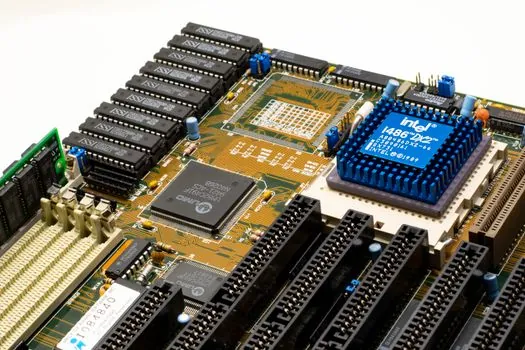
Component obsolescence is now the primary structural risk in power electronics procurement, not price [S1]. The practical response combines proactive lifecycle management, smarter inventory, and authorized sourcing partnerships to extend system longevity across the platform lifetime [S1].
For a semiconductor tool sold over a decade, the procurement contract has to specify four things: a defined production life, advance change notification, last-time-buy terms, and a form-fit-function replacement path. None of those arrive with a catalog unit; all four are negotiable on a semi-custom or custom engagement [S1][S3]. A power distribution architecture that treats the supply as a controlled subassembly, not a line item, is the structural fix.
ESG and Regulatory Gates: CSDDD, CSRD, SB 253
Sustainable procurement has shifted from a corporate responsibility line item to a regulatory gate. The Corporate Sustainability Due Diligence Directive (CSDDD), the Corporate Sustainability Reporting Directive (CSRD), and California's SB 253 reporting rule are tightening supply-chain transparency, and procurement teams that fail to embed ESG criteria into sourcing decisions now face both audit and capital risk [S2].
On the investor side, 64% of investors prioritize sustainability when evaluating long-term stability, and 46% of consumers report buying more sustainable products, both data points that flow back into supplier scoring [S2]. The procurement checklist: Scope 3 emissions disclosure, labor-rights audits, conflict-mineral tracking, and a measurable improvement loop with the supplier, not a one-time questionnaire [S2].
What This Filter Rules Out

This playbook is not for buyers sourcing commodity power cable assemblies, standard power meter instrumentation, or low-voltage building power distribution gear. Those categories do not face the compound-spec problem, do not require SEMI F47 compliance, and do not need 10-year change-control. For a fab-side OEM buying a power supply that drives a plasma rail or a detector, the gates above are mandatory; for a facilities buyer replacing an enclosure fan, they are noise [S3].
RFQ Structure and Trackable Signals
Write the RFQ around the compound requirement, not the price sheet. Required fields: ripple (mV) per rail, SEMI F47 ride-through profile, cooling method (fanless conduction or convection), envelope (mm), safety approvals list, expected production life in years, and PCN and last-time-buy terms [S3]. Score suppliers on electrical fit, lifecycle terms, ESG audit status, and NRE amortization, in that order, with price as a tiebreaker, not the headline [S1][S2][S3].
Track these signals over the next two quarters: CSDDD enforcement guidance from the European Commission, the first SB 253 reporting cycle results out of California, and the next round of distributor PCN bulletins for installed power platforms [S1][S2]. A related reference on adjacent commodity procurement, Copper Procurement Strategy: 2026 Spec-First Buyer Guide, walks the same spec-first logic for raw inputs, and Silicon Wafer Procurement 2026 extends the supplier-tier framework upstream of the power semiconductor stack.