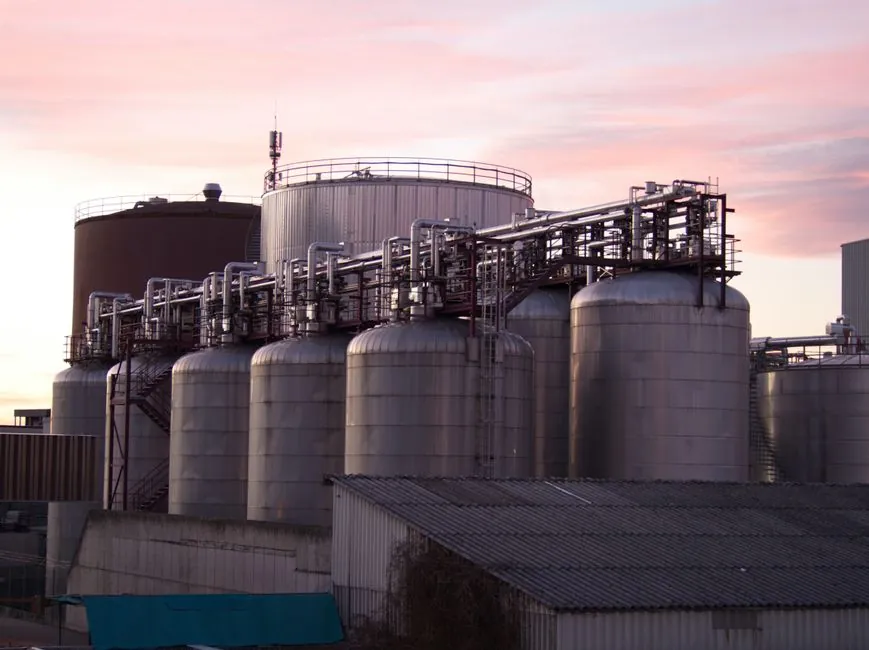
China is the world's largest stainless steel producer, and buying direct from Chinese mills and service centers is now the default path for any importer ordering more than a few tons of coil. National crude stainless output hit 28.63 million tons in the first nine months of 2024, up 3.45% year-over-year, while net exports rose 46% on the same base, per the Stainless Steel Branch of the China Iron and Steel Association [S3].
That scale matters because it sets the price floor: a 304 cold-rolled coil sourced through Foshan, Jiangsu, or Shanxi is rarely a single-supplier decision. The job in 2026 is not to find a mill, it is to match grade, gauge, surface finish, and certification to the application, then route the order through the right cluster, as outlined in this stainless steel sourcing map for global buyers [S6].
Match grade to service environment before negotiating price
Grade selection drives corrosion life, weld behavior, and price. Austenitic 304 (18Cr/8Ni) is the default for food contact, kitchen equipment, and architectural trim, and it is the most widely stocked coil in Foshan, where thin gauges down to 0.1 mm are routinely available [S3]. For chloride-bearing or marine exposure, 316/316L (2-3% Mo) is the engineering baseline; for magnetic, formable, lower-cost parts (appliance inner liners, sinks, cookware bodies), 430 ferritic is the workhorse, and Jieyang clusters around 400-series cookware and tableware production [S3].
For higher-temperature or pressure codework (boilers, chemical tanks, heat-exchanger shells), buyers usually need an alloy steel or duplex grade rather than standard 304, which is why mills in Jiangsu and Zhejiang stock plate, pipe, and forgings to ASTM, JIS, and DIN specifications for petrochemical and energy work [S3]. Confirming the required standard (ASTM A240 for plate/sheet, ASTM A276 for bar, EN 10088 for European delivery) on the mill certificate before contract signature prevents most grade disputes.
Pick the cluster that matches the coil, not the other way around
Regional specialization is the single biggest lever for lead time and unit cost. The six main sourcing clusters in China each own a different slice of the stainless steel coil value chain, and understanding that geography prevents buying the wrong product from the right region [S3]:
Foshan (Guangdong) is the South China distribution hub for 200/300 series cold-rolled coils and sheets, including ultra-thin gauges to 0.1 mm, with slitting, brushing, 8K mirror polishing, and PVD coating done in-house. Jieyang (Guangdong) is the consumer-goods cluster for 400-series cookware, tableware, and sinks, with full vertical integration from stamping to plating. Jiangsu and Zhejiang (Yangtze River Delta) cover industrial plate, welded and seamless pipe, dished heads, and flanges, with Wenzhou and Lishui strong in sanitary and pressure piping. Shanxi and the northeast, anchored by TISCO (Taiyuan Iron and Steel) and Baowu, host the largest integrated stainless capacity, with TISCO alone running 3 Mt/year of stainless output and 10 Mt/year total steel capacity [S4]. Shandong rounds out the map with stainless plate for shipbuilding and chemical tank fabrication.
For most importer RFQs in 2026, the routing question is: 304 cold-rolled coil to 2 mm? Foshan. 316L plate to 20 mm for pressure vessels? Jiangsu/Zhejiang or Shanxi mill direct. 430 cookware blanks? Jieyang. This logic mirrors broader fluoropolymer sourcing from China where regional cluster specialization sets the realistic price ceiling [S2][S3].
Vet suppliers on certification, mill source, and export history
The standard minimum evidence pack for any new supplier in 2026 is: ISO 9001 quality system certificate, mill test certificate (MTC) to EN 10204 3.1, a recent export shipment list (preferably to a country with strict customs like the US, EU, or Korea), and a third-party inspection report from SGS, BV, TUV, or Intertek on the lot being shipped [S1][S2].
Major mill-direct options include TISCO (Taiyuan Iron and Steel, founded 1934, 10 Mt total / 3 Mt stainless annual capacity), Baowu Steel Group (formed 2016 from Baosteel + Wuhan merger, 130,401 employees by end-2021), and Angang Lianzhong in Guangzhou (1 Mt/year stainless, hot- and cold-rolled coils) [S4]. For 304-specific orders where factory-direct pricing is the goal, suppliers like X-Metal in Foshan publish the full grade, surface finish, and customization matrix that an importer needs to write a clean PO, and they routinely ship to construction and food-processing customers [S5]. Always cross-check the supplier's stated capacity against China's customs export records before locking a contract; the China customs HS code 7219 for flat-rolled stainless is searchable and public.
Plan logistics, Incoterms, and payment against coil-specific risks
Coil shipments are not box shipments: a single 304 cold-rolled coil at 1.0 mm x 1219 mm can weigh 4-7 tons, and edge damage, rust, and gauge mismatch are the three most common claims on China-origin coils. The practical 2026 playbook starts with FOB or CIF Incoterms (FCA keeps the title-to-risk handoff earlier but gives less control over vessel selection), a 30% TT deposit with 70% against copy of B/L, and an irrevocable L/C at sight for first-time orders above USD 50,000 [S2][S6].
Container loading matters: coils ship eye-to-the-side or eye-to-the-skid on dedicated coil racks with wooden dunnage and VCI anti-rust film; for sea routes longer than 21 days, specify desiccant bags inside the coil sleeve to prevent condensation staining. Lead times in 2026 cluster around 25-35 days for stocked 304/430 gauges from Foshan, 35-50 days for mill-direct 316L plate from Shanxi, and 50-70 days for custom finish (PVD, etched, mirror) runs [S2][S6]. Add a third-party pre-shipment inspection (PSI) clause: 7-10 days before ETD, with sampling per AQL 2.5 for surface defects and a portable XRF gun check on every coil sampled for grade verification.
Compare the main sourcing options on four decision criteria
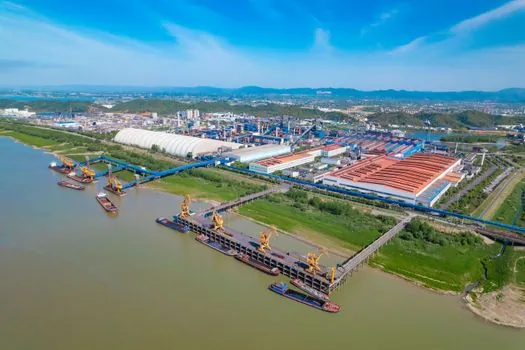
For an importer choosing among the main routes into Chinese stainless coil, four criteria dominate the decision: minimum order quantity, lead time, certification depth, and unit cost. The realistic comparison for a 1.0 mm 304 2B coil in mid-2026, based on the cluster data above [S3][S4][S5][S6]:
Service center direct (Foshan, Jiangsu): MOQ 5-20 tons, lead time 25-35 days with slitting, MTC to EN 10204 3.1 standard, unit cost near mill level. Mill direct (TISCO, Baowu, Angang Lianzhong): MOQ 20-50 tons per spec, lead time 35-60 days, full heat-lot MTC and PMI traceability, unit cost at mill list price minus volume rebate. For commodity 304/430 coils, the service-center path wins on speed; for 316L, duplex, or code-stamp work, the mill-direct path is the only realistic option because service centers rarely stock pressure-grade gauges.
Standards, documentation, and the red flags that block a shipment
Documentation gaps, not material failures, are the leading cause of 2026 coil shipment rejections at US/EU customs. The non-negotiable documents to demand before ETD are: commercial invoice, packing list, mill test certificate to EN 10204 3.1 (not 2.1, which is self-declared), certificate of origin (Form E for ASEAN, Form A for GSP, or a China-issued COO depending on destination), and an ISO 9001 certificate that has not expired [S2][S6].
7219 vs 7220) than what the product actually is. The 2022-2026 enforcement environment in the US (Section 232 stainless derivatives, AD/CVD on Vietnam-transshipped Chinese-origin 304) means the country of origin declaration on the COO is now a hard legal document, not a formality [S6].
Two trackable signals for the next sourcing cycle: monitor the monthly China customs export volume for HS 7219 to gauge spot supply, and request the mill's quarterly nickel-molybdenm cost surcharge adjustment, which usually moves 60-90 days behind LME nickel and is the single biggest driver of 304/316 coil price revisions through the rest of 2026 [S3][S6].