China sits at the centre of the global fluoropolymer trade, controlling fluorspar feedstock, PTFE compounding capacity, and an estimated 49.6% of Asia-Pacific resin volume in 2025 [S4]. Peflon, the export arm of Quzhou DFS Chem, ships from a Chinese production base operating since 1956 and offers 12+ fluoropolymer families, including PTFE molding powders, FEP resin, PFA dispersion, PCTFE, ETFE, and PEEK, to 60+ countries under ISO 9001/14001/45001 with REACH, RoHS, FDA, and UL documentation [S1].
For an importer, that footprint translates into a specific decision tree: choose a resin family against your service envelope, then qualify the Chinese mill on grade purity, regulatory paperwork, MOQ, and lead time before negotiating price [S2]. The market backdrop is a high-performance fluoropolymer (HPF) segment valued at USD 87.2 million in China in 2025 and projected to reach USD 104.7 million by 2030 at a 3.7% CAGR, slower than the 7.1% global average, which signals saturation in commodity grades but persistent pull from chemical processing, EV wire insulation, and semiconductor fabs [S3].
Resin Family Selection: PTFE, PFA, FEP, and Specialty Grades
PTFE leads the Chinese fluoropolymer mix with 65.1% of global product share in 2026, anchored by gaskets, seals, and wire insulation across heavy industry [S5]. For an importer, PTFE in its four commercial forms, molding powder, fine powder, micro powder, and aqueous dispersion, covers roughly 90% of the friction-, chemical-, and temperature-driven applications you will encounter; molding powders feed skived sheet and rod, fine powders feed paste-extruded tube and wire, micro powders feed ink and lubricant additives, and dispersions feed coating and impregnation [S1].
PFA and FEP are the melt-processable alternatives you specify when PTFE's sintering step is unacceptable: PFA for ultra-pure semiconductor liners, fluid-system tubing, and chemical equipment, and FEP for wire and cable jacketing, film, and chemical-resistant coatings [S1]. Where the operating envelope moves beyond 200°C or demands optical clarity, PFA outperforms FEP; where you need a flexible, lower-cost cable jacket that still passes UL plenum ratings, FEP remains the default.
Specialty grades (PCTFE, PEEK, THV) are small-volume but high-margin: PCTFE for cryogenic seals and aerospace valve linings, PEEK for backup rings and medical-grade machined parts, and THV for flexible, transparent barrier tubing [S1]. A practical sourcing rule of thumb, drawn from supplier guidance, is to shortlist two resin families per part before requesting samples: one commodity candidate (PTFE or FEP) and one upgrade candidate (PFA or PCTFE) [S2].
Quality Verification: PFOA-Free, Documentation, and Sample Testing
Chinese fluoropolymer supply has a documented contamination risk: some manufacturers re-pelletize PTFE scrap and ship it as virgin resin, which drops purity, temperature resistance, and chemical inertness while shortening service life in lined industrial valves and pumps [S2]. The mitigation is non-negotiable sample testing before any volume commitment; reputable Chinese mills such as HENGYI and Peflon will provide free samples sized to your test method within 3-7 days [S1][S2].
Regulatory paperwork is the second quality gate. Peflon publishes 100% PFOA/PFOS-free production with REACH, RoHS, FDA, and UL compliance on request, backed by ISO 9001/14001/45001 certification [S1]. For European buyers, REACH and RoHS are now baseline; for medical and food contact, insist on FDA-grade documentation; for wire and cable destined for the North American market, UL listing on the specific FEP or ETFE grade is a hard requirement [S1]. The growth in semiconductor and battery-grade orders is exactly what is driving the stricter purity audits, since ultra-pure PTFE and PFA piping systems are now specified across entire fluid handling networks rather than only the most aggressive service lines [S5].
Sample tests should mirror your end-use: density and melting point for resin grade verification, tensile and elongation for mechanical integrity, and a 24-hour chemical exposure coupon against your actual process fluid. If the mill cannot supply lot-traceable certificates of analysis (CoA) with each shipment, treat that as a disqualification, not a negotiation point [S2].
MOQ, Lead Time, and Total Landed Cost

Minimum order quantity (MOQ) is where many first-time Chinese fluoropolymer deals stall. Most PTFE sheet and rod manufacturers enforce MOQs that exceed what a small job shop can absorb, and the same constraint applies to custom PFA extrusions and PCTFE machined parts [S2]. For stock shapes (skived sheet, extruded rod, standard tubing) you can usually negotiate down to a single carton; for custom compounds, expect mill MOQs in the 500 kg to 1 tonne range, with production lead time of 3-6 weeks before shipping.
Shipping economics matter as much as FOB price. PTFE and PFA are low-density but high-volume; a 20 ft container of skived sheet will deliver roughly 8-12 tonnes depending on thickness, and ocean freight from Shanghai or Ningbo to Long Beach or Rotterdam typically adds 25-35 days on top of production [S2]. Air freight is viable for sample and emergency orders but pushes landed cost up by an order of magnitude, so most importers consolidate quarterly.
The price discipline that works: obtain at least three written quotes from audited Chinese mills, normalize them to the same grade, quantity, Incoterm, and payment terms, then negotiate on payment terms (T/T 30/70 versus L/C at sight) before pushing on unit price [S2]. A 5% price concession on PTFE molding powder is rarely worth a 30% deposit upfront with no CoA; the working capital cost and quality risk dominate the unit-price delta.
Application Cross-Check: Wire and Cable, Semiconductor, and Chemical Service
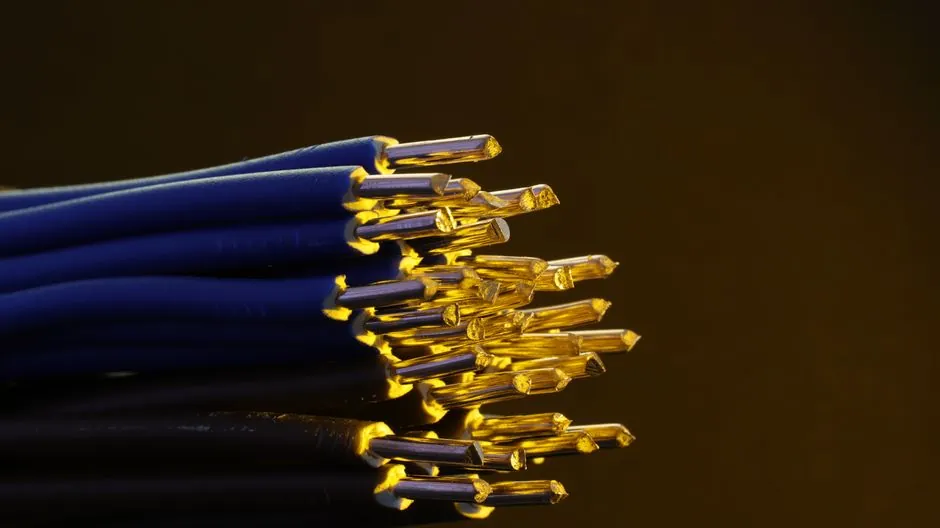
Three end-use corridors are pulling Chinese fluoropolymer supply hardest in 2026. Wire and cable insulation, driven by EV high-voltage harnesses and plenum-rated data cable, is the largest single application segment and is forecast to grow at 12.7% CAGR through 2035 as EV volumes scale [S4]. Specifying FEP or ETFE here means checking dielectric strength, flammability rating (UL 94 V-0 is standard), and temperature class against your harness design.
Semiconductor fabrication is the second growth corridor, with over USD 120 billion in committed public-private investment through 2030 translating directly into resin-order backlogs for ultra-pure PTFE and PFA [S4]. The qualification cycle is long, typically 12-18 months, and requires the mill to demonstrate extractables testing, particle counts, and traceability that commodity PTFE suppliers cannot meet; plan to engage a pressure transmitter or flow meter on your ultrapure loop before you finalize the resin CoA, since the resin and the instrument spec are reviewed together during fab qualification.
Chemical service is the third corridor and remains the technical baseline: PTFE, PFA, and PCTFE gaskets, pump components, and valve linings for aggressive media, plus PTFE and PFA liners for chemical transfer and acid service [S1]. For gaskets and seals, pair the resin selection with a pressure sensor that matches the same chemical compatibility list; specifying a PTFE liner with a stainless pressure sensor wetted in hydrochloric acid is a common mis-step that fails within months.
Standards and Compliance Discipline

Two regulatory currents are reshaping Chinese fluoropolymer sourcing in 2026. The first is the PFAS/PFOA phase-out: the EU is tightening REACH enforcement on per- and polyfluoroalkyl substances, and US states are following with their own disclosure rules, which means a 100% PFOA/PFOS-free production statement is now a baseline procurement requirement, not a premium feature [S1]. Confirm the declaration covers the specific grade you are buying, not just the brand umbrella.
The second current is low-VOC and environmental coating regulation, anchored in the EU by Directive 2004/42/EC, which is accelerating the substitution of architectural coatings and industrial linings toward fluoropolymer systems [S4]. For an importer, this translates into growing European demand for water-based PTFE and PFA dispersions, which the Chinese supply chain is still scaling. Ask your mill for a written plan on water-based dispersion capacity if your target market is the EU.
Industry standards to anchor your spec sheet: ASTM D4894 and D4895 for PTFE molding and fine powder, ASTM D3307 for FEP, ASTM D3308 for PFA, and UL 94 V-0 for flammability on wire and cable grades. For semiconductor and pharmaceutical service, add extractables testing per IEST recommended practices and endotoxin testing on medical grades.
Common Failure Modes and Vetting Checklist
The most common failure modes when sourcing fluoropolymers from China are: resin grade substitution (recycled scrap sold as virgin), documentation gaps on REACH/RoHS/FDA/UL, MOQ surprises on custom compounds, and shipping damage on skived sheet rolls that are crated without edge protection [S2]. A 5-point vetting checklist covers most of these: (1) audit the production base and ask for the founding year, Peflon traces to 1956 with a 2008 trading entity [S1]; (2) request lot-traceable CoAs on the first three shipments; (3) commission an independent lab test on the free sample; (4) confirm PFOA/PFOS-free declaration in writing on letterhead; (5) negotiate a small initial order (one pallet) before scaling to container volume.
If the mill refuses free samples, balks at CoAs, or pushes you to T/T 100% upfront, walk away. The Chinese fluoropolymer base is deep enough that quality supply is available without accepting those terms [S1][S2]. For buyers also specifying silicone rubber or ABS in the same supply chain, a parallel silicone rubber sourcing map and an ABS procurement strategy follow the same vetting logic, so the audit effort you build here is reusable across adjacent polymer programs.
Trackable signals to watch over the next two quarters: PFOA/PFOS-free declarations tightening from "100% free" to "below detection limit" with quantified LOD; water-based PTFE and PFA dispersion capacity announcements from major Chinese mills; and any revision to REACH Annex XVII that broadens PFAS restriction beyond the current scope. Any of these will reshape the qualification matrix on your next audit cycle.