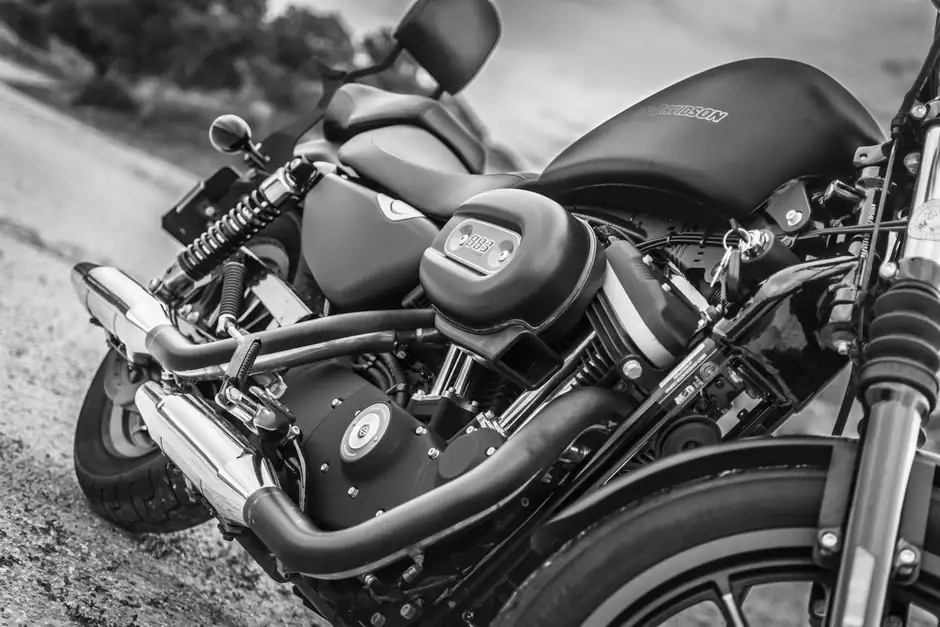
Exhaust manifold coating selection must combine a 900°C-plus internal service limit with 500–700°C external metal temperatures and hundreds to thousands of heating and cooling cycles [S2].
Silicone-ceramic or inorganic silicate systems can limit oxidation and heat transfer, but a qualified system needs surface preparation, controlled thickness, cure validation, adhesion testing, and cycle-to-failure data [S2][S3].
Thermal Cycling Drives the Coating Decision
Exhaust manifolds repeatedly expand and contract as they move from cold start to high-load operation, creating differential strain between connected sections, unequal wall thicknesses, and manifold-to-fastener interfaces [S2].
Internal exhaust-port surface temperatures can exceed 900°C under high-load conditions, while external cast iron and steel surfaces can reach 500–700°C during sustained operation [S2]. Uncoated manifolds oxidize rapidly at exhaust-service temperatures, producing scale that contaminates the exhaust system and progressive wall-section loss that leads to cracking [S2].
Thermal-cycle qualification must continue beyond the first visible cracking or delamination point.
Choose Internal or External Protection by Function
Internal thermal barrier coating addresses gas-side heat and oxidation at the exhaust port, where surface temperatures may exceed 900°C [S1][S2].
External coating is a separate engineering function. It can reduce radiant heat toward surrounding components, protect oxidation-prone surfaces, and limit thermal-fatigue exposure on external manifold structures, while surface temperatures remain in the 500–700°C range [S2][S3].
For internal and external surfaces, compare the options by temperature exposure, thermal-cycle count, adhesion after cycling, oxidation resistance, and repairability. A coating intended for visible headers is not automatically suitable for a 900°C internal port, and an internal TBC is not automatically justified where the design requirement is external radiant-heat reduction [S1][S2][S3].
Compare Coating Families by Decision Criteria
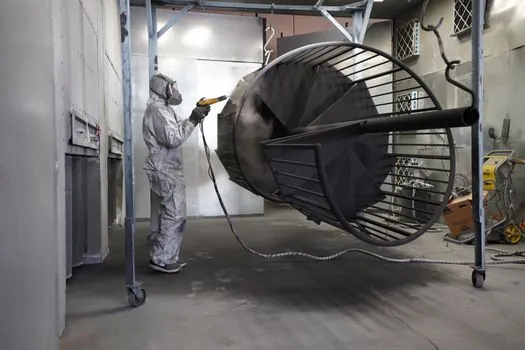
Silicone-ceramic and inorganic silicate coating families are used for high-temperature manifold protection because they form dense, adherent barriers that restrict oxygen access to the substrate [S2]. Thermal barrier systems may also use a bond coat to improve substrate adhesion and a ceramic insulation layer to reduce heat transfer [S5].
Prepare the Substrate Before Coating
Coating performance begins with metal preparation rather than chemistry selection. For a rusty header, bare-metal preparation is followed by a zinc-rich primer and a high-temperature topcoat cured at 350°F [S7]. This sequence addresses corrosion, surface preparation, and final thermal protection as separate functions.
Generic exhaust-coating processing calls for thorough degreasing, abrasive surface profiling, controlled coating thickness, and monitored curing [S3]. Uniform coverage matters because local thin areas can become initiation sites for oxidation or cracking, while excessive thickness can create stresses that the substrate does not tolerate during cycling.
Coating design should follow the same staged logic used for multi-coat systems. The functions of primer, intermediate coat, and topcoat are described in Primer, Intermediate Coat and Topcoat Functions, which is relevant when a zinc-rich primer, barrier intermediate layer, and ceramic finish are combined for a repaired or replacement manifold.
Qualify with Defined Test Criteria
Performance is typically evaluated against ASTM D2485, the Standard Test Methods for Evaluating Coatings for High Temperature Service [S2]. Coating performance is typically qualified against ASTM D2485 (Standard Test Methods for Evaluating Coatings for High Temperature Service) [S2].
A procurement specification should define the substrate, preparation method, coating chemistry, dry-film thickness, cure schedule, service-temperature range, number of thermal cycles, adhesion criterion, oxidation target, and repair procedure [S2][S3]. “Ceramic coating” is not a sufficient material description because an external finish, an internal TBC, and a layered primer-topcoat system serve different engineering functions [S1][S2][S7].
The test program should also distinguish visible cracking from hidden oxidation or section loss. Thermal cycling can generate stress near flanges, bends, and branch connections, while scale formation removes metal from the manifold wall over repeated cycles [S2].
Match the System to the Failure Mechanism
Thermal barrier coatings are appropriate for exhaust manifolds where reducing metal temperature is the primary requirement, including high-performance and heavy-duty V16 applications [S1][S5]. They are not a universal remedy for every exhaust-system defect, because a coating cannot correct a casting defect, weld discontinuity, blocked passage, or structural overload.
Advanced multilayer approaches can improve adhesion through bond coats, while rare-earth zirconates and pyrochlores have been investigated for higher-temperature stability and resistance to sintering and phase changes [S5]. Those material directions do not replace application qualification, because thermal conductivity must be balanced against strain tolerance and the coating-substrate expansion mismatch [S5].
Exhaust coating is also a maintenance control. Loose scale can contaminate downstream sensors and catalysts, and progressive section loss can initiate cracking [S2]. For fleet, marine, or industrial engines exposed to moisture, salt, and chemical by-products, the specification should include oxidation control and adhesion after cycling, not heat retention alone [S3].
Verify the Coating Under Real Service Cycles
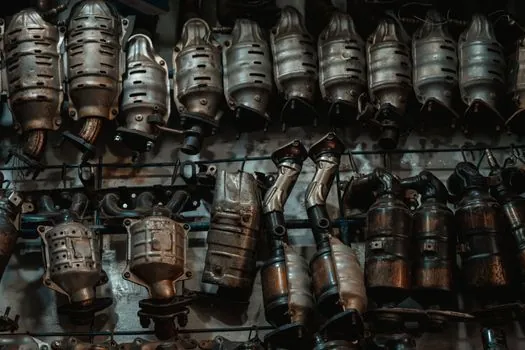
Before approving a manifold coating, record the substrate condition, abrasive preparation, coating batch, thickness, cure temperature, service-temperature exposure, and cycle count. Then document adhesion, visible cracking, delamination, oxidation, and any change in wall section [S2].
The decision is straightforward: use an external silicone-ceramic or silicate system for radiant-heat and oxidation protection on 500–700°C external surfaces, and qualify a bond-coated ceramic TBC when an internal surface above 900°C requires reduced metal temperature [S1][S2].
Track two procurement signals before release: a coating-specific thermal-cycle result tied to the actual temperature range, and completed records for preparation, thickness, cure, adhesion, and oxidation performance [S2][S3]. These records determine whether a manifold coating is a qualified service system or only a product designation.