Thermal-sprayed aluminum has been used to protect offshore platforms from atmospheric and salt-water corrosion [S2].
Organic paint remains practical for atmospheric exposure, complex geometry, and economical field repair, but its barrier depends on intact films and compatible surface preparation [S2][S6].
Thermal-sprayed aluminum forms a rough, porous metallic layer over abrasive-blasted steel, followed by a sealer that fills the pores without creating a measurable surface film [S4]. The aluminum layer provides both a physical barrier and sacrificial protection: when moisture reaches exposed steel through localized damage, aluminum can corrode preferentially and reduce attack at the steel interface [S4][S5].
Paint instead depends on a continuous organic barrier between the steel and the marine environment. Its performance depends on coating thickness, surface preparation, application conditions, cure, adhesion, and the ability to repair damaged areas [S8]. Published guidance states that “the initial painting cost is relatively low compared to thermal spray coating,” while a painted surface may require attention before five years in some applications [S6].
For offshore structures, these mechanisms make TSA more tolerant of local mechanical damage, but they do not eliminate maintenance. TSA can combine with a paint system for additional corrosion protection, while carbide and ceramic thermal sprays serve separate wear-resistant duties on valve faces, drill bits, and other components [S2]. The substrate and exposure must be selected before comparing carbon steel, stainless steel, or aluminum alloy structures.
Select by Exposure Zone and Damage Risk
TSA is the stronger candidate for submerged and splash-zone steel because seawater exposure can create both continuous corrosion and impact or abrasion damage. TSA also appears in atmospheric applications, but the marginal benefit must be weighed against application cost and repair logistics [S1][S5].
Paint has practical advantages for atmospheric corrosion protection and repair, while TSA has also been used to protect offshore platforms from atmospheric and salt-water corrosion [S2][S6]. It is also easier to apply to complex steel geometry than a high-temperature metallic spray process. The distinction is not “paint versus TSA” in the abstract, but atmospheric corrosion control versus damage-tolerant metallic protection with inspection and sealer requirements [S2][S4].
Use a criteria-based split: specify TSA where continuous wetting, impact, abrasion, difficult access, or consequential local coating damage dominates; specify paint where dry exposure, simple access, low initial cost, and straightforward field repair dominate. For mixed offshore structures, a system specification may use TSA at the splash zone and paint in less severe atmospheric areas, subject to the project corrosion design.
Cost, Service Life, and Maintenance Drive the Comparison
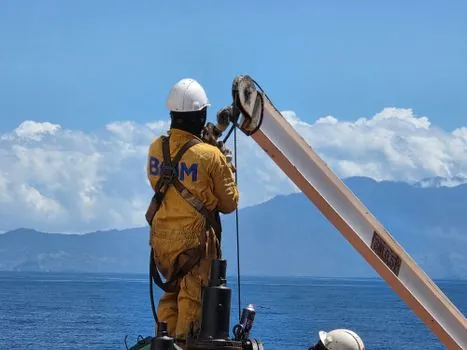
Initial painting cost is lower than thermal-spray application [S6]. Thermal spraying requires abrasive preparation, molten-particle deposition, sealer application, cure or handling controls, and inspection of a porous metallic layer. Paint also needs blasting, careful application, curing, and holiday inspection, but its damaged area can often be repaired with conventional coating materials.
TSA has a substantial maintenance advantage where its sacrificial mechanism can protect nearby steel after localized coating damage. Research on arc-sprayed 1050 aluminum found that TSA can retain protective behavior when steel is partially exposed because aluminum acts as a distributed anode in seawater [S5]. That does not justify a fixed service-life number: exposure, coating porosity, sealer quality, cathodic-protection interaction, substrate condition, and damage extent all affect performance.
Paint generally wins on first cost, application flexibility, and local repair. TSA generally wins where damage tolerance and long-term corrosion protection justify a higher initial burden. The industrial coating decision should therefore compare installed cost over the planned inspection cycle, not coating material price per square metre alone.
TSA Requires Sealing, Inspection, and Qualified Application
Thermal-sprayed aluminum is often combined with a paint coating system to provide corrosion protection [S2].
Inspection must address the entire system, not only aluminum thickness. Key checks include substrate cleanliness and abrasive preparation, coating thickness, porosity or sealer condition, adhesion, surface preparation before sealing, and visible defects. Painting a thermally sprayed surface requires its own preparation and compatibility process; the paint system must be selected for the sprayed substrate rather than copied from a conventional steel schedule [S8].
Marine test evidence also matters. Studies of arc-sprayed 1050 aluminum under full artificial-seawater immersion and artificial-seawater droplets identified sulfur-containing products such as felsobanyaite and carbonate products such as dawsonite, and found that seawater was more representative than simple NaCl solution for this behavior [S5]. Cathodic and anodic regions on thermally sprayed coatings were also not easily distinguished, unlike on aluminum sheet [S5].
Paint Remains Appropriate for Many Offshore Applications
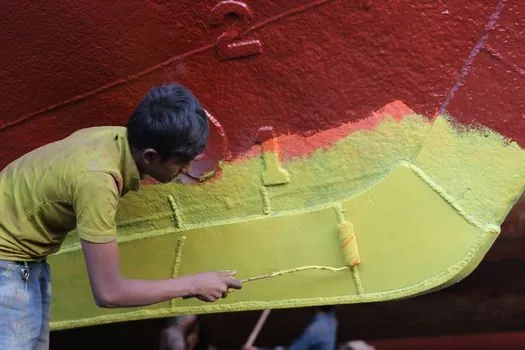
Paint is suitable for atmospheric offshore steel when the project can control surface preparation, coating sequence, curing, dry-film thickness, adhesion, and defect repair. Primer, intermediate, and topcoat duties must be defined separately rather than treating paint as a single uniform film. A structural steel specification can remain economical when access permits recurring inspection and spot repair [S6].
Paint is not a strong choice for critical submerged or splash-zone steel where impact damage, abrasion, inaccessible repair points, or local steel exposure dominate the risk. Its performance also depends on temperature during application, substrate dryness, coating chemistry, surface profile, and compatibility with the cathodic-protection system. These constraints make paint less forgiving than TSA in severe marine exposure [S2][S5].
TSA is not the answer for every offshore component either. Its corrosion function does not replace hard wear coatings where valve sealing surfaces need abrasion resistance, and thermal-sprayed ceramics or carbides address a different requirement [S2]. Likewise, coating selection must consider the underlying alloy steel grade, fabrication condition, geometry, and service temperature rather than relying on a generic TSA label.
Specification and Acceptance Criteria
Specify the system by service zone, substrate grade, surface preparation, aluminum material, nominal thickness, sealer type and application sequence, surface profile, cure state, adhesion method, coating thickness, and repair procedure. A typical offshore TSA target of approximately 200 μm is a useful reference, not a universal substitute for the project specification [S4].
For painted steel, identify each coat by function, dry-film thickness, number of coats, surface preparation, approved temperature range, overcoating interval, curing requirement, and repair procedure. The primer, intermediate coat, and topcoat system must be compatible with the steel and expected marine exposure; coating sequence and cure are part of the corrosion barrier, not installation details [S8].
Require inspection and acceptance records for both options, and define repairability before procurement. TSA repairs must restore metallic protection and sealing, while paint repairs must restore the film and adhesion. Track recurring coating defects, sealer loss, steel exposure, and touch-up frequency after installation; these field signals provide a defensible basis for revising the maintenance interval or protection philosophy.