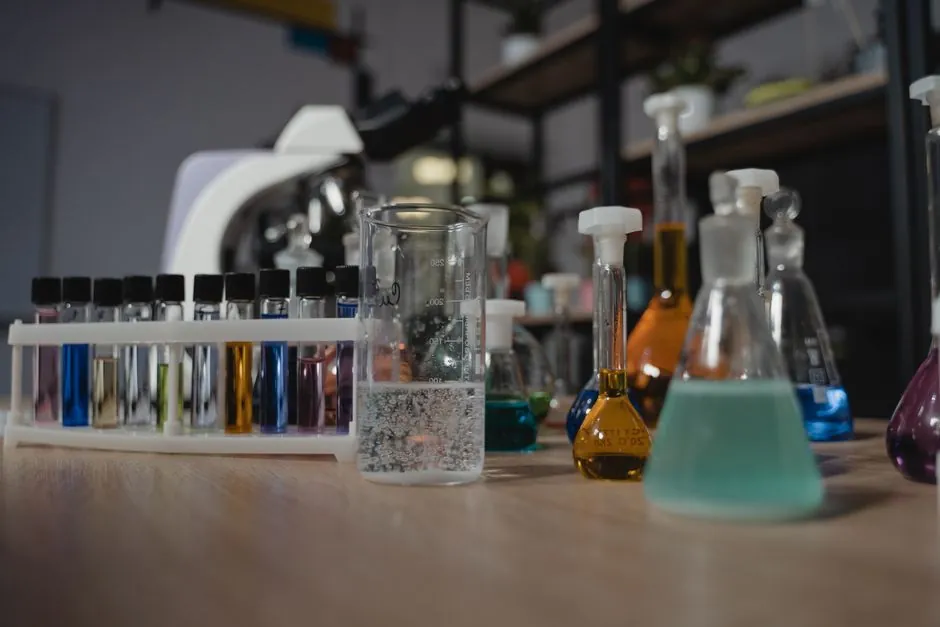
For a chemical-plant emergency light, the binding spec set is ATEX/IECEx zone rating, Ex mark group, T-class, IP rating, wattage tier, and LiFePO4 backup duration. Field guidance published 2026-01-16 ties 10-18W to 1-5 lux escape paths, 30-40W to 10-20 lux walkways, and 60-100W to 20-50 lux high-bay or outdoor tank-farm areas, with chemical production autonomy fixed at 2 hours and refinery autonomy at 2-3 hours [S3].
Compliance bodies (ATEX 2014/34/EU, IECEx, GB3836 series) require the luminaire's Ex mark to cover both the gas group present (IIA/IIB/IIC) and the surface temperature class (T1-T6). Die-cast aluminum housings with tempered-glass lenses and IP54 sealing (or IP66 for washdown zones) are the dominant 2026 build, with LED sources rated for 50,000 hours and 85+ CRI [S1][S5].
Zone classification and Ex mark: which gas group, which T-class
Zone 1 and Zone 2 cover locations where flammable gas or vapor is likely or occasionally present during normal operation, while Zone 21 and Zone 22 cover combustible dust. A typical chemical-plant emergency luminaire carries an Ex mark such as Exde IIB T6, where "Exde" indicates flameproof enclosure plus increased safety, IIB defines the gas group, and T6 caps the maximum surface temperature at 85 °C [S1].
Selection of gas group is not optional: hydrogen, acetylene, and carbon disulfide demand IIC-rated enclosures, while ethylene and most petroleum vapors sit in IIB. T-class must stay below the auto-ignition temperature of the worst-case vapor; T6 (85 °C) suits most light-hydrocarbon service but is not universal. The BCJ-series flameproof emergency light is rated for Zone 1, Zone 2, Zone 21, and Zone 22 with OEM-configurable Ex markings [S2].
Wattage tiers matched to lux and mounting height
Published 2026-01-16 selection tables map floor area and mounting height to wattage as follows: under 100 sq ft at 2.5-3 m takes 10-18W, 100-250 sq ft at 3-4 m takes 18-30W, 250-600 sq ft at 4-5 m takes 30-40W, and 600-1200 sq ft at 5-7 m takes 60-80W [S3]. High-bay process halls and outdoor tank farms push to 80-100W at 7-10 m mounting height, where minimum illumination rises to 15-30 lux.
Lux floors follow the same source: 1-5 lux for escape paths, 5-10 lux for staircases and exits, 10-20 lux for general plant walkways, 20-50 lux for high-bay process areas. Under-sizing is the most common audit failure: a 2024 shutdown incident in a Maharashtra solvent plant left a 110 m corridor dark when 10W fittings failed, and the plant cut evacuation time from 6 minutes to 120 seconds after upgrading to 60W LiFePO4 flameproof units [S3]. The 6W-class dual-head lamp (2x3W, Exde IIB T6, 85-265V input) is intended for small MCC rooms and labs, not main escape routes [S1].
Battery chemistry, autonomy, and self-contained vs central systems
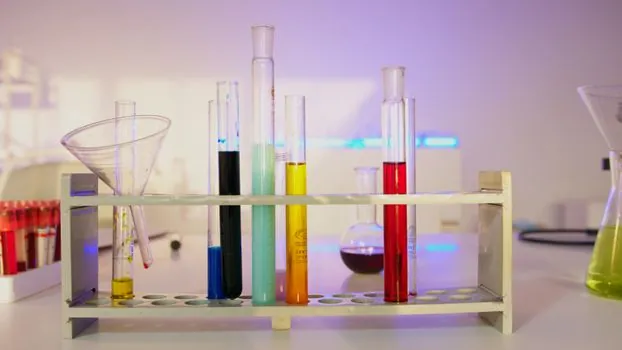
LiFePO4 batteries have displaced Ni-Cd in 2025-2026 hazardous-area emergency builds on the basis of higher cycle life, flatter discharge curve, and better high-temperature resilience. A 2026-01-16 engineering guide explicitly recommends LiFePO4 across small labs (90-120 min backup), production corridors (2 hours), process halls (2-3 hours), and outdoor tank farms (3-4 hours) [S3].
Autonomy tiers map to plant type: pharmaceutical 90-120 minutes, chemical production 2 hours, petroleum and refinery 2-3 hours, offshore and gas processing 3-4 hours, confined space 4 hours [S3]. Typical contract offerings land in this band: the BCJ-series delivers 180 minutes of continuous emergency runtime with Ra≥70 LED output [S2], while a separate ATEX 220VAC die-cast aluminum unit quotes 120+ minutes at 3W for Zone 1 and Zone 2 [S5]. Self-contained flameproof fittings simplify installation and isolate failures; central-battery systems cut per-unit cost but introduce a single point of failure and more complex Ex-rated wiring [S3].
Housing, ingress, and photometric durability
Die-cast aluminum is the default 2026 housing material for hazardous-area emergency luminaires, paired with tempered-glass lenses for impact resistance and high-pressure electrostatic surface coating for corrosion control. The Sinozoc BAT95-21 ships with WF2 protection grade, IP54 sealing, ambient range -20 °C to +50 °C, 6V emergency power voltage, 24-hour charging time, and 0.3-second switchover to emergency mode with 90-minute runtime [S1].
Higher-risk washdown and marine zones step up to IP66 with IIC gas-group rating and 180-minute autonomy, as published for the BCJ-series OEM configuration [S2]. CRI Ra≥70 is the minimum for emergency signage visibility, with Ra≥85 available on premium builds for accurate hazard-color recognition. LED source life is typically quoted at 50,000 hours, cutting relamp frequency in continuous-burn chemical service [S1][S5].
Placement, exit signage, and integration with evacuation design
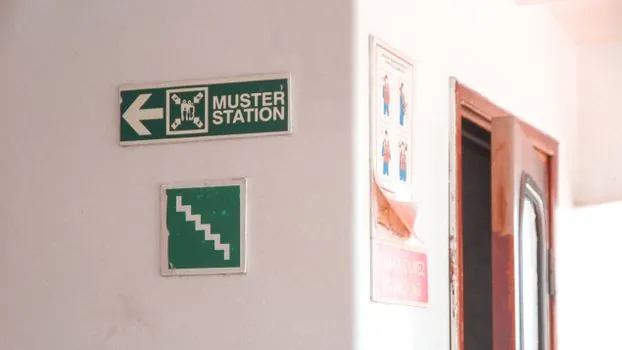
Engineering guidance sets a maximum spacing of 8-10 m between emergency luminaires along escape paths, mandatory mounting above exits, stairs, and pathway turns, downward tilt to avoid glare, and flameproof exit signs at every change of direction [S3]. The 3W customizable anti-explosion emergency exit sign covers this function for chemical plants and mining operations, with ATEX, CNEX, CERoHS, and ISO9001 certifications and a typical supply capacity of 5,000 pieces per month [S7].
Risk assessment drives the photometric, electrical, and mechanical design layers together: hazard inventory, evacuation scenarios, and escape-route geometry must be resolved before wattage and battery sizing [S8]. Similar spec discipline applies to upstream oil and gas facilities, as detailed in a 2026 oil-and-gas emergency-light selection guide that maps zone ratings, battery tiers, and luminaire classes. For a broader construction-site cross-check, see the construction-site emergency-light spec gates and photometric floors reference, which complements the chemical-plant Ex-mark logic with ambient-temperature and IP-floor requirements. Industrial buyers comparing lamp-based status devices can contrast a hazardous-area luminaire against the signal tower light sizing and selection guide for non-emergency machine-status duty.
Limitations, common audit failures, and the economy-grade trap
Cheap "explosion-proof" emergency lights sold without a verifiable ATEX, IECEx, or GB3836 certificate are the single largest safety gap; a 2026-06-11 review stresses that corrosion-resistant materials, sealed housings, and durable components are required for reliable operation in harsh chemical atmospheres, not optional [S9]. Economy units often quote IP54 but ship with thin-sheet steel that fails the WF2 corrosion test, or use Ni-Cd packs with reduced high-temperature life. The same review flags the energy-efficiency upside of LED over legacy fluorescent: lower thermal load, longer service intervals, fewer maintenance openings inside classified areas [S9].
Selection screens for a chemical-plant specifier should therefore require: (a) Ex mark with the correct gas group and T-class for the worst-case vapor, (b) IP rating matched to washdown or outdoor exposure, (c) LiFePO4 battery with the autonomy tier required for the plant type, (d) die-cast aluminum housing with documented WF2 corrosion rating, and (e) photometric evidence (lux level at the working plane, not just lamp wattage) [S3][S8]. The wider emergency light classification covers battery-backed, self-contained, and central-supply architectures; the emergency stop category covers shutdown circuits and is distinct from evacuation lighting; the emergency rescue category covers escape-path planning and PPE, not luminaire selection. A chemical plant that fixes these five gates plus zone-correct Ex marking will pass both PESO and ATEX audits on the first inspection cycle.
Trackable signals for the next procurement cycle: (1) any move by IECEx toward tighter LiFePO4 thermal-runaway containment in Zone 1 luminaires, and (2) OEM lead-time compression on 60-100W IIC-rated units, which currently sit at 5-9 working days for ATEX 3W exit signs [S7] but stretch to several weeks for the higher-wattage IIC builds.