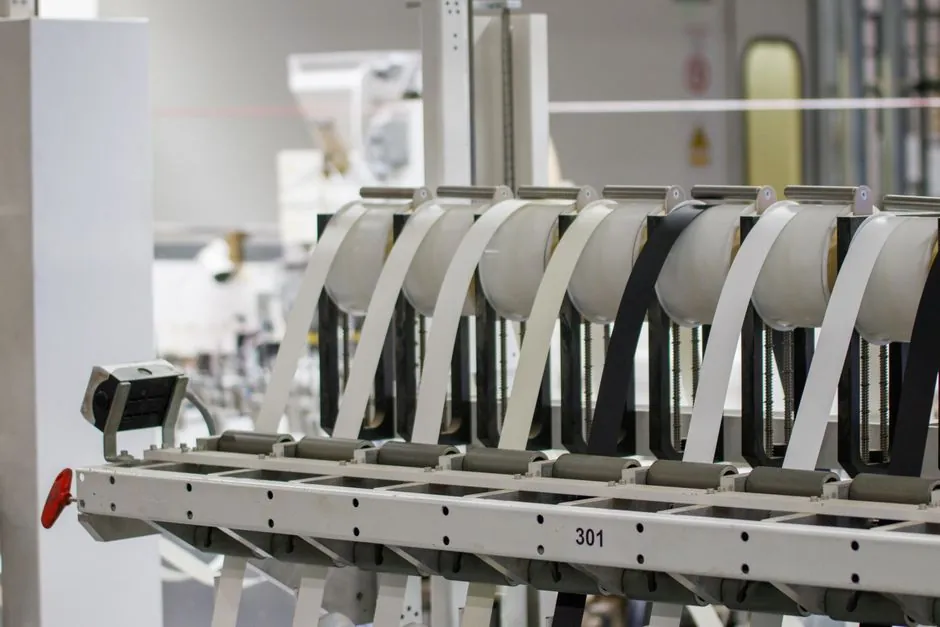
Industrial floor specifiers should anchor selection on three measurable criteria: PEI wear grade 4 or 5, Dynamic Coefficient of Friction (DCOF) at or above 0.42 wet per ANSI A326.3, and water absorption under 0.5% per ASTM C373, the impervious porcelain threshold [S2].
These three values map directly onto the dominant failure modes in production halls: surface crushing under forklift and pallet-jack traffic, slip incidents during washdown, and chemical or moisture penetration that destroys the body of the tile [S1][S2]. A tile that fails any one of them is a maintenance liability, not a floor.
Fully vitrified ceramic tiles are commonly specified for industrial flooring because they are engineered to handle extreme pressure from heavy loads such as forklifts and pallet jacks without degradation.
Fully vitrified ceramic and porcelain tiles are the default choice for industrial flooring because their dense, non-porous body resists water, oils, acids, and cleaning agents without surface breakdown [S1]. When paired with epoxy grout and narrow joints, the same assembly also supports hygiene protocols used in food and beverage plants [S1].
For food and beverage, brewery, dairy, and laboratory halls, the published B&K Group specification lists four operational reasons for choosing ceramic tile over resin or concrete: high abrasion resistance, low water absorption, anti-slip surface texture, and high mechanical load capacity under rolling equipment [S3]. Hexagonal formats add grip on irregular floors, while rectangular formats allow precise slopes to V2A/V4A stainless steel drains for washdown hygiene [S3].
Wear Rating: PEI 4 and PEI 5 Are the Only Commercial-Industrial Options
The Porcelain Enamel Institute (PEI) scale separates commercial suitability cleanly: PEI 3 covers light commercial spaces such as hotel rooms, PEI 4 covers moderate commercial use including hallways, retail, and public areas, and PEI 5 is the heavy commercial class required for airports, malls, and industrial walkways [S2]. Most commercial specifiers default to PEI 4 or PEI 5 glazed porcelain for any floor that sees shift-long traffic [S2].
In practice, the jump from PEI 4 to PEI 5 is the difference between a hall that sees carts and dollies and one that sees forklifts with steel wheels turning on a tight radius. Production lines, dispatch areas, and any zone where finished goods move on pallet jacks should not be specified below PEI 5, because the abrasion cycle of a steel-wheeled jack running the same arc thousands of times per week falls outside PEI 4's qualification envelope [S2].
Slip Resistance: DCOF ≥0.42 WET Per ANSI A326.3
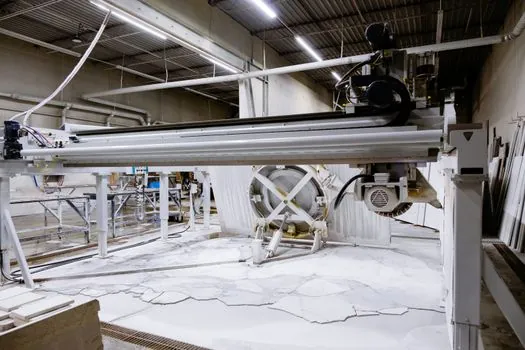
ANSI A326.3 sets the modern U.S. threshold for interior commercial floors at DCOF ≥0.42 wet, and that same 0.42 number is the floor that restaurants, gyms, pool decks, and healthcare facilities cite in their slip-prevention plans [S2]. The older Static COF (SCOF) test is still referenced in some legacy specifications but has been superseded for new work [S2].
For processing halls, the anti-slip rating is typically engineered into the tile surface itself (a pressed texture or a grit-bearing glaze) rather than added through a topical treatment that would wear off under scrubbers. Specifiers should treat DCOF as a floor-level requirement, not a tile-only requirement: the rating must hold after years of mechanical scrubbing and chemical exposure, which is why the industrial ceramic category emphasises body density as well as surface texture [S1][S3].
Water Absorption and Chemical Resistance: The ASTM C373 Line
ASTM C373 classifies porcelain as impervious at under 0.5% water absorption, and that is the cutoff most U.S. commercial specifications adopt for kitchens, laboratories, and chemical handling areas [S2]. Fully vitrified tiles exceed this comfortably because the sintering process closes the pore structure, which is the same property that delivers the chemical resistance to oils, acids, and harsh cleaning agents [S1].
Quarry tile, by contrast, is a traditional natural-clay product that is strong and slip-resistant but slightly porous; it is therefore specified for light-duty industrial kitchens or storage areas without chemical exposure, and may require sealing to prevent moisture retention [S1]. Epoxy flooring competes on chemical resistance and seamless installation but is not a tile in the traditional sense and trades off repairability and impact tolerance [S1].
Format, Drainage, and HACCP Layout Choices
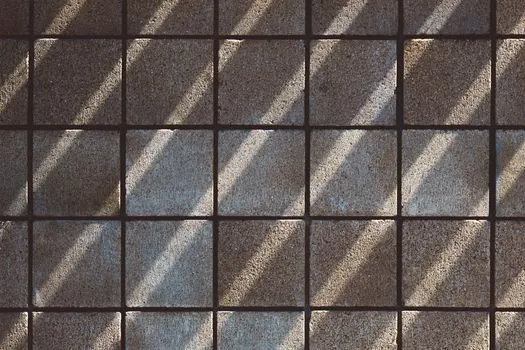
Two formats dominate industrial ceramic installations: rectangular tiles, which allow precise floor slopes to drainage channels, and hexagonal tiles, which provide multidirectional grip and adapt to irregular substrate geometry [S3]. For food, beverage, and pharmaceutical halls, rectangular formats are paired with stainless steel floor drains (V2A / 1.4301 or V4A / 1.4404 grades) to meet HACCP washdown and corrosion requirements [S3].
Specifier caution: hexagonal tiles complicate slope-to-drain geometry, so they are typically reserved for dry-process zones, packaging lines, and circulation aisles where standing water is not a daily condition. Drainage detail, not tile body, is usually the single biggest variable in washdown hygiene audits [S3].
Decision Matrix: Which Tile Where
Three options cover most industrial scenarios. (1) Fully vitrified porcelain, PEI 5, DCOF ≥0.42, absorption <0.5%: production halls, chemical processing, food and beverage, breweries, dairies, laboratories [S1][S2][S3]. (2) Quarry tile, sealed, PEI 4-5: light-duty industrial kitchens and dry storage with no chemical exposure [S1]. (3) Epoxy or resin flooring: zones dominated by chemical splash where a seamless, coved floor is required and tile joints would be a hygiene risk [S1].
For warehouse and dispatch areas, a related commercial ceramic tile selection map for 2026 projects is worth cross-checking, because the same PEI/DCOF logic applies but the loading profile is different. For facilities that also specify line-side safety marking, the warning tape selection spec map pairs naturally with slip-rated tile where aisle demarcation is required.
What Industrial Tile Cannot Do
Ceramic and porcelain tile, even fully vitrified, will not absorb structural movement the way a resilient floor will, so slab control joints must be honoured in the tile layout or reflected through movement joints in the assembly [S1]. They are also cold and hard underfoot, which is a real consideration for standing-work stations and a reason resin systems still win some assembly cells. And despite high compressive strength, point loads from racking posts or dropped tooling can chip a tile beyond cosmetic repair; the failure mode is local replacement, not patch repair [S1][S3].
Documentation and Standards to Put on the Specification
A complete industrial tile specification should reference the wear class (PEI 4 or PEI 5), the slip test method and result (DCOF ≥0.42 wet, ANSI A326.3), the water absorption class (porcelain, <0.5% per ASTM C373), the chemical resistance statement from the manufacturer, and for food or pharma halls, a HACCP-compliance statement covering joint width, grout chemistry, and drainage integration [S2][S3]. Where mechanical scrubbers and acidic or alkaline cleaning agents are routine, the tile body and grout must be qualified together, because a DCOF-compliant tile on a soft grout will still fail the hygiene audit.
Track these signals on the next project: confirm whether the manufacturer publishes a per-batch DCOF value, not just a catalog nominal, and require the grout supplier to certify chemical compatibility with the site's cleaning regimen; both items are the most common audit findings when an industrial adhesive or grout is mismatched to a vitrified body.