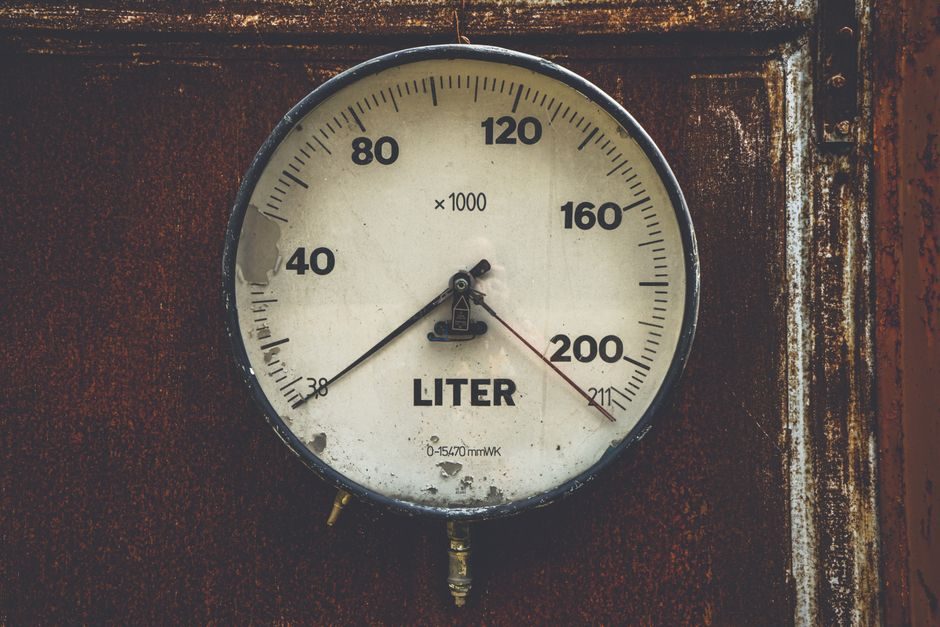
Variable area flowmeters — also called rotameters — use a buoyant float in a tapered tube whose height maps to volumetric flow; DirectIndustry's 2026-05-25 industrial catalog lists 66 manufacturers and 334 distinct products tagged under this technology, making it the broadest single technology category in the flowmeter directory [S2].
Process engineers still reach for them first on utility water, instrument air, lube-oil skids, and dosing skids where cost dominates and high accuracy is not required; the same source notes DirectIndustry's buying guide groups them as "variable-area" alongside coriolis, electromagnetic, ultrasonic, vortex, and turbine primaries, so the first job is ruling those higher-cost options out before specifying a rotameter body [S2].
Float and tube material set the chemical envelope
Glass-tube meters with stainless or PTFE floats dominate the 1–1500 l/h liquid window — Roxspur's LG/NG series spans 1 l/h to 1500 l/h at 0–100 °C and 0–16 bar with a glass body for direct visual reading [S3]; the same material set is the default on Yokogawa's rotameter line for low-pressure utility service [S4].
For aggressive chemicals, sanitary, or higher-pressure lines, the tube and wetted float upgrade to stainless steel, PTFE, PVC, or polypropylene; TECFLUID's 6000 series supports DN15–DN80 in stainless, PTFE, steel, glass, PVC, or polypropylene, with the glass option kept for clean visual applications only [S1]. Engineers who try to push a glass tube into a hot caustic or chlorine service are reading the wrong spec — the envelope is set by the float and the tube together, not by the scale on the side.
Line size and flow range must be matched to the float curve
Each rotameter body is calibrated for a specific float geometry — swapping the float changes the range by 5× to 10×, so a meter ordered for 10–200 l/min (the STAUFF SDM-1500-A-200-T hydraulic variant, 20–110 °C) cannot be re-rated in the field by trimming a plug [S5].
DirectIndustry's 2026-05-25 buying guide groups variable area meters with the wider flow family; sizing practice is the same as any primary — read the line's normal flow in m³/h, not its peak, and stay inside the meter's 10:1 turndown on a single float [S2]. When the application's turndown exceeds 10:1, the practical answer is a different technology — vortex or Coriolis — not two rotameters piped in parallel, because the float friction band eats any resolution gain.
Output stack: visual, 4-20 mA, HART, or PROFIBUS

Local-indication meters with a printed scale are still the volume leader — Omega's spring-and-piston VA line, DwyerOmega's Rate-Master Precision Flowmeters (2", 5", 10" scales, NIST calibration available), and acrylic body meters for medical, laboratory, and environmental work all rely on the operator's eye. [S1]
Where a DCS or SCADA needs the reading, the OEM option stack runs analog, 4-20 mA, HART, and PROFIBUS — TECFLUID's 6000 series ships with 4-20 mA + HART + PROFIBUS on the same body for DN15–DN80 lines [S1], and the M21 series adds the same comms profile in a smaller envelope with ATEX coverage for pharmaceutical, food, water-treatment, and sanitary plants [S6]. Engineers should verify that the transmitter card is genuine 4-20 mA + HART superimposed (FSK on the analog loop) — HART does not run natively on PROFIBUS PA, so the two protocols need separate comm boards on the same body.
Hazardous-area and sanitary certification gates
ATEX-rated bodies are now standard on European-built electronic rotameters — TECFLUID's M21 carries an ATEX protection level with stainless wetted parts, targeted at pharmaceutical, food, water-treatment, and sanitary duty where flammable vapor or dust may be present [S6]. For North American plants, the comparable path is CSA Class/Div or IECEx, selected per the area classification drawing rather than the meter's catalog page.
Sanitary builds are a separate spec — tri-clamp ferrules, surface finish to a documented Ra value, and 3-A or EHEDG certification on the wetted path. The same 6000-series body is offered with PTFE or stainless for hygienic service, but the specifier still has to confirm the elastomer list and the surface-finish certificate; ordering a standard industrial body into a CIP/SIP loop is the fastest way to fail a plant audit.
Pressure, temperature, and orientation limits

Glass-tube meters are typically capped at 16 bar and 100 °C — Roxspur publishes 0–16 bar and 0–100 °C as the published window on its LG/NG glass series [S3]. The all-metal 6000 series raises both, but the specifier still has to read the individual data sheet rather than the family brochure [S1].
Orientation is not optional: a variable area meter is gravity-referenced, so the body must be installed vertical with flow upward; horizontal mounting is the most common field failure and the reason "installed vertical" appears in TECFLUID's installation callout for the 6000 series [S1]. On hydraulic skids where the routing forces a horizontal run, the practical answer is a different primary — see the vortex selection criteria reference for those service windows.
Comparison of 2026 cataloged variable area options
Lining the main product families against the four spec gates a process engineer actually checks: TECFLUID 6000 (DN15–DN80, stainless/PTFE/glass, 4-20 mA + HART + PROFIBUS, industrial) [S1]; Roxspur LG/NG (1–1500 l/h, glass body, visual indication, 0–16 bar / 0–100 °C) [S3]; STAUFF SDM-1500 (10–200 l/min, aluminum/in-line portable, hydraulic, 20–110 °C) [S5]; TECFLUID M21 (in-line vertical, stainless, 4-20 mA, ATEX, pharmaceutical/food/sanitary) [S6]; DwyerOmega Rate-Master (2"/5"/10" scales, NIST calibration, gas and liquid).
Cross-checked on cost vs accuracy vs hazardous-area vs sanitary: glass-tube visual units (Roxspur, Omega, Dwyer) are lowest cost but capped at ~16 bar and 100 °C with no electronic output; industrial metal-body electronic units (TECFLUID 6000, STAUFF SDM) add HART/PROFIBUS and broader pressure/temperature envelopes for general process and hydraulic duty; ATEX + sanitary electronic units (TECFLUID M21) sit at the top of the cost stack and are the right pick only when a hazardous-area or hygienic-area classification forces it.
What a variable area meter will not do
Rotameters do not measure mass flow directly, do not work in slurries with solids above the float's clearance, and do not hold calibration in pulsating flow without a pulsation damper upstream. Yokogawa's rotameter page explicitly positions the family for low-pressure, clean-service indication rather than custody transfer or high-accuracy batch [S4].
Where the spec calls for mass flow, high accuracy, or two-phase / dirty media, the right move is to step up to Coriolis or ultrasonic primaries — variable area is the wrong tool, and forcing it into those services is what creates the "rotameters are unreliable" reputation that the technology does not actually deserve in its proper envelope. For thermal mass applications on clean gases, the thermal mass flowmeter buying guide covers the inline vs insertion vs low-flow decision.
Trackable signals: the DirectIndustry buying guide for variable area flow meters (66 manufacturers, 334 products, last indexed 2026-05-25) [S2] and the Yokogawa rotameter product page (last updated within the current catalog cycle) [S4] are the two nodes to re-check before issuing a purchase order; any new ATEX/IECEx certificate revision or a HART/PROFIBUS option drop on the TECFLUID 6000 or M21 lines would be the next data point worth monitoring.