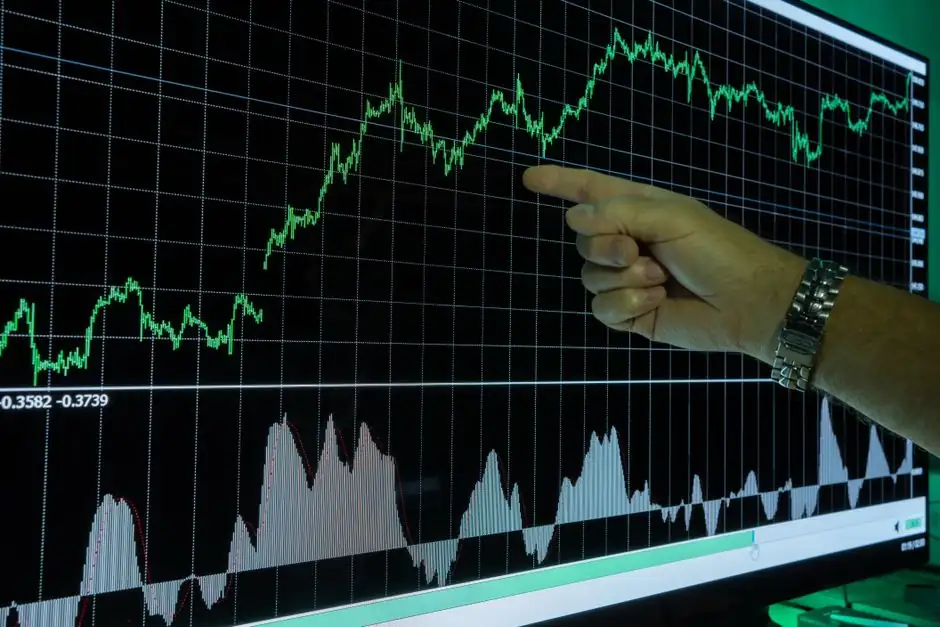
At least 32 spectrum analyzer manufacturers are active globally in 2026, spanning Shenzhen-based SIGLENT, Germany-based Rohde & Schwarz, U.S. firms such as Tektronix, Berkeley Nucleonics, and BK Precision, and Indian distributors offering entry-level to 7.5 GHz real-time units [S1][S2][S4][S5].
The catalog cuts across a wide frequency band: SIGLENT's SMS1015XV covers 1.5 GHz, the SMS3021X sits at 2.1 GHz, the SMS3032X reaches 3.2 GHz, and the SMS3075XP extends to 7.5 GHz, illustrating how a single vendor stacks tiers in 1.5–7.5 GHz increments [S3]. For a deeper spec walkthrough, see the selection logic for spectrum analyzers.
What a spectrum analyzer actually does, and what it does not
A spectrum analyzer measures the magnitude of an input signal versus frequency within the full frequency range of the instrument, with the primary use being to measure the power of the spectrum of known and unknown signals [S8]. The instrument is foundational in lighting-equipment-and-electric-lamps EMI pre-compliance, in telecom base-station bring-up, and in radar and EW lab work. It is not a time-domain oscilloscope: pulse rise times below a few nanoseconds, or logic-level glitches, are better captured on a scope or a moisture analyzer is a different category entirely (mass-basis gas or vapor measurement), and that confusion comes up in buyer RFQs.
Tier-1 global suppliers: where they sit, what they ship
Rohde & Schwarz markets a wide range of versatile signal and spectrum analyzers from entry-level to handheld and midrange models through to top professional units, addressing bench, field, and conformance test workflows [S2]. Tektronix positions its RSA series for real-time RF measurement, with architecture that can record, stream, and analyze data in real time at full bandwidth, including ruggedized, battery-portable models for field capture [S5].
Japan and the U.S. round out the high tier: Anritsu and Yokogawa Electric Corporation are listed among key optical and RF analyzer vendors, while Berkeley Nucleonics, BK Precision, and Keysight-style suppliers appear in the EMC directory alongside Aaronia AG, Ceyear, Com-Power Corporation, and Good Will Instrument Co. [S4][S9]. Optical spectrum analyzer specialists include EXFO Inc., Aragon Photonics Labs S.L.U., and II-VI Incorporated, which target DWDM and laser-line analysis rather than generic RF work [S9].
Mid-tier and value suppliers: where the volume really moves

SIGLENT Technologies America is a Shenzhen, Guangdong, China-based designer and manufacturer of electronic test and measurement instruments, supplying bench spectrum analyzers in 1.5 GHz, 2.1 GHz, 3.2 GHz, and 7.5 GHz configurations (models SMS1015XV, SMS3015XP, SMS3021X, SMS3021XP, SMS3032X, SMS3032XP, SMS3075XP) [S1][S3].
India's distributor ecosystem is dense: Scientific India, Scientech World, and similar resellers market audio, RF, and general-purpose spectrum analyzers sourced from Chinese and Taiwanese ODMs, with prices in the entry-level to midrange band [S3][S7]. EMC-focused niche vendors (Com-Power, Aaronia) serve radiated and conducted immunity labs with analyzers paired to LISNs, near-field probes, and antennas [S4]. For buyers comparing this category to adjacent bench instruments, the moisture analyzer and gas analyzer categories share form-factor and display logic but use entirely different sensor chains.
Selection criteria that actually separate the vendors
Four specs cut the field: frequency range, real-time / instantaneous bandwidth, resolution bandwidth (RBW), and displayed average noise level (DANL). For Wi-Fi 6E work, an analyzer that covers 5 to 7 GHz plus second and third harmonics is required, not just 2.4 GHz carrier coverage [S5]. For radar pulse work, dynamic range matters more than absolute frequency, because the emitted signal and its echo differ in amplitude by many tens of dB [S5].
Probability of Intercept (POI) is the speed metric: lower POI times mean the analyzer can catch transients with 100% capture probability, and that figure is set by the underlying signal-processing throughput [S5]. RBW governs how closely spaced signals can be resolved, so dense commercial wireless bands and satellite downlinks push buyers toward narrower RBW filters. Sensitivity (i.e., a low noise floor) is decisive for electronic warfare and remote sensing, where weak signals set the detection limit [S5].
Decision matrix: entry vs. midrange vs. real-time vs. optical
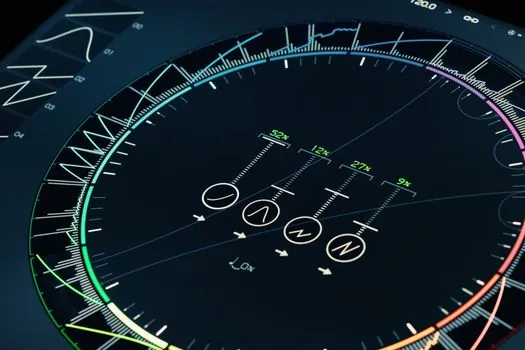
The midrange value tier (SIGLENT SMS3021X, SMS3032X at 2.1–3.2 GHz) suits general RF bring-up, EMC pre-compliance, and education labs, with frequency coverage adequate for sub-6 GHz wireless and most ISM-band work [S3]. The high tier (Rohde & Schwarz, Keysight-class, Tektronix RSA) is required when conformance, low-phase-noise close-to-carrier measurements, or wide real-time bandwidth are in scope [S2][S5].
Handheld and field units add battery operation and ruggedized enclosures at the cost of bandwidth and RBW, which is acceptable for site surveys and interference hunting but not for lab-grade phase noise [S5]. Optical spectrum analyzer vendors (Yokogawa, EXFO, Aragon Photonics, II-VI) are a separate supply chain addressing 1260–1650 nm DWDM grids and laser characterization, not RF; the wrong category will be specified if RF and optical are conflated [S9].
Limitations, failure modes, and sourcing reality
Vendor directories such as Metoree list 32 manufacturers in 2026, but the count conflates OEMs with rebranded ODMs, regional distributors, and EMC niche suppliers, so the genuine OEM count is smaller [S1]. Lead times on top-tier real-time analyzers can stretch into months, while midrange Chinese units are typically in stock at distributors, which shifts total cost of ownership beyond the headline price [S1][S6].
Calibration is the other hidden cost: a spectrum analyzer used in a regulated EMC lab needs annual calibration traceable to a national metrology institute, and that service is not interchangeable across vendors [S3]. For a sense of how a different category tracks similar cost-vs-spec trade-offs, see the tier-1 IGBT suppliers in 2026 vendor map.
Standards and sourcing signals to track
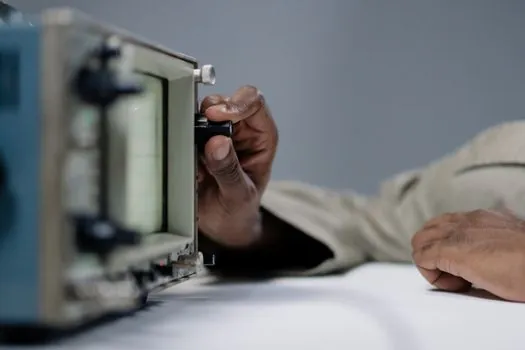
EMC compliance work pulls the analyzer into CISPR 16-1-1 and related radio-domain emission measurements, which is why EMC directories cluster spectrum analyzers with EMI receivers, LISNs, and antenna kits [S4]. Buyers in the EU also align to the Radio Equipment Directive for out-of-band emissions on the device under test, and in the U.S. to FCC Part 15 subparts; the analyzer itself is the measurement instrument, not the regulated article. Trackable signals over the next two quarters: new real-time bandwidth tiers from Tektronix and Rohde & Schwarz firmware updates, the next ipros.com ranking refresh (last update 12 August 2026) [S6], and the appearance of additional 7.5–13 GHz Chinese midrange units as 6 GHz Wi-Fi bands expand in regulatory acceptance.