
A spirit level is selected on four spec anchors: vial sensitivity expressed in mm/m or arc-seconds, body geometry (round, cross, horizontal bar, vertical), the governing metrology standard (DIN 877, DIN 2276/1, BS 3509), and the vial material (glass tubular, glass circular, plastic circular, plastic cylindrical) [S2][S8].
WYLER AG's 172 series round levels and 176 series cross levels illustrate how a single vendor splits form factor across two industrial duties, machine erection versus two-axis levelling, while sharing aluminium-alloy, black-anodised construction [S1][S2].
Vial sensitivity: the single number that decides the application
Vial sensitivity for precision spirit levels is typically expressed in mm/m of bubble travel, with common values spanning 0.30 mm/m to 10.00 mm/m depending on whether the duty is machine-tool alignment (sensitive end) or general construction (coarse end) [S2].
Per the WYLER 176 cross level specification table, sensitivity is selectable per unit, with DIN 877 and DIN 2276/1 cited as the governing metrology standards, meaning the buyer must pick sensitivity from a vendor-supplied table rather than assume a default [S2]. Cross-type vials on a single body show both X- and Y-axis inclination simultaneously, which removes a second setup step on multi-axis machinery [S2]. For first-time specifiers, the spirit level encyclopedia page lists the sensitivity-versus-duty matrix that maps mm/m values to typical metrology tasks.
Body geometry: round, cross, horizontal bar, vertical
The four body geometries serve distinct mechanical interfaces: round (bull's-eye) vials sit flat on a machine bed and read vertical-axis plumb; cross vials mount on a side face and read two horizontal axes at once; horizontal bar vials bridge long spans for surface flatness; vertical bar vials mount on a vertical face to read a single horizontal axis [S1][S2].
Geometry dictates the mounting hardware. The WYLER 172 round level is supplied for screwing onto the measuring object, while the 176 cross level uses the same screwed fixation because its aluminium-alloy, black-anodised body carries a flat reference face for two perpendicular vials [S1][S2]. For longer base frames where a single-bar vial would be the wrong length class, the level measurement reference covers the frame-length versus bar-length rule of thumb used in machine-tool installation. Buyers who need a single instrument to read level on both axes in one setup should pick the cross geometry and skip the round vial, because a round vial only resolves one axis per placement [S2].
Standards compliance: DIN 877, DIN 2276/1, BS 3509

Three standards govern the European spirit-level market: DIN 877 (precision levels for use in metrology), DIN 2276/1 (cross spirit levels, geometric and sensitivity classes), and BS 3509 (specification for tubular spirit level vials, the British equivalent covering vial geometry and bubble travel) [S2][S8].
DIN 877 and DIN 2276/1 are called out together on the WYLER 176 cross level datasheet, which means a buyer requiring DIN-traceable calibration must verify both standard numbers, not just one, before accepting a certificate of conformity [S2]. BS 3509:1962 remains the cited reference for tubular spirit level vials and predates the later ISO geometry harmonisation, so it is still the controlling document for vial glass dimensions in British metrology stacks [S8]. Outside Europe, Antpedia's classification of spirit-level standards lists 16 entries spanning linear and angular measurements, volume/mass/density, and storage, which is a useful cross-reference for buyers sourcing from non-European suppliers [S3].
Material selection: glass versus plastic vials
Vial material drives both service life and optical readability. Glass tubular vials (BS 3509 class) are the metrology default because glass has a stable thermal expansion coefficient, well-defined bubble geometry, and long-term dimensional stability [S8].
Plastic circular and plastic cylindrical vials are an alternative where impact resistance or cost dominates over metrology-class accuracy, and metal-cased levels with optical sensor vials cover the electronically instrumented end of the range [S4]. Heiber's export-only product line explicitly splits into plastic circular, plastic cylindrical, glass circular, glass tubular, metal-cased, and optical-sensor level vials, which mirrors the same material taxonomy used in metrology catalogues and gives a buyer a six-way selection grid before brand choice enters the decision [S4]. For impact-prone field service, a plastic vial typically out-survives a glass one but cannot meet the same DIN 877 sensitivity class, so a buyer who has to choose plastic must accept a downgraded sensitivity class on the certificate [S4][S8].
Decision matrix: matching level type to duty

Selection by duty resolves to four typical cases. For machine-tool erection on a flat bed, a round vial (WYLER 172 class) at coarse sensitivity (around 1.00-3.00 mm/m) gives a fast visual reference; for two-axis alignment of a measuring object, a cross level (WYLER 176 class) at finer sensitivity (0.30-1.00 mm/m) is the correct form factor; for metrology lab traceability, a DIN 877 / DIN 2276/1 certified precision bar level with a glass tubular vial is mandatory; and for site construction impact duty, a plastic-vial bar level with metal frame is the cost-effective pick [S1][S2][S8].
The shortlist logic, given those four duties, is straightforward: a buyer who needs DIN-traceable calibration specifies a DIN 877 / DIN 2276/1 stamped aluminium-alloy, black-anodised level with selectable sensitivity; a buyer who needs field durability specifies a plastic-vial level and accepts the lower sensitivity class; a buyer who needs a single instrument for two axes specifies the cross geometry over the round geometry; a buyer who needs plumb indication on a vertical face specifies a vertical bar level, not a round vial [S2][S4]. Compared with the electronic end of the same product family, an automatic level or laser level replaces the human eye reading a bubble with a sensor and display, but costs more and requires power, so a buyer on a tight budget or a metrology-traceable audit should still pick a glass-vial spirit level [S2].
Who should NOT pick the mainstream round level
The round (bull's-eye) vial is the wrong choice on three specific duties. It cannot read a second axis, so on any two-axis levelling job it forces a second placement and loses setup time compared with a cross level [S2].
It cannot read plumb on a vertical face without a separate vertical bar level, because the round vial's reference plane is horizontal by design [S1]. It cannot meet the higher DIN sensitivity classes that a metrology lab or machine-tool builder will demand, because round vials are typically sold in coarse sensitivity grades suited to erection work rather than fine grades suited to instrument calibration [S1][S2]. A buyer who needs an automated readout at machine startup, for example a pump base that must self-report level to a PLC, should bypass the round spirit level entirely and look at a level switch or electronic infrared level instrument instead [S2].
Limitations and failure modes
Spirit levels have four well-known failure modes that the spec must address: vial fluid ageing (the bubble shrinks or the fluid discolours over years), mechanical shock cracking the glass vial, thermal drift in the body's flatness reference, and mounting-creep on soft machine feet that slowly re-tilts the level [S4][S8].
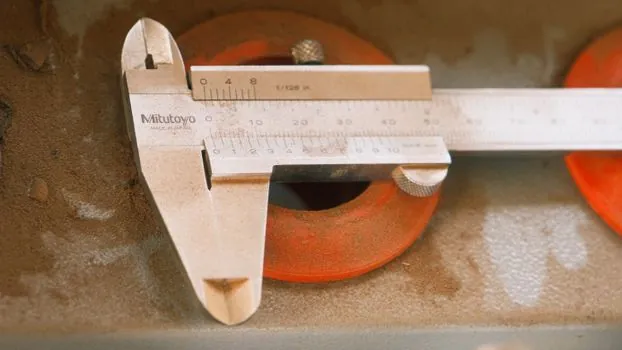
Glass-vial levels are particularly vulnerable to shock, and BS 3509:1962 specifies the dimensional envelope and bubble geometry but does not define a shock rating, so a buyer needing impact resistance should default to a plastic-vial level and accept a sensitivity downgrade [S4][S8]. Aluminium-alloy, black-anodised bodies (such as the WYLER 176 cross) hold flatness well in normal shop conditions, but prolonged thermal cycling above the standard room-temperature calibration band will shift the reference, so calibration at the actual operating temperature is recommended for any level used on a machine bed that runs warm [S2]. For the related precision-measurement workflow, the Caliper vs Micrometer vs Dial Indicator article covers the sister instruments used downstream of a spirit level in the same metrology chain. Sourcing and standards traceability: buyers should request the certificate to cite DIN 877 and DIN 2276/1 by number, not generically, and on British contracts should reference BS 3509 vial dimensions separately from the level body standard [S2][S8].
Trackable next signal: the Antpedia classification index carries 16 spirit-level standard entries across linear, volumetric, and storage categories, which is the working set a procurement engineer should audit against before locking a vendor; the WYLER 2009 catalogue (166 pages) and 2018 catalogue (216 pages) remain the controlling vendor references for cross and round series sensitivity tables [S1][S2][S3].