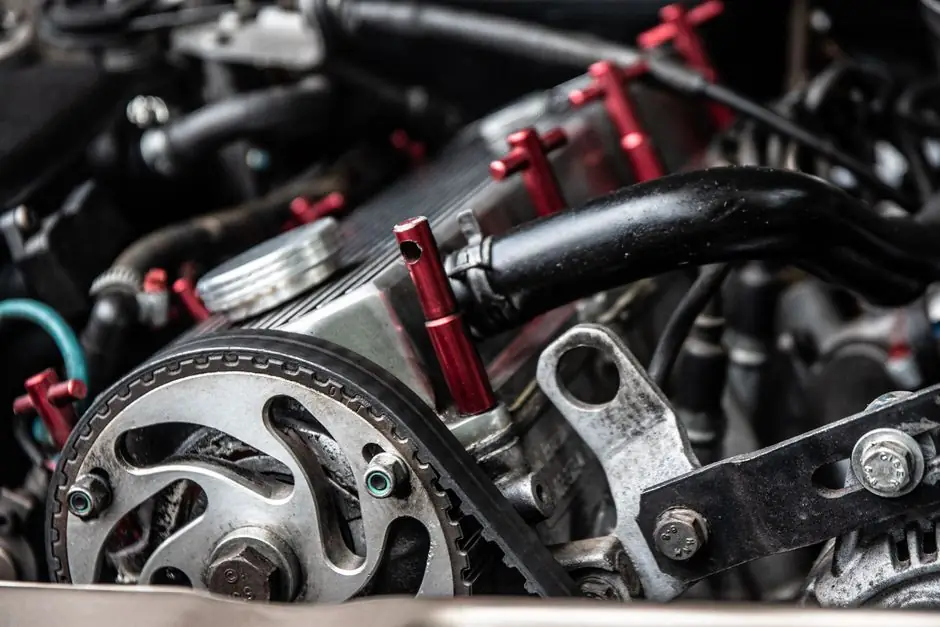
Automotive assemblies need spring washers sized to maintain bolt preload through vibration, thermal cycling, and fluctuating loads, with the required reaction force established for each joint rather than copied by washer name alone [S2][S8].
Applicable choices range from M2-size wave washers of roughly 2–3 mm across to multi-inch Belleville disc springs capable of carrying very high preload in a compact package, and production commonly uses high-strength or tempered carbon steel, stainless steel, brass, bronze, and copper alloys [S2][S3][S4].
Define the Joint Function Before Choosing a Washer
A spring washer stores mechanical energy and applies a reaction force between the fastener and joint, but that function does not make every washer suitable for every bolted connection. The washer may maintain preload, distribute load, compensate for stack variation, absorb shock, or resist fastener rotation [S2].
Automotive production teams should assign each joint one primary duty before releasing a part number. An engine, transmission, suspension, brake, or body attachment normally has a defined bolt size, tightening specification, service temperature, and vibration profile, while the selected washer must remain compatible with the fastener head, nut, and bearing surface [S2][S5].
Curved washers are typically stamped from tempered spring steel, with stainless steel available where corrosion resistance matters, and their material thickness can range from a few thousandths of an inch to approximately 0.100 in or more. That dimensional range makes them practical for compact assemblies requiring relatively light thrust and controlled axial-end-play compensation [S2].
Compare Belleville, Wave, Curved, and Split Lock Types
Belleville washers provide a high spring rate in a compact axial envelope because their conical shape flattens under load and generates a reaction force, making them suitable for high-load joints that need substantial preload maintenance or travel compensation [S2][S3].
Wave washers use a rippled profile and generally provide a lighter compensating force for shock absorption, sustained load, bearing preload, motors, and electronics. Curved washers use one smooth curve rather than multiple waves and suit weight- and space-sensitive assemblies needing lower thrust, whereas split lock washers depend on friction and edge engagement and are generally better suited to lighter vibration duty [S2].
For related agricultural-equipment duty, the selection logic differs because equipment exposure and joint loading change the acceptable washer geometry; see Spring Washers for Agricultural Machinery for that comparison.
Match Material to the Service Environment

Carbon steel offers economical strength for general industrial use, while 301, 302, and 17-7 PH stainless steel add corrosion resistance and broader temperature capability than typical coated carbon steel [S2]. Belleville washers can also be supplied in Inconel or finished carbon steel for demanding loads, temperature cycling, and controlled corrosion performance [S3].
Phosphor bronze, brass, bronze, and copper alloys are also established spring-washer materials, with copper alloys selected where thermal or electrical conductivity is useful. Their suitability still depends on the automotive environment, especially salt exposure, exhaust heat, coolant, and galvanic contact with the surrounding bolt and joint materials [S4][S7].
Material selection also changes spring rate, corrosion resistance, operating-temperature range, and forming behavior. A washer that meets the required force in a laboratory can fail a production design if its material loses stiffness, suffers hydrogen embrittlement, or corrodes at the joint interface, so the purchase specification should identify the exact alloy and temper rather than a generic material family [S2][S9].
Size the Part by Load and Travel
Washer selection should be based on the joint load, washer size, material, and operating conditions, including the load range and expected movement. These four checks are more useful than selecting from nominal fastener diameter alone because the same M8 bolt may encounter radically different preload and environmental duties in different automotive assemblies [S8].
For a Belleville washer, the usable load and deflection must be evaluated through the washer geometry and material response rather than treated as a generic spring constant. Available products span metric and imperial sizes, and the selection process must also account for the required force, permitted travel, and space available inside the stack [S3].
The spring washer must fit without changing the intended clamp stack, and its outside diameter must not foul adjacent components. In high-load applications, a washer that is merely larger than the fastener can introduce unacceptable edge loading, while an undersized washer can permit point loading or lose useful travel before the joint reaches its specified preload [S3].
Build Production Controls Around the Washer Geometry

Typical manufacture begins with material selection, followed by high-pressure stamping, die punching, heat treatment, surface treatment, and inspection. Mechanical, hydraulic, and pneumatic presses are used, with press force and configuration determined by washer size and material thickness [S4].
Heat treatment requires controlled temperature and time because the process strengthens and hardens the formed spring while also creating a risk of deformation if its thermal cycle is not controlled. Surface treatment may include plating or a protective coating intended to resist humidity and temperature-related environmental effects [S4].
Incoming and in-process inspection should check outside diameter, thickness, free height, cone or wave geometry, hardness, surface condition, and cracks or other defects. Automated or manual gaging must be tied to the actual drawing, and acceptance needs defined sampling and traceability requirements because a washer with the correct nominal size can still have incorrect spring force [S4].
Automotive lines should also distinguish a spring washer from a plain hardened flat washer. The lock nut or locking assembly may address anti-rotation through thread geometry or prevailing torque, but that does not remove the need to establish whether the washer is intended to maintain preload, absorb shock, distribute load, or close a stack gap [S2].
Match the Washer to the Actual Failure Mode
Spring washers are used in automotive, aerospace, and general machinery to maintain bolted-joint integrity, reduce vibration, absorb shock, and limit loosening, but an incorrect selection can cause early loosening, fatigue failure, or wasted axial space [S2][S6]. The washer therefore should not be treated as a universal anti-loosening device.
For high-speed rotating assemblies, the relevant checks include fastener head geometry, nut or thread locking method, surface finish, and allowable axial movement. If a locking feature already provides controlled anti-rotation, a split washer may add little spring benefit, while a Belleville washer may be justified where measured preload loss would threaten gasket seating, bearing load, or another defined functional requirement [S2].
Wave and curved washers are less suited than Belleville washers when a joint needs a large, accurately defined reaction force, but they can be preferable when the duty is light thrust, shock absorption, or end-play compensation. A retaining ring serves an axial-locating rather than spring-preload function, so it is not an interchangeable substitute for a load-carrying spring washer [S2].
Specify the Deliverable, Not Just the Family Name
A production-ready spring-washer specification should define the type, dimensions, material grade, temper or heat-treatment requirement, surface treatment, spring-rate or load-at-deflection requirement, and inspection method. Metric and imperial Belleville options exist, but catalog size alone does not establish the force needed by a particular automotive joint [S3].
Material options include carbon steel, stainless steel, 17-7 PH, 301, Inconel, phosphor bronze, brass, bronze, and copper alloys, but the final choice should follow the actual exposure and required force. A locking assembly is appropriate only when the controlled joint design includes the required locking elements, surface conditions, and tightening process [S4][S5].
For procurement and line validation, the next trackable signals are approval of the joint-specific load-versus-deflection data, confirmation that the material and coating match the automotive environment, and release of dimensional and hardness inspection records for the production lot. Those checks turn a generic spring washer into a defined automotive production component [S4][S8].