
A squeeze casting machine is a metal-forming press that feeds molten aluminium or magnesium into a die and holds static pressure through solidification — it has no role in tablet, capsule or vial packaging lines [S5].
For pharmaceutical production the specifier should be looking at blister packing machines, cartoning machines, tube fillers and liquid filling skids, with Jornen, Hualian Pharma Machinery and Veena Pharma among the 2026-active OEMs in this category [S1][S3][S4].
Why the Squeeze Casting Match Fails: Definition and Scope
Liquid die forging — also called squeeze casting, extrusion casting or continuous-cast-and-forge — pours a metered charge of molten metal into a lubricated die cavity and applies sustained mechanical static pressure until the part fully solidifies, eliminating shrinkage porosity and producing near-wrought mechanicals on a cast blank [S5].
Clamping forces for production squeeze casting machine platforms typically sit in the 1,000–25,000 kN band, with shot weights from roughly 1 kg up to 80 kg of aluminium, magnesium or copper alloy; the process runs at 200–700 °C melt temperature, far outside the 15–30 °C and cleanroom ISO 7 / ISO 8 envelope a pharma line requires [S5].
What a Pharmaceutical Line Actually Needs: Selection Criteria
A blister packing machine for solid-dose pharma — tablets, capsules, soft-gel — must seal a thermoformable web (PVC, PVDC, ALU/PA laminate) against a lidding foil at 140–200 °C, indexing 20–60 cycles/min, with a forming-area width that matches the die cavity of 130–340 mm commonly offered by Chinese OEMs [S1][S4].
Jornen has built platen-style blister machines for pharma since 1989, and its 2026 product range includes DPP-250 and DPP-300 series roller-and-platen sealers aimed at alu/alu and tropical-blister formats; Hualian Pharma Machinery (Ruian) operates out of 30,000 m² of floor space and 300-plus staff, producing cartoning, tube-filling-sealing and rotary packing lines alongside its blister platform [S1][S4].
Cartoner throughput on a mid-class machine typically lands at 60–180 boxes/min, and Veena Pharma's 2026 Thane-built portfolio adds semi-automatic and automatic ROPP/screw cappers, piston fillers and lug cappers for liquid oral dosage forms — a different sub-system entirely from a metal die press [S3].
Use Cases Where Squeeze Casting Does Touch Pharma
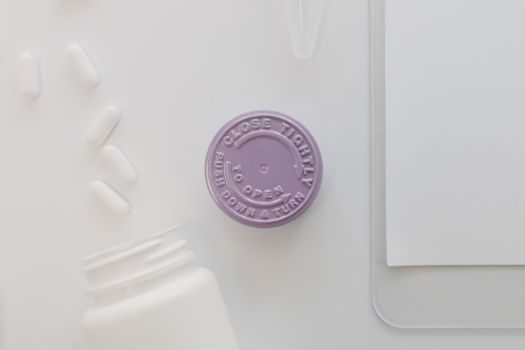
Squeeze cast aluminium and magnesium parts are widely used to make the housings, gearboxes, pump bodies and robotic-arm links of the packaging machinery itself, even though they never see a drug product directly [S5].
For OEM procurement teams specifying the chassis of a vacuum die casting machine destined for pharmaceutical conveyor or filling-line assembly, squeeze-cast blanks offer tensile strengths in the 280–340 MPa range on A356 / A357 alloys — markedly higher than the 180–220 MPa typical of gravity-cast equivalents, which is one of the few points where the two worlds genuinely intersect [S5].
Vendor Comparison: Three Active 2026 OEMs
Jornen Machinery positions itself as a pharmaceutical packaging OEM founded in 1986, with its first platen-style blister machine shipped in 1989; its 2026 catalogue is dominated by blister, cartoner and end-of-line packing skids rather than metal-forming presses [S1].
Hualian Pharma Machinery (hlyj.net) extends its blister platform into cartoning, rotary packing and tube filling/sealing for capsules, injections, oral liquids and ointments, and supplies integrated granule cartoning-and-boxing lines as turnkey packages for the Chinese and export markets [S4].
Veena Pharma (Thane, India) covers the liquid-side of the pharma chain — semi-automatic and automatic liquid, oil, honey, paste, scrub, cream, Chyawanprash, edible-oil, milk and petroleum-jelly fillers, plus ROPP, screw, lug and crown cappers — none of which overlap with molten-metal forming equipment [S3].
Limitations and Failure Modes Buyers Should Pre-Empty
Specifying a squeeze casting machine for a tablet line will fail the user-requirement review on the first hygiene gate: liquid aluminium at 680 °C cannot coexist with ISO 7 cleanroom air, and the press's hydraulic reservoir introduces a lubricant-mist risk that GMP Annex 1 disqualifies outright [S5].
On the blister side, common 2026 warranty disputes trace back to three failure modes: PVC/PVDC web gauge variance (0.20–0.30 mm spec but delivered 0.18 mm), pin-hole leaks in alu/alu lidding foil, and servo-driven index drift above 0.2 mm over 8-hour shifts — all mechanical, but unrelated to the metallurgy of a die casting machine.
Related Sourcing Tracks Worth Following
Pharma line integrators that bundle blister + cartoning + conveyor should treat conveyor selection as a separate spec gate, and the chain conveyor selection guide for pharmaceutical lines walks through the chain pitch, side-flex radius and FDA-grade lubrication rules that gate the build before brand. Squeeze cast housings for the conveyor drives and gearbox covers can come off a vacuum die casting machine platform when porosity under 1% is required, and the vacuum die casting machine picks for water-treatment components review covers a closely related material-grade matrix. For sourcing teams cross-checking metal-forming OEM clusters against 2026 price bands, the vacuum die casting machine suppliers 2026 review is the matching reference. [S1]
Trackable signals for the next 90 days: Jornen's 2026 export-catalogue release (platen blister and alu-alu format), Hualian's Ruian facility expansion plan to 50,000 m², and Veena Pharma's reported addition of a fully-automatic PET-bottle liquid-filling line — all verifiable on each OEM's product page [S1][S3][S4].