
Water-treatment OEMs are pulling vacuum die castings into three jobs that used to be sand or gravity castings: pump volute and end-cover bodies in 80–600 mm envelope, multi-port valve manifolds for RO/DI skids, and aerator/agitator rotors on small-bore shafts [S3][S5].
The business case is straightforward — vacuum reduces gas porosity in the cast skin, which lets anodised aluminium filter brackets and pneumatic-actuator housings ship into a chlorinated-water envelope without secondary impregnation [S8]. Vacuum die casting machine builds in the 130–2,000 kN clamping-force band dominate this work; below 130 kN the shot weight is too small for a 1.5 kg pump cover, above 2,000 kN the cycle time penalises the small-batch filter-bracket runs that make up most of the volume.
Vacuum Levels, Leak-Up Rates and Chamber Geometry
A vacuum die casting cell holds ≤50 mbar absolute in the die cavity for at least 4 seconds before shot initiation; the leak-up rate ceiling is typically 5 mbar/min on a sealed dry die, and suppliers who publish a tighter figure (≤2 mbar/min) usually pair it with a servo-driven vacuum valve and an O-ring sealed shot sleeve [S6].
For water-treatment castings, the cavity vacuum matters more than the platen vacuum: a 0.5 mm wall filter-bracket section will not gas-out if the chamber pulls to 80 mbar but the cavity stays at 200 mbar, so buyers should ask suppliers for a cavity-mounted gauge trace, not a plenum reading. Longhua-class cold-chamber builders expose this on the machine HMI; gravity-die casting cells retrofitted with vacuum lids rarely do, and that gap shows up as porosity on CT scans of anodised valve bodies.
Alloy Decision: Al/Si vs Zn vs Mg for Wet-Process Hardware
AlSi9Cu3 and A356 are the default alloys for pump covers and RO manifold bodies; both take a 6-bar hydrostatic test in the as-cast condition once vacuum is in line, and both anodise to ASTM B580 Type II for service in chlorinated dosing loops [S7].
Zn (Zamak 3/5) shows up on smaller handle hardware, sample-cooler lids and instrument brackets where 1–3 mm wall sections dominate; the alloy pours below 420 °C so a hot-chamber or gravity die cell with vacuum assist is enough, and a zinc die casting machine in the 80–500 kN band handles the typical 0.05–1.2 kg shot. Magnesium (AZ91D) is the wildcard for handheld water-quality instruments and drone-deployed sampling floats, and a magnesium die casting machine in the 160–900 kN band is the envelope to look at — cycle time is the lever, not clamping force.
Two engineering facts set the alloy split for water-treatment hardware. First, Zn alloys creep above 80 °C, so any casting that sees hot sanitising water (≥90 °C CIP) belongs in Al or Mg, not Zn. Second, Mg needs a cover gas (typically 0.5–2% SF6 or a modern fluorine-free substitute) in the melt furnace, and a vacuum cycle that ramps slowly enough not to flash the melt front — suppliers who run Mg in cold-chamber vacuum cells usually spec a 6–8 mbar absolute floor, not the 50 mbar figure used for Al.
Clamping Force, Shot Weight and Platen Sizing
For a 2.0 kg aluminium pump cover, projected area around 0.045 m² and an intensification pressure of 60–80 MPa, the calculated clamping force lands in the 2,700–3,600 kN band; running that part on a 2,000 kN machine is a flash-and-sticking risk that no vacuum will fix. A safer envelope is the 3,500–5,000 kN band, which is also the band where die casting machine builders in the Chinese standard T/CASME 1608-2024 group sit their cold-chamber AI-assisted cells [S6].
For water-treatment OEM buyers, the practical shot-weight envelope to write into the spec is 1.5–6.0 kg for Al and 0.05–1.2 kg for Zn, and the tie-bar clearance or platen size has to clear a 700 × 700 mm die footprint without a die-set adapter. Smaller filter brackets (200–500 g Al) run on 500–900 kN machines with shot sleeves in the 50–60 mm bore range; multi-port RO manifolds (3–5 kg Al) need the 1,600–2,500 kN band and a 70–80 mm bore sleeve. For comparison against a gravity die casting machine on the same part, expect 30–45% longer cycle time on the gravity cell and a porosity-grade trade-off that usually shows up in pressure-test scrap rates of 3–6% versus under 1% on a vacuum cell.
Vacuum Pump Type, Seal Stack and Maintenance Window
Most water-treatment foundries run a rotary-vane or dry-claw vacuum pump sized to pull a 200–600 L die volume to 50 mbar in 1.5–3 seconds; a 4 kW rotary-vane pump is a common match for a 900 kN machine, while a 1,600 kN cell usually wants a 7.5–11 kW dry-claw pump to keep the leak-up budget inside the 5 mbar/min ceiling [S3].
The seal stack — O-ring, backup ring and wear plate on the shot sleeve, plus the die-height spacer — is the consumable that decides uptime. Buyers should ask for a published seal-replacement interval (a healthy number is 8,000–15,000 shots) and a shot-sleeve bore tolerance band of ±0.05 mm; the shot sleeve sourcing map goes into the material tiers and cluster geography that drive lead time on those sleeves. Oil-sealed rotary-vane pumps add a coalescing-filter swap every 1,500–2,000 hours; dry-claw pumps push that to 4,000–6,000 hours and drop the oil-mist load on the foundry floor, which matters for foundries running aluminum die casting machine cells next to anodising lines.
Process Controls and AI-Assist Tracing
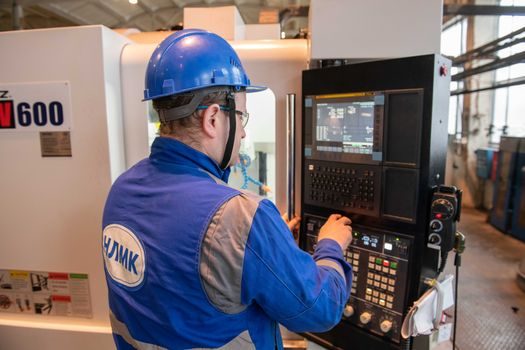
For water-treatment OEM buyers, the spec clause to write in is "vacuum valve opens at slow-shot end, cavity ≤50 mbar before fast shot, leak-up logged per cycle and exportable as CSV/OPC-UA." That clause is the difference between a cell that holds ±2 mbar on shift 1 and a cell that drifts to 80 mbar by shift 3 and starts venting porosity into the next lot of RO manifolds. Buyers running multi-vendor cells should also confirm the HMI supports Modbus TCP or OPC-UA before placing the order; older HMIs with proprietary fieldbus add a 3–6% integration cost on the plant-side PLC that rarely shows up in the machine quote.
Standards, Sourcing Constraints and Use-Case Fit
[S1]
For Xylem-class ZLD skid builders (the Vacom evaporator/crystalliser line integrates vapor-compression with brine concentration) and other Tier-1 water-tech OEMs, the casting supplier audit usually runs on three items: vacuum-level data logging, alloy traceability and surface-finish consistency on anodised faces [S3]. Tier-2 and Tier-3 buyers — small municipal skid builders, packaged RO container builders, point-of-use dispenser OEMs — can accept a simpler spec without the OPC-UA export, but should still demand the cavity vacuum trace, because the scrap saving on a 0.8 kg pump cover pays for the audit in 3–4 lots. Hot-chamber sourcing guidance covers the smaller Zn-alloy bracket and handle work; die-steel grade selection matters when the chosen vacuum cell is going to be running H13 dies at 200 °C on AlSi9Cu3, since the through-hardening and temper-resistance bands directly set die life on those long RO-manifold runs.
The two watch-items for Q3 2026 specifiers: the EU's PPWD recast timing on lead and cadmium limits for any component in drinking-water contact, and the supply-side lead time on 70–80 mm shot sleeves and H13 die blocks — both are running 14–22 weeks from the main Chinese clusters as of late June. Buyers who lock the alloy and vacuum spec in July 2026 are looking at first-article delivery in late Q4 2026, with a 3-shot PPAP on a 1.5–5.0 kg Al pump cover or RO manifold as the realistic entry point into a qualified supply chain.