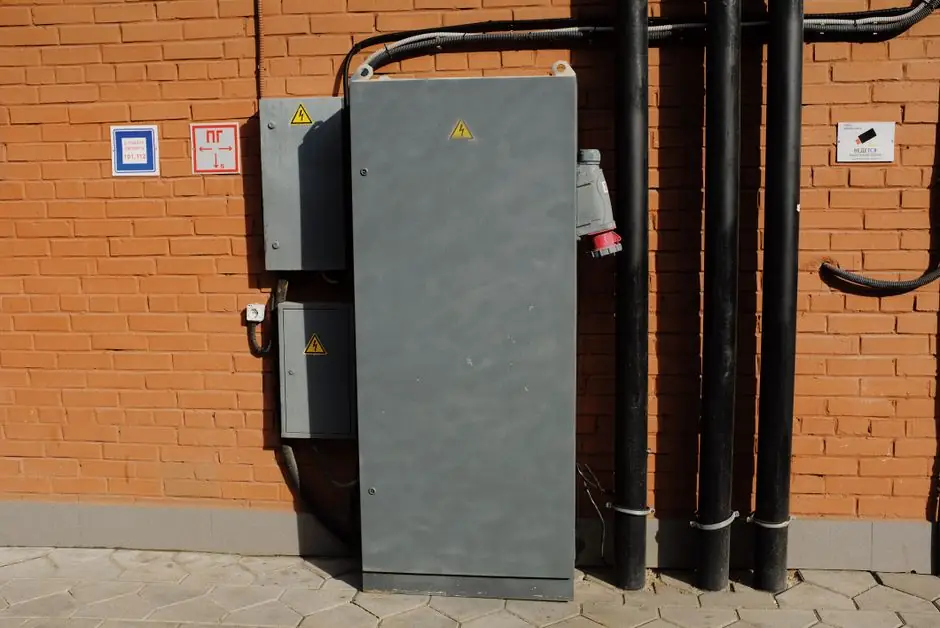
Standby generators in the 8-150 kW bracket are the workhorse segment for residential estates, retail, light-commercial, telecom, and small data-center backup, with diesel dominating the 50-1500 kW commercial tier and natural gas leading the 8-26 kW home segment per current OEM portfolios [S1][S2].
Selection is not a single-number decision: kW load, kVA at 0.8 power factor, fuel logistics, NFPA 110 Tier, ATS topology (open / closed transition / soft-load), and emissions class all shape the shortlist [S1][S3].
Sizing the Load Before Sizing the Set
The first selection step is a measured load list, not a nameplate guess: sum the running Watts of permanently-connected circuits, add the largest motor's locked-rotor current (LRA) to get the step-load, and derate for 0.8 power factor to convert kW into kVA [S3].
Residential 10-20 kW units cover a typical 200 A home service with managed loads, while 26-60 kW units back up small offices, gas stations, and restaurants with HVAC [S1]. Standby generators for telecom and data-center edge sites typically start at 100 kW and run to 500 kW or higher in the containerized format, with paralleling switchgear to reach MW-class [S2].
Fuel Choice: Natural Gas, Diesel, LPG, or Bi-Fuel
Natural gas is the default for 8-26 kW residential standby because the gas utility line keeps the fuel topped up indefinitely; diesel dominates 50-1500 kW because diesel engines tolerate higher kW per liter and accept block-loaded motor starting better [S1][S2].
Mainstream OEM platforms now span FAWDE, Doosan, and WeiChai diesel engines in the 50-1000 kW containerized format, with three-phase 50/60 Hz outputs for cross-region deployment [S2]. Briggs & Stratton standby platforms in the 10-20 kW range use a 6-character model number prefixed with "04" and a 2-character revision, simplifying spare-parts ordering across the home standby line [S5].
For sites without gas utility access, LPG/propane standby and bi-fuel (diesel pilot + natural gas main) are common, but runtime is bounded by the on-site tank, so fuel autonomy in hours at full load must be specified alongside tank size [S1].
Transfer Switch Topology and Switching Time
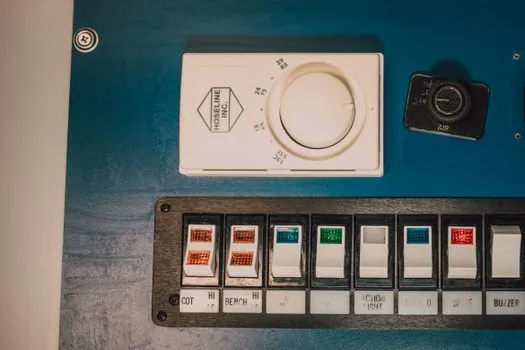
The automatic transfer switch (ATS) is half the system: open-transition switches are cheapest but break the motor's residual voltage, while closed-transition switches overlap sources for under 100 ms to ride through grid-side disturbances [S1].
ASCO transfer switches and load banks pair with most major standby brands and are stocked by US dealers alongside the generator, which matters when an outage hits: 24/7 emergency service contracts from regional dealers explicitly cover the ATS, not just the engine [S1]. For mission-critical loads, soft-loading switchgear lets two or more generators run in parallel and shed/load-share without a blackout when a unit trips offline [S2].
Application Fit: Who a Standby Set Is FOR, and Who It Is Not
A standby generator is FOR sites that need automatic, code-required, or business-continuity backup: hospitals (NFPA 110 Type 10/Class X), data-center edge, telecom, water/wastewater lift stations, refrigerated warehouses, and homes in outage-prone service areas [S3][S4].
A standby set is NOT for prime power in remote sites, where a prime-rated diesel genset is the correct spec, and it is NOT for short-duration ride-through where a UPS covers the 10-30 s gap before the engine reaches rated voltage and frequency [S4]. Buyers who need portable or towable power for jobsites should look at trailer-mounted mobile gensets rather than stationary standby, because standby assumes a fixed pad, fixed fuel line, and fixed exhaust routing [S2].
Selection Criteria: A Side-by-Side Comparison
For the most common 10-150 kW duty, four realistic options line up as follows: (a) 10-26 kW air-cooled natural gas residential standby, lowest cost per kW, 100-200 A service coverage, single-phase 120/240 V; (b) 30-60 kW liquid-cooled natural gas/LPG, three-phase 208/480 V available, covers small commercial with managed HVAC; (c) 60-150 kW diesel standby, 480 V three-phase, EPA Tier 4 Final emissions, 24 h sub-base fuel tank, accepts 100% block load; (d) 150-500 kW containerized diesel with paralleling switchgear, used for telecom hub and data-center edge redundancy [S1][S2].
Across these, the decision criteria are: cost per kW (a is lowest, d is highest), fuel autonomy (a unlimited via gas utility, c-d limited by tank), emissions compliance (a-b exempt from EPA Tier 4 Final below ~75 hp in most US jurisdictions, c-d require it), motor-starting kVA (diesel wins), and installation footprint (a pads in a yard, d occupies a 20 ft ISO container footprint) [S1][S2].
Standards, Protections, and Sourcing
Standby generator protection design draws on NFPA 110 for emergency and standby power systems (defining Type/Class/Tier), IEEE 141 (Red Book) for facility power distribution, and IEEE 242 (Buff Book) for protection and coordination, with medium-voltage sets adding differential protection (87), overcurrent (50/51), and reverse-power (32) per the standard protection textbook treatment [S6].
Residential and small-commercial buyers should insist on UL 2200 listing for the genset package and CSA C22.2 No. 100 for the Canadian market, and confirm the ATS is UL 1008 listed; these three marks are the quickest way to filter out non-compliant imports in the 8-150 kW range [S1][S3]. Dealer-led sourcing from authorized service networks (Kohler, Generac, Cummins, Briggs & Stratton, Winco, Onan) tends to be safer than open-market imports because warranty claim flow and parts stocking run through the dealer, not the buyer [S1][S4].
Procurement signals worth tracking next: EPA Tier 4 Final transition timelines for the 19-75 kW standby band, and the growing overlap with battery energy storage for hybrid systems that ride through the engine-start delay [S3]. For a closer look at how a similar control-and-power specification is structured, see this direct-mount pressure transmitter reference, and for the parallel question of mechanical drive and control hardware sourcing, this OneSpan hardware-tagged 8-K note is a useful contrast. Linked control-side protection design also appears in the accelerometer selection guide on ML-core IMUs, where the same standards-citation discipline applies.
Spec-level background on the components involved: linear guide, crossed roller guide, and function generator.