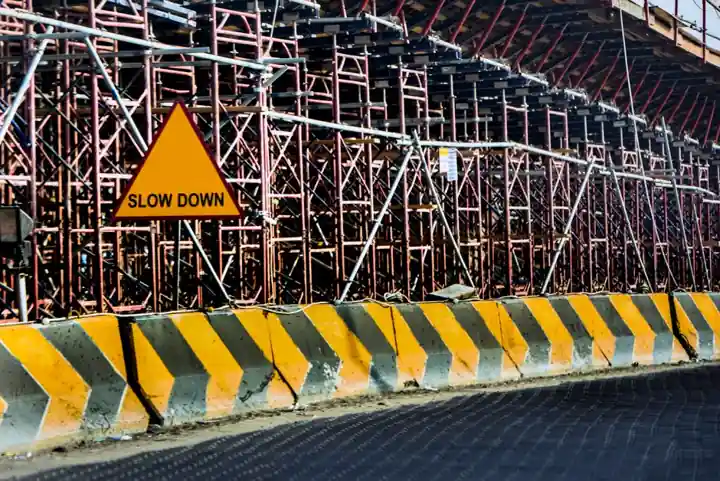
Renovation work is not greenfield work: the substrate is unknown, the slab edges are irregular, the mix water is whatever the truck brings, and the specifier cannot count on a uniform 28-day cure. Cold-drawn wire hooked-end steel fibers conforming to EN 14889-1 Group I or ASTM A820/A820M Type I are the default starting point, at a typical dosage band of 30-50 kg/m³ for bonded overlays and 20-40 kg/m³ for thin-section toppings, per industry guidance published 2026-08-12 [S4].
Three constraints drive the selection more than any single lab number: bond to the old substrate, residual flexural strength at the design joint spacing, and the corrosion risk carried by the exposure class. A renovation specifier should treat the existing slab as the load path and the steel fiber as a crack-width and toughness upgrade, not as primary tensile steel [S5].
Why Renovation Is a Different Spec From New Build
Renovation overlays fail by delamination, not by crushing, and the steel fiber choice is governed by that mechanism. Overlays are typically 50-100 mm thick; the fiber must therefore stay within a 30-50 mm length band so it does not stand proud of the cover or ball under the screed box [S4]. A 30 mm hooked-end fiber at 0.55-0.75 mm diameter (aspect ratio roughly 40-65) is the common engineering compromise, supplied as glued bundles that disperse inside the mixer [S3].
Bond to substrate is governed by surface preparation, not by fiber, but fiber choice still controls post-crack behaviour across the interface. Where the substrate shows a random crack pattern, distributed fiber reinforcement at 35-50 kg/m³ limits crack width and maintains aggregate interlock better than a mesh that does not cross the crack [S5]. A renovation specifier should still calculate the residual flexural strength fR1 or fR3 (EN 14889-1 performance classes) rather than read the fiber dosage as a strength value.
Steel Fiber Type Comparison for Renovation Use Cases
Fiber geometry drives the comparison. EN 14889-1 Group I cold-drawn wire covers the products the contractor actually sees in the catalog: hooked-end, crimped, and straight. Group II cut sheet is cheaper but offers weaker anchorage; Group III melt-extracted has a rough surface that helps in shotcrete but is harder to pump through a screed. Group IV shaved cold-drawn wire and Group V milled-from-block are niche, mostly used in precast, not renovation [S3].
The takeaway is that the standard name is the certificate, but the shape is what the contractor places on the slab. A spec that names only "EN 14889-1 Group I" leaves hooked-end versus straight ambiguous; tighten the spec to geometry and aspect ratio [S4].
Hooked-End Versus Straight Micro: A Decision Rule

Hooked-end fibers carry the post-crack load by mechanical anchorage: the hook straightens under pullout, and the energy absorbed raises the residual flexural strength fR1 from a typical 1.5-3.0 MPa (plain) to 4.0-7.0 MPa at 40 kg/m³ dosage in normal-strength concrete.
For a standard renovation overlay, hooked-end wins on cost per MPa of residual strength. For a UHPC patch, a bonded topping thinner than 30 mm, or a heavily congested rebar zone, straight micro wins on placement. The wrong choice in the wrong place is a fiber that balls in the mixer, sticks out of the surface, or fails to bridge the cracks that actually open [S4].
Corrosion, Stainless, and the Exposure Question
Carbon steel fibers in a 50 mm overlay with 20-30 mm cover will show rust at the surface within 12-36 months if the slab is exposed to chloride, frequent wetting, or unheated indoor spaces with de-icing salt tracked in. Stainless 304 or 316L fibers eliminate the rust-staining risk and are the only acceptable answer for clean rooms, food plants, and coastal decks, per spec guidance for slab environments published 2026-08-10 [S3][S5].
Where the renovation is industrial warehousing with no chloride exposure and the slab will be coated or sealed, low-carbon cold-drawn wire remains the cost-default. A specifier should also check the chloride limit of the mixing water and any admixtures: a calcium chloride accelerator in the old patch will attack the new carbon steel fiber as aggressively as it would attack rebar [S4].
Dosage, Dispersion, and What the Mixer Operator Sees
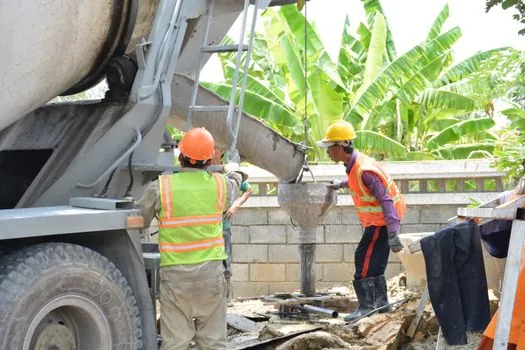
Fiber dosage is not a strength number; it is a crack-control number. A 30 kg/m³ dosage typically delivers a residual flexural strength ratio fR1/fL around 0.4-0.7 in normal-strength concrete; doubling the dosage to 60 kg/m³ does not double the strength, it improves the post-crack toughness and reduces crack width, but it also drags workability down by 30-50 mm of slump [S4].
Glued bundles (colloided or "bundled" hooked-end fibers) disperse in 60-90 seconds inside a normal drum mixer and are the practical choice for site-batched renovation concrete. Loose fibers are acceptable in plant-batched precast; in a site bucket they ball. A water-reducing admixture is almost always required once the dosage passes 40 kg/m³; without it the mix is not placeable [S4].
What Steel Fiber Will Not Replace in a Renovation
Steel fiber is not rebar, and a renovation spec that treats it as a one-for-one substitute will fail. Continuous bars are still required where the structural element depends on directional tensile capacity, anchorage into supports, or moment resistance at a beam-column joint. Steel fiber is a distributed reinforcement, useful in slabs-on-ground, pile caps, mat foundations, and some wall elements, but not a replacement for primary flexural steel in suspended members [S5].
Renovation also exposes the spec to substrate variability that a new-build slab never has. The specifier should require a substrate pull-off test (typical acceptance ≥1.0-1.7 MPa tensile bond), a moisture test, and a survey of existing crack pattern before locking the fiber dosage, because the dosage that closes a 0.3 mm crack is not the dosage that closes a 1.0 mm crack [S4].
Procurement, Standards, and What to Put on the PO
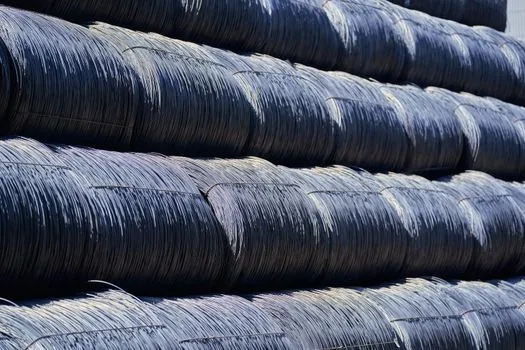
The purchase order should carry: (a) the standard reference, EN 14889-1 Group I or ASTM A820/A820M Type I, (b) the fiber shape and length, (c) the tensile strength of the parent wire, typically 1,100-1,500 MPa for cold-drawn, (d) the dosage in kg/m³, and (e) the residual strength class required at that dosage, fR1 and fR3 per EN 14889-1, or the equivalent ASTM C1609 residual strength result. Without items (d) and (e), the supplier can ship a fiber that meets the standard but does not meet the project [S3][S4].
Batch traceability matters on a renovation because the new fiber batch is going onto a 30-year-old slab. Mill certificates, CE/UKCA or equivalent marking, and a sample retained for the project file are the minimum. For stainless grades, a 304 versus 316L mismatch is a real-world problem and the PO should specify by UNS designation (S30400 / S31603), not by trade name [S3].
For data-center slabs, the spec narrows to stainless 304/316L with documented low-shed behaviour and a tighter surface tolerance, covered separately in the data-center floor selection guide. For high-rise core walls and seismic zones, the residual strength demand jumps and the fiber choice moves toward high-ductility macro-synthetic blends, discussed in the high-rise SFRC selection guide. Where the renovation is a cleanroom slab, the cleanroom-grade steel fiber reference lists the accepted low-shed stainless grades and 304/316L tradeoffs.
Two signals to track over the next reporting cycle: ASTM C1609 residual strength testing becoming more common in renovation tender documents, and EN 14889-1 performance classes fR1 and fR3 being requested as binding acceptance criteria rather than nominal dosage. A third, narrower signal: 4D steel fibers entering the renovation conversation as a hybrid geometry that combines hooked-end anchorage with shape-memory recovery, with published flexural data showing restrained crack propagation under freeze-thaw loading, per a 2026 Construction and Building Materials study [S6]. A specifier writing a 2026-Q4 renovation tender should treat the 4D geometry as emerging, not yet mainstream, and pin the spec to proven Group I cold-drawn wire while leaving room for a substitution request.
Spec-level background on the components involved: steel fiber, carbon fiber, and concrete fiber.