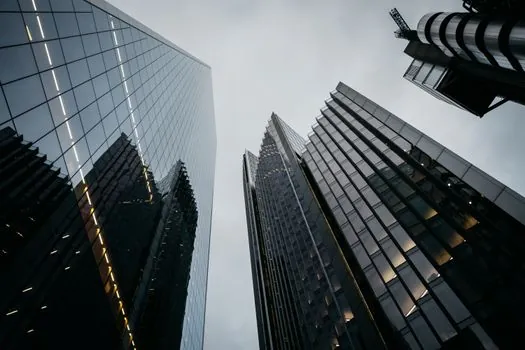
High-rise structural and mechanical specs in 2026 resolve around three load-bearing decisions: the foundation pile (often seamless casing), the lateral-force-resisting frame (HSS columns, outrigger-belt trusses), and the vertical service risers (seamless for high-pressure, ERW for fire/HVAC). The Springer study on piled-raft design for a high-rise in Mazandaran province, Iran, demonstrates that pile arrangement beneath maximum load positions controls both total and differential settlement, using a non-uniform configuration validated against ISSMGE TC18 case data [S1].
Seismic design is governed by lateral stiffness, not just material strength. Pushover analysis on 10, 15, 20, 25, and 30 storey RCC models with a core-and-outrigger-belt system shows the optimum outrigger-belt location varies with building height and load pattern, directly influencing roof displacement, storey shear, base shear, and fundamental period [S4]. For tubular outrigger chords and HSS bracing, steel pipe grade, diameter, and wall thickness must satisfy the seismic demand envelope before they satisfy any plumbing or fire-suppression duty.
Spec gate 1: structural grade and pipe type
ASTM A53 Grade B (ERW, NPS 1/8-26) covers general structural and low-pressure service; ASTM A106 Grade B/C (seamless) covers high-temperature and high-pressure service typically above 400 deg F. For fire-protection risers, NFPA 13 references ASTM A795 in addition to A53. The structural frame itself frequently uses ASTM A500 HSS for columns and bracing, which is a different product form from line pipe but is often procured from the same mill. [S3]
For deep-foundation piling in high-rise builds, seamless steel pipe is widely specified for casing because the absence of a longitudinal weld eliminates a known fatigue and corrosion initiation line under cyclic seismic and lateral loads. Welded mesh panels made from low-carbon, electro-galvanized, or hot-dip galvanized wire are routinely used as an ideal material in the new type of high-rise building construction for slab reinforcement and partition walls [S2], complementing the structural pipe cage rather than replacing it.
Spec gate 2: outrigger-belt position and seismic load path
Outrigger-belt position is not a single fixed elevation; it shifts with storey count, lateral load pattern (uniform, modal, triangular), and loading direction. Pushover analysis on 3D RCC models from 10 to 30 storeys confirms that the same outrigger-belt location produces different roof displacement and storey shear in the X versus Y direction, so the pipe-spec engineer cannot reuse one pipe schedule for both axes [S4].
For 20-30 storey towers, the optimum outrigger-belt typically sits between 0.4H and 0.6H; for 10-15 storey towers it shifts lower because the fundamental period is shorter and mode-shape influence on upper-storey drift is reduced. HSS or heavy wall pipe chords in the outrigger-belt must therefore be checked at the actual installed elevation, not at a generic mid-height assumption. Lateral stiffness from the pipe-and-concrete composite core is what the analysis is reading, which is why wall thickness and steel grade (A500 Grade B/C, yield 46-50 ksi) are first-tier spec data, not a procurement afterthought.
Spec gate 3: vertical service risers and fire-protection mains
High-pressure service risers for domestic water, hydronic heating, and compressed air specify seamless A106 Grade B in NPS 2-12 with Sch 40 to Sch 80 wall, because the homogeneous grain structure handles thermal cycling between ambient and 400 deg F without the weld HAZ becoming a fatigue starter. The seamless construction eliminates the risk of leakage at the weld seam and enhances reliability in marine and offshore-style service conditions, which translates directly to high-rise mechanical rooms where leak detection is delayed by enclosure [S3].
For fire-protection standpipes and sprinkler risers, NFPA 13 lists ASTM A53, A135 (ERW), and A795 as acceptable; ERW is the cost-effective default where the operating pressure stays below 175 psi and the temperature below 150 deg F. Where a high-rise life-safety system feeds a multi-zone pump array with churn surge pressures above 250 psi, specify steel-plastic composite pipe only for the buried service lateral, not for the riser; the riser stays metallic. For plumbing drain, waste, and vent in tall shafts, cast iron historically dominated, but current high-rise specs increasingly accept service-weight cast iron or, for low-rise portions, PE pipe for horizontal runs where building movement joints concentrate.
Selection criteria comparison: seamless vs ERW vs HSS
The three pipe families are not interchangeable. Seamless (A53 Type S, A106, API 5L) carries the highest pressure and temperature envelope, has no longitudinal weld, and is the only option for high-temperature and high-pressure service above 400 deg F [S3]. ERW (A53 Type E, A135) is the workhorse for Sch 40 fire and water mains, with consistent wall concentricity and lower cost per ton. HSS (A500) is a structural section, not a pressure pipe, and is not rated for hydrostatic pressure duty even when the wall thickness matches a Sch 40 line pipe.
Across the decision criteria, seamless wins on pressure rating, temperature ceiling, and corrosion fatigue resistance; ERW wins on cost, availability, and dimensional range up to NPS 26; HSS wins on section modulus and concentric compression load, but loses on pressure and on the cost of an ASME B31.1/B31.3 pressure rating. For high-rise builds, the procurement pattern is usually ERW for fire and HVAC mains, seamless for high-pressure and high-temperature risers, and HSS for the structural frame and outrigger chords.
Foundation interface: pile raft and pipe casing
For piled-raft foundations under non-uniform column loads, optimizing pile arrangement beneath the heaviest load positions reduces total and differential settlement with similar total pile length compared with uniform layouts [S1]. The pipe casing for bored piles is usually A252 Grade 2 or 3 (welded or seamless) in NPS 16-48, with wall thickness selected to resist ground-water hydrostatic pressure during concrete pour, not the structural building load. After concrete placement, the casing acts compositely with the pile concrete; the seam orientation and weld quality matter for the long-term groundwater seal.
For driven precast piles, the pile itself is reinforced concrete with a steel cage; pipe casing is rare. For steel H-piles, the spec is ASTM A572 Grade 50 or A690 for marine exposure, which is a rolled section, not a pipe. Engineers who need a closed-ended driven pile for soil displacement use steel pipe with end plates, typically A252 Grade 3 in 12.7-25.4 mm wall, driven with a vibratory hammer in granular soils and a hydraulic impact hammer in cohesive soils. The sleeve around the pile cap connection is then sealed with a pipe clamp rated for the expected differential movement across the seismic gap.
Standards, sourcing, and 2026 procurement notes
The governing standards for high-rise steel-pipe specs are ASTM A53, A106, A252, A500, and A795 for product; ASME B16.9 and B16.11 for fittings; ASME B31.1 for power piping and B31.3 for process piping; NFPA 13 for fire sprinkler; and AISC 360 and the relevant seismic design category (IBC) clauses for structural HSS. For seismic detailing in high-seismic zones, the AISC seismic provisions add slenderness and width-to-thickness limits on HSS bracing and outrigger chords, which translate directly to wall-thickness minimums the pipe-spec engineer must apply. [S1]
Procurement risk in 2026 concentrates on three items: long lead times for large-diameter seamless (NPS 16+), third-party MTC traceability for imported pipe, and EN 10219 vs ASTM A500 dual-certification for projects in the EU seismic zone. The Lebanon wholesale market listing for seamless steel pipe confirms that offshore-grade seamless supply is treated as a global commodity, with stockists in MENA, South Asia, and East Asia quoting the same ASTM A106/API 5L grade bands for structural and pressure service [S3]. For a related reference on the school-building analog of the same spec map, see Steel pipe selection for schools: 2026 spec gates for campus builds, and for a stricter cleanliness-driven spec environment see Steel Pipe Selection for Cleanroom Service: 2026 Spec Gate Map.