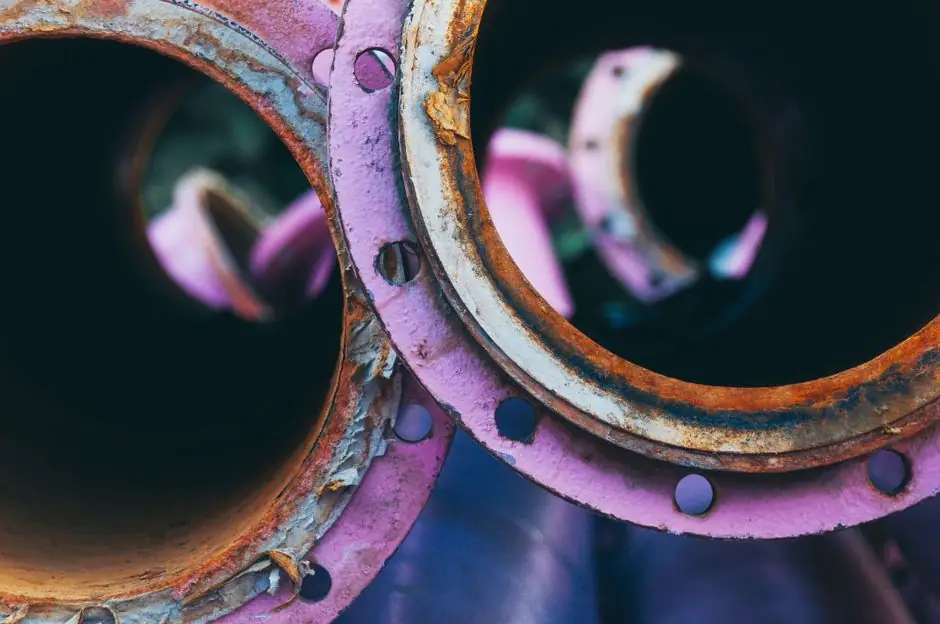
School campus builds in 2026 most commonly spec carbon steel pipe in the 1/2"–6" NPS range for potable water, HVAC hydronic, sprinkler, and soil/waste/vent lines, with ASTM A53 Grade B ERW and galvanized schedules 40/80 dominating domestic U.S. and GCC school projects [S4].
Selection is driven by code compliance, fluid service, and lifecycle cost: ASTM A53 for general plumbing, ASTM A795 for fire sprinkler, and API 5L/ISO 3183 linepipe for larger campus utility mains. Suppliers including Shree Steel Overseas (Dubai) and Apex Pipe (Houston) explicitly list schools and essential buildings among their project scopes [S1][S2].
Service-by-service pipe map for school buildings
A typical K-12 campus routes four fluid services through steel pipe: potable cold/hot water, sanitary drainage, fire protection, and HVAC hydronic/chilled water. For potable water distribution 1/2"–2" NPS, ASTM A53 Grade B galvanized schedule 40 ERW is the default in GCC and U.S. school stockists, supplied with 3.1 MTCs per EN 10204 [S1][S4].
For fire sprinkler risers and branch lines, ASTM A795 Type E (ERW) schedule 10/40 and ASTM A53 schedule 40 are the two governing standards, with UL/CSA listing required by NFPA 13 in U.S. jurisdiction. Permanent Steel's catalog explicitly lists ERW, SSAW, and LSAW carbon steel pipe, all of which intersect school project bills of materials depending on the diameter and pressure class [S5].
For HVAC hydronic and chilled water, schedule 40 black steel with welded or grooved pipe fittings is standard; for direct-buried chilled-water or fire-water mains on larger campus sites, 3PE anti-corrosion coated steel pipe per DIN 30670 / GB/T 23257 is the established buried-service spec [S3].
Material decision: seamless vs ERW vs galvanized
For school building service pipe under 24" OD, ERW (electric resistance welded) ASTM A53 dominates on cost; the general engineering rule is to choose ERW up to NPS 24 and switch to seamless steel pipe only when service temperature exceeds 400 °C or the line is subject to high-cyclic fatigue, which is uncommon in school HVAC and plumbing. [S5]
Galvanized carbon steel (hot-dip zinc coating, typically 610 g/m² for heavy galvanizing per ASTM A53) is the default for potable water and fire lines where corrosion on the inside of the pipe is a concern, while black steel is preferred for closed-loop hydronic where oxygen ingress is controlled. Cangzhou Hongxin's product range includes NPT-threaded galvanized nipples and ASTM A53 pipe, which is a typical school stockist SKUs for plumbing drops [S7].
For buried campus utility runs (fire mains, chilled water, domestic water laterals), steel-plastic composite pipe and 3PE-coated steel pipe outperform bare black steel in corrosive soil: the 3-layer FBE/adhesive/PE coating meets DIN 30670 and GB/T 23257, with continuous service temperatures typically -40 °C to 80 °C [S3].
Diameter, schedule, and length selection
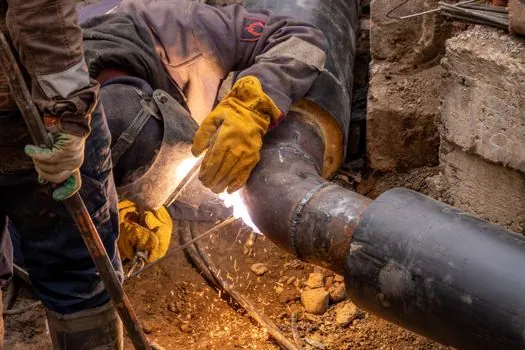
School plumbing fixture branches run at 1/2"–1" NPS schedule 40; water main risers and horizontal runs sit at 2"–6" NPS; fire sprinkler branch lines are typically 1"–2 1/2" with 4"–8" risers in larger schools. Apex Pipe's surplus inventory shows 16" OD × 0.375" wall (62.58 lb/ft) and 48" OD large-diameter rolled-and-welded stock, illustrating the upper end of linepipe diameters that may be used for site utility mains rather than in-building runs [S2].
For fire protection risers specifically, ASTM A795 schedule 10 is now the most commonly specified thin-wall sprinkler pipe in U.S. K-12 builds because it cuts weight roughly 30% versus schedule 40 while still meeting NFPA 13 hydrostatic test requirements; schedule 40 is still required where the line is subject to mechanical abuse (garage ceilings, mechanical rooms).
Standards, documentation, and code compliance
The four standards that govern nearly every steel pipe purchase order on a school build are ASTM A53 (general service), ASTM A795 (fire sprinkler), ASTM A106 (high-temperature seamless, for boiler rooms), and ASME B36.10M (dimensional). For GCC school projects, the equivalents most often cross-referenced are Saudi Aramco 01-SAMSS-001, ADNOC/PDO material specs, and API 5L for linepipe [S1].
Documentation is non-negotiable on education work: 3.1 material test certificates per EN 10204, plus project-specific submittals for potable water (typically NSF/ANSI 61 certification for galvanized or epoxy-lined pipe in U.S. schools). Apex Pipe specifically categorizes stock as "New Surplus" (independent test reports), "Prime" (mill test reports), and "Domestic" (Melted & Made in USA) [S2].
Pressure-rating math for school mains: a 4" schedule 40 ASTM A53 Grade B ERW pipe (OD 114.3 mm, wall 6.02 mm) carries an ANSI B16.5 flange rating of Class 150 at ambient; the pipe's internal allowable pressure per ASME B31.1 (power piping) at 38 °C is roughly 7.0 MPa before derating, more than enough for any school water or sprinkler main.
Supplier landscape and lead time signals
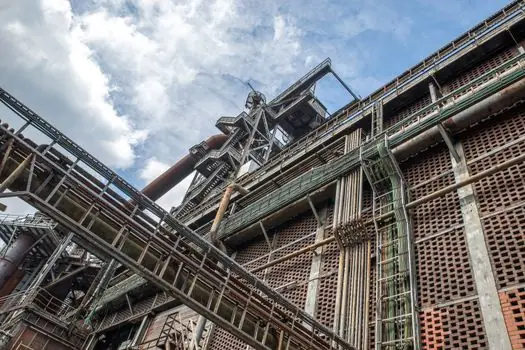
Three supplier archetypes serve school builds: mill-direct manufacturers (Permanent Steel, Tianjin Wanlei, Nansteel, Haodeboer) for production orders of 50 tonnes and up, regional stockists (Shree Steel Overseas, Cangzhou Hongxin) for fast-turn MTC-stamped lots in the 5–50 tonne range, and surplus/used pipe dealers (Apex Pipe) for cost-driven non-safety lines [S1][S2][S3][S4][S5][S7][S8].
Haodeboer's case-study page lists water conservancy, mining, marine, and oil & gas projects as their active sectors, with school builds typically flowing through their oil-and-gas and water-conservancy product lines [S3]. Tianjin Wanlei's hot-product page features ASTM A53 B galvanized seamless, JIS G3466 square tube, and ASTM A53 ERW pipe, the three SKUs most often listed on school plumbing bills [S4].
Standard mill lead time for ASTM A53 ERW in 2026 is 3–5 weeks for stock sizes 1/2"–6" NPS schedule 40; galvanizing adds 1–2 weeks; 3PE coating for buried runs adds 2–3 weeks. For school summer-build schedules (June–August handover), orders placed before March typically land on site without expediting.
Common failure modes and what to avoid
The most common in-service failure on school steel pipe is not the pipe itself but the galvanic joint at the transition between galvanized and black steel, or between steel and copper; dielectric unions or 150 mm of plastic pipe spacer are the standard fix. Internal corrosion of black steel in closed hydronic loops is the second mode, mitigated by keeping dissolved oxygen below 50 ppb via air separators and chemical treatment. [S5]
External corrosion on direct-buried fire mains and domestic laterals is the third failure mode: a 2026 best practice is to specify 3PE coating per DIN 30670 with a fusion-bonded epoxy primer below 80 µm and an adhesive mid-layer, rather than relying on coal-tar enamel or single-layer FBE alone, because 3PE extends service life past 50 years in most soil resistivities above 1,000 Ω·cm [S3].
Avoid mixing standards on a single line class: NPS 2 galvanized A53 nipples (Cangzhou Hongxin SKUs) [S7] should not be spliced into an API 5L linepipe fire main, because the dimensional tolerances, threading, and MTC requirements differ. For a K-12 fire-water service entry, stay on one standard from the building tap to the city main.
Selection checklist for the 2026 school build
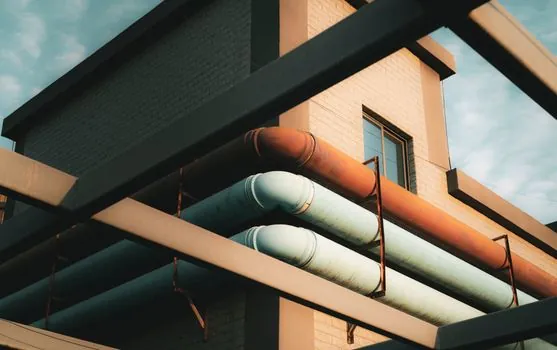
Use this decision grid: (1) Service and fluid, (2) Governing standard, (3) Material, (4) Diameter/schedule, (5) End finish, (6) Coating, (7) Documentation. For a typical school: domestic cold water 1/2"–2" → A53 Gr.B galv sch40 NPT; fire sprinkler 1"–4" → A795 sch10/40 grooved; buried fire main 4"–10" → A53/PSL2 steel pipe 3PE-coated; HVAC hydronic 2"–8" → A53 black sch40 welded. [S5]
For procurement, the engineering gate is the MTC: insist on EN 10204 3.1 for every heat number, plus positive material identification (PMI) on stainless and galvanized runs if the school district is U.S.-public-works-funded. School projects routed through GCC municipal frameworks (Saudi Arabia Vision 2030 school buildouts) will additionally require PDO/Aramco/ADNOC vendor approval before pipe ships [S1].
For a parallel guide on industrial sites and data center pipe runs, the spec-gate logic is similar but diameters and pressure classes step up: see Steel Pipe Selection Gates for Industrial Facilities and Data Center Steel Pipe Selection: Spec Gates for 2026 Builds for the larger-bore variants used on campus utility tunnels and chiller plant headers.
For high-rise campus buildings where riser length exceeds 30 m and vibration is a concern, pipe clamp selection and expansion-loop design become as important as the pipe grade itself; PE-coated risers and grooved-end couplings tend to win out over threaded in this case because of faster erection and easier rework.
Track these three signals for the next procurement cycle: mill lead times for ASTM A53 sch40 4"–6" in your region, any new 3PE coating line capacity announcements, and district or municipality adoption of NSF/ANSI 61 for galvanized potable lines. Any change in these three typically shifts the school pipe bid mix by 5–10% within one quarter.