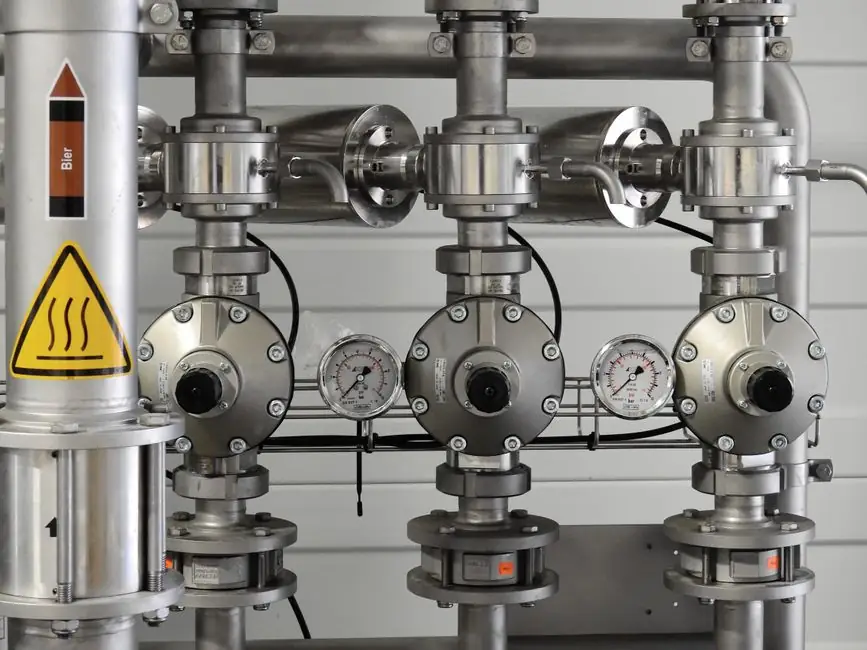
Cleanroom pipe selection is governed by three hard gates: ISO 14644-1 airborne particulate class, ASTM A269/A270 or equivalent stainless tubing specification, and orbital-welded or electropolished joint finish, with galvanized carbon steel rejected above ISO Class 6 by the dominant semiconductor and biopharma spec sheets [S1][S3].
Process utilities in semiconductor fabs, GMP fill-finish suites, and hospital pharmacy cleanrooms route through stainless seamless steel pipe runs in 1/2" to 4" nominal diameters; semiconductor wet benches commonly use 1/2"–2" 316L seamless tubes, while cleanroom makeup air and hydronic loops more often use 2"–6" welded stainless with sanitary joints [S1][S4].
Cleanliness Class and Material Gate
ISO 14644-1 Class 5 (formerly Federal Standard 209E Class 100) caps particulate at roughly 3,520 particles ≥0.5 μm per m³, and is the typical entry point for semiconductor and aseptic suites where any corrosion or particulate shedding on internal pipe walls triggers particle excursions [S1].
Above ISO Class 6, the spec baseline in the current supplier dataset is 304L or 316L austenitic stainless with a 2B or BA internal finish, Ra ≤0.8 μm (32 μin) for general process lines and Ra ≤0.5 μm (20 μin) for high-purity semiconductor UPW/chemicals, versus hot-dip galvanized carbon steel, which is not in the cleanroom product category for any of the surveyed mills [S3][S4]. Galvanized zinc coatings shed particulates, off-gas at the temperatures used for autoclave/sterilization, and corrode under cleanroom quat and H₂O₂ vapor exposure, which is why the cited cleanroom spec sheets pin stainless steel pipe as the only accepted material above Class 6 [S3][S4].
304L vs 316L Stainless Selection
304L (UNS S30403, 18Cr-8Ni, low C) covers most cleanroom process water, WFI, and clean steam lines where chloride exposure is below roughly 200 ppm and operating temperature stays under 60 °C; 316L (UNS S31603, 16Cr-10Ni-2Mo) is the spec for chloride-bearing chemistries, hypochlorite dosing, and bioprocess buffer where pitting and crevice corrosion on sensitized welds are the failure mode [S1][S4].
Carbon is held to ≤0.030% in both 304L and 316L to prevent chromium-carbide precipitation at the 450–850 °C sensitization range, so post-weld passivation and ASTM A249/A269-compliant orbital TIG autogenous welding preserve the as-built Ra value [S1][S3]. Tianjin Wanlei's general steel pipe and seamless product line covers A53 ERW for non-cleanroom service, while their corrosion-resistant range shifts to 304/316 stainless for hygienic use, and Hebei Hongcheng's seamless range extends to ASTM A335 P22/P91 alloy for the adjacent high-pressure boiler envelope outside cleanroom boundaries [S1][S4].
Seamless vs Welded Tubing

Welded stainless (ASTM A249, A312) is acceptable on 2"–6" hydronic and makeup-air runs where the weld seam can be ground flush and electropolished to Ra ≤0.8 μm; the cited Youfa carbon steel category (ERW, LSAW, SSAW) is explicitly not for cleanroom service, while their stainless steel pipe range carries the cleanroom-compatible grades [S5]. For 6"–24" cleanroom exhaust and return-air ducting with low cleanliness demand, hot-dip galvanized welded steel may appear on Class 7–8 rooms, but every surveyed mill positions stainless as the safe default above Class 6 [S3][S4][S5].
Joint, Fitting, and Surface Finish
Orbital TIG autogenous welding with argon-purged internals is the dominant cleanroom joint method; it avoids filler metal composition drift and produces a flush internal bead that electropolishing can bring to Ra ≤0.4 μm, which is the target for semiconductor wet-bench UPW lines and is one of the gate conditions for pipe fitting approval on hygienic service [S1][S3].
Buttweld fittings for cleanroom service follow ASME B16.9 (factory-made) and B16.28 (short-radius) dimensional envelopes, and JS Fittings operates 100-m automatic painting lines plus 1/2"–40" sandblasting on a 35,000 m² site with 30,000 t/year capacity, which is the kind of throughput you need for biopharma and fab build-outs; their standards stack covers ASME/ANSI/GOST/EN/BS/DIN/JIS, with ISO 9001 quality management and CE/GOST-R/PETROBRAS/NIOC/ADNOC certifications applicable to cleanroom-adjacent process piping [S3]. For slurry or viscous product lines, sanitary tri-clamp ferrules and ASME BPE fittings give a clean mechanical joint without crevices [S3].
Comparison of Common Cleanroom Pipe Options
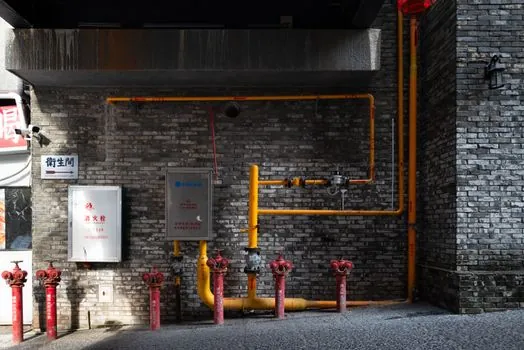
On four decision criteria, the typical 2026 spec sheet maps to: (1) Material grade: 304L suits clean WFI/process water, 316L suits chloride and pH extremes, galvanized carbon steel is excluded above ISO Class 6, 2205 duplex suits hot NaOH or high-chloride CIP; (2) Manufacturing route: seamless dominates ≤2", welded and electropolished is acceptable 2"–6", ERW galvanized is rejected; (3) Internal finish: 2B mill (Ra ~0.6–0.8 μm), BA (Ra ~0.3–0.5 μm), mechanically polished to 20 μin, or electropolished for ≤10 μin on semiconductor lines; (4) Joint method: orbital TIG with autogenous weld plus purge, plus sanitary tri-clamp for process skids, never threaded joints in cleanroom process lines [S1][S3][S4].
Vinayak Steel's Indian export catalog (Mumbai, 400004) carries nickel alloy plates, buttweld fittings, and stainless plate stock that routinely feed cleanroom projects; the same vendor line shows the stainless fast-track pipe/tube/fittings/valves/flanges package that large Indian biopharma EPCs pull in directly, and it aligns with the China-side offer from JS Fittings and Wanlei on grade, standards, and documentation [S2][S3][S4].
When Steel Pipe Is the Wrong Choice
Carbon steel and galvanized steel fail cleanroom service in three measurable ways: zinc off-gassing at the 121 °C SIP/sterilization temperature, iron-oxide particulate shedding under cleanroom H₂O₂ vapor cycles, and crevice corrosion inside threaded joints exposed to chloride-bearing quat disinfectants, all of which drive particle counts above the 3,520/m³ limit that ISO Class 5 enforces [S1][S4].
For high-purity deionized water, ultrapure chemicals, and clean steam, polymeric alternatives such as PE pipe in PP/PVDF/PFA-lined form factor are sometimes chosen for sub-1" lines, but the load-bearing main headers in 2"–6" sizes are still stainless in most audited cleanrooms; and the steel plastic composite pipe category, while common in municipal and chemical service, is not used in GMP or semiconductor interiors because the polymer inner liner can shed and outgas [S3][S4]. Specifying stainless also avoids the leakage and pipe clamp support-spacing failure mode that plagues composite systems on long vertical risers, where the metal-polymer bond is the recurring leak path.
Standards, Sourcing, and Trackable Signals
The governing standards stack for cleanroom stainless pipe is ASTM A269 (seamless and welded austenitic tubing for general service) and A270 (sanitary tubing for dairy/food/pharma), with ASME B31.3 process piping and BPE for bioprocess, plus ISO 14644-1 for the room classification, and the offering from the four China- and India-side suppliers is documented as ISO 9001 and ASME/ANSI/GOST/EN/BS/DIN/JIS compliant at the mill level [S3][S4].
Trackable signals over the next quarter: (1) ASTM A270 revision activity on electropolished internal Ra values, (2) ISO 14644-1 update cadence for Class 5 particle limits, and (3) EPC RFQs for 316L seamless 1/2"–2" tubing into semiconductor fabs in Hubei, Telangana, and Penang, where Wanlei, Hongcheng, JS Fittings, and Vinayak already ship recurring tonnage. Practical guidance for spec writers: pin ASTM A269/A270, 316L seamless, orbital TIG with Ra ≤0.5 μm internal, and reject galvanized carbon steel above ISO Class 6; the 304L/316L gate plus surface finish plus joint method is the complete decision rule [S1][S3][S4]. A 2026 Q4 signal to watch is EPC repeat-order patterns at JS Fittings and Wanlei, which would confirm whether the spec sheet described here is being written into new fab and fill-finish contracts. For builders cutting first-time cleanroom pipe, a useful cross-reference is the renovation steel plate selection gate map and the food and beverage AMR stainless washdown gate map, both of which rely on the same 304L/316L finish logic.