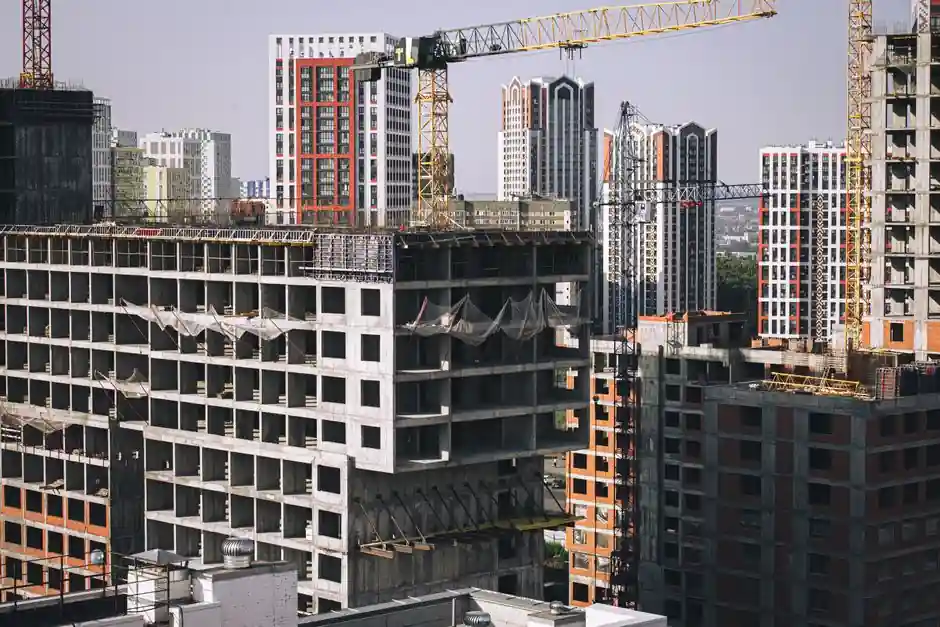
Steel-plastic composite pipe (SP) selection for high-rise water and fire risers resolves around three hard numbers: a 1.6 MPa working-pressure rating for high-rise and fire mains, a DN65 to DN200 size band for the community and riser trunk, and a 22,860 mm (75 ft) occupied-height threshold above which most codes force metallic piping on the vertical run [S2][S7].
The composite family is broader than the name suggests: plastic-aluminum, plastic-steel, plastic-fiber, and plastic-copper variants all share a polymer liner bonded to a metal or fiber reinforcement, and the right one for a tower depends on whether the line carries potable water, fire-fighting flow, or mildly corrosive drainage, with the steel wire-mesh skeleton type being the default pick for fire and high-rise risers per current mainland spec guidance [S2][S4].
Pressure, Diameter, and Wall-Thickness Bands for SP Risers
Working-pressure selection is the first gate. Low-rise residential supply sits at 1.0 MPa, mid-rise building networks at 1.25 MPa, and high-rise plus fire-protection risers at 1.6 MPa on standard SP constructions, with thickened-wall options specified for buried or salt-alkaline routes [S2]. The same source maps nominal diameter to duty: household branches DN15 to DN25, household risers DN32 to DN50, community mains DN65 to DN200, and municipal or factory feeders at DN200 and above [S2]. HDPE alternatives (PE100) compete on flexibility and corrosion resistance, but they still have to clear the same 1.6 MPa envelope when specified for high-pressure zones, and they handle water-hammer shock better than rigid metal purely because the polymer yields elastically [S3].
For a criteria-based comparison, the four realistic candidates for a high-rise riser line up as follows. SP steel-wire-mesh skeleton: 1.6 MPa rated, DN65 to DN200 common, fire-rated by composition, medium weight. Lined plastic-steel (epoxy-coated): 1.0 to 1.6 MPa, DN15 to DN200, best for domestic potable, lighter than solid steel. Inner-and-outer plastic-coated steel: 1.0 to 1.25 MPa in standard wall, used for sewage and mildly corrosive media, with thickened anti-corrosion plastic layer specified for damp or salt-alkaline soils [S2]. HDPE PE100: pressure classes spanning PN10 to PN16 (about 1.0 to 1.6 MPa), flexible, corrosion-proof, but not fire-rated for the riser itself [S3]. Polybutene-1 (PB-1) systems land in a similar pressure band to HDPE and add acoustic damping, which matters on long vertical plumbing stacks [S6].
Code Threshold That Forces Metallic Pipe Above 75 ft
Under the IBC high-rise material provisions adopted in U.S. jurisdictions, metallic piping is mandatory throughout buildings whose occupied floor sits more than 22,860 mm (75 ft) above the lowest level of fire-department vehicle access, which is the line that pushes designers away from all-plastic risers on tall residential and hotel towers [S7]. That is the reason a pure HDPE or PB-1 stack will not pass on its own above the 75 ft line, and why a steel-plastic composite is the practical answer: the steel backbone satisfies the metallic-pipe rule while the plastic liner preserves the corrosion and water-quality advantages of polymer [S2][S7].
Fire-protection mains in particular are spec'd as steel wire-mesh skeleton SP rather than lined plastic-steel, because the skeleton geometry keeps the pipe round under fire-load conditions while the polymer coating on the steel mesh keeps the wetted surface from corroding during the 50-plus-year design life [S1][S2]. A PVC pressure pipe in a non-fire zone will outlast most metal alternatives (PVCPA data point to a 100-plus-year life expectancy), and PEX installed and maintained properly is rated for 50-plus years, so the polymer liner is not the weak link in the composite, the steel skeleton is what carries the mechanical and fire load [S1].
Material Trade-offs: Composite vs Plastic vs Pure Steel
The PVCPA and Green Building & Design citations in the plastic-pipe literature frame the choice clearly: PVC pipe manufacturing uses virtually 100 percent of the PVC compound and the product is fully recyclable, with a life expectancy of more than 100 years; PEX has lower manufacturing impacts than copper because the low-temperature extrusion process is energy-light, and its service life matches copper at 50-plus years when properly installed [S1]. Pure steel, by contrast, can handle about 20 percent more pressure than welded steel of the same schedule because there is no seam to initiate a failure, and stainless Type 304/304L and 316/316L remain the principal materials for municipal water and wastewater service where corrosion is the dominant design driver [S5].
The composite lands in the middle: it isolates the wetted path from oxygen, so the inner wall does not oxidize or scale the way a plain carbon-steel pipe does, and the smoother plastic bore reduces pumping friction loss compared to aged metal [S4]. On a tower, that means smaller booster pump sets for the same fixture count, or the same pumps delivering usable pressure on the top floor where the static head is highest. Designers also have to remember that HDPE and PB-1 still need water-hammer arrestors even though the polymer itself absorbs some shock, and that PEX and HDPE both fall under the 75 ft metallic-pipe rule in U.S. high-rise code, so a true composite (or pure metal riser) is the only code-clean path for the vertical stack itself [S3][S6][S7]. For a wider procedure view of how the polymer side of these systems gets installed, the field procedure on plastic pipe installation walks through the same pressure and support logic that governs the SP riser, and the comparison to other metallic and polymer stacks sits in the steel pipe family entry.
Fitting Compatibility and Support Hardware
Every SP selection has to be matched downstream, because the nominal diameter and pressure rating of the pipe have to be carried through to the elbow, tee, and flange fittings, otherwise the joint is the leak point before the pipe wall is [S2]. In practice that means same-DN, same-PN fittings on the riser, with flanged transitions at equipment boundaries and grooved couplings on the straight runs where the spec allows disassembly. For HDPE, the same rule shows up as electrofusion or butt-fusion coupling selection matched to the PE100 pressure class, and for PB-1 the joint is typically a heat-fusion or mechanical press fit that has to share the pipe's published pressure derating curve at the operating temperature [S3][S6].
Support spacing on the riser is set by the same pressure and temperature envelope, and indoor overhead or concealed ceiling runs take standard wall thickness, while buried or pipe-jacked sections take the thickened wall option; salt-alkaline or damp soils push the specifier to the thickened anti-corrosion plastic layer, which adds roughly 1 to 2 mm of outer coating on the steel substrate [S2]. For a higher-level view of where SP sits against other reinforced polymer options like FRP composite stacks, and how the steel backbone relates to the wider seamless steel pipe market that feeds the riser industry, the comparison turns on temperature ceiling, joint method, and fire rating rather than raw pressure.
What SP Is and Is Not the Right Answer For
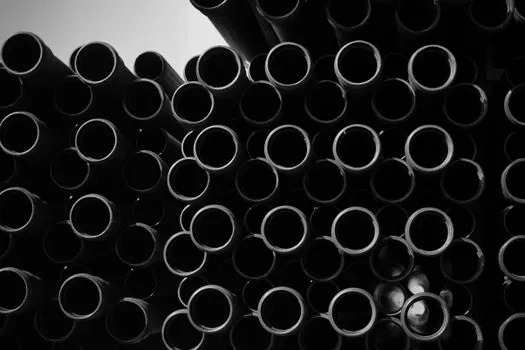
SP is the right answer for high-rise domestic risers above the 75 ft threshold where the code wants metal, for fire-protection mains where the steel mesh skeleton gives both pressure rating and fire integrity, and for community and municipal feeders in the DN65 to DN200 band where a 1.6 MPa rating matches the pump curve [S2][S7]. SP is also the right answer where the water chemistry would attack plain carbon steel, since the polymer liner keeps the wetted path isolated from oxygen and aggressive ions [S4][S5].
SP is not the right answer where the spec demands a single-material recyclable pipeline for a green-building credit (pure PVC or PEX scores better on the recycling metric, even with the PVCPA 100-year and PEX 50-year service-life data points), and it is not the right answer for low-pressure residential branches where DN15 to DN25 lined plastic-steel or PEX will do the job at lower cost and faster install [S1][S2]. It is also not the right answer for high-temperature process service or for hydrocarbon lines, where the polymer liner's temperature ceiling is the binding constraint, and a seamless carbon steel API 5L line pipe is the correct call instead [S5]. Where the design needs the metallic-pipe rule satisfied while still protecting the bore, the steel-plastic composite pipe family is the explicit answer; where the design needs a pure polymer pressure pipe for cold domestic water, the plastic pipe encyclopedia page is the right starting point instead.
Next spec milestones to track: any 2026 update to the high-rise material provisions governing the 22,860 mm (75 ft) metallic-pipe threshold, and any revision of the 1.6 MPa high-rise and fire-main pressure-rating convention in the SP manufacturer literature, both of which would shift the SP versus lined-plastic-steel versus HDPE split on the next tower project.