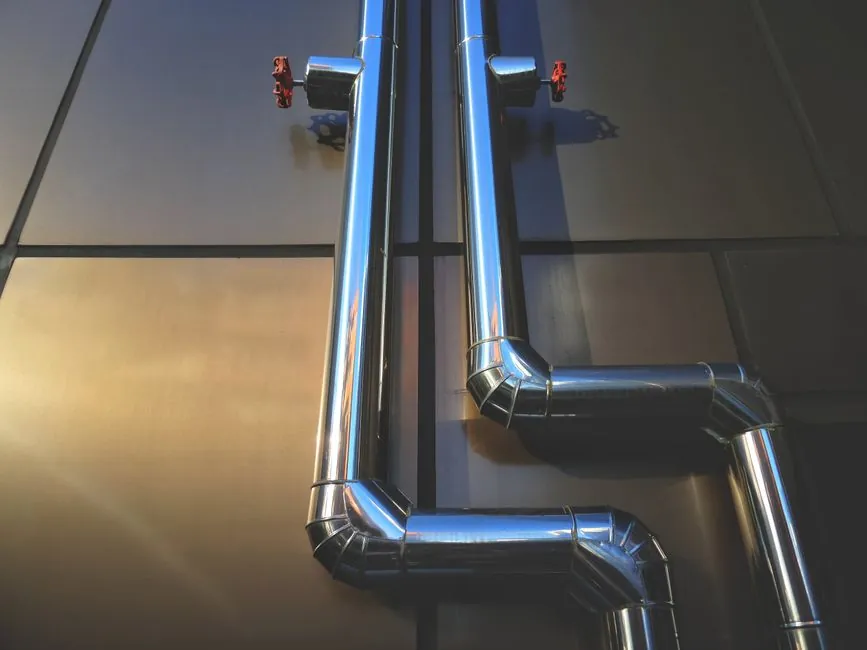
Steel-plastic composite pipe (SP) is the renovation default where legacy galvanized steel has scaled shut but risers, joist penetrations, and meter assemblies were sized for steel, not plastic; the multi-layer design keeps that steel dimension while replacing the corroding inner surface with a bonded PE or epoxy liner [S4].
For renovation, the working envelope that matters is design life up to 50 years, an oxygen-barrier inner wall that protects boilers and balance tanks from diffusion corrosion, and a galvanised outer steel substrate that retains threaded, flanged, or grooved connections identical to the pipe being removed [S4][S6]. Hot-water circuits in occupied buildings, hospital and food-processing risers, and direct-drinking-water laterals are the four scenarios where SP outperforms both bare steel and all-plastic PEX/PE-RT alternatives [S1][S6].
Substrate anatomy: what is actually inside an SP pipe
SP is not a single product. The four production variants documented in industry guides are steel-belt reinforced SP, seamless-steel-pipe reinforced SP, perforated steel-strip SP, and steel-mesh skeleton SP, each with a different pressure/temperature ceiling and a different bending behaviour on site [S4].
Plastic-coated steel and steel-plastic composite differ in process: the former welds a PE anti-corrosion layer on the outside of a standard steel pipe, while the latter is a galvanised internal plastic-coated composite steel pipe made by pretreatment, preheating, internal coating, levelling, and post-treatment, usually supplied threaded [S4]. That process distinction is the reason SP is rated for direct drinking water (oxygen barrier on both faces) while a simple plastic-coated line typically is not [S4].
Pressure, temperature, and water-hammer envelope
Renovation crews should size SP against three concrete limits: working hot-water temperature typically 95 deg C with short peaks to 110 deg C for heating circuits, sustained working pressure of 1.0-1.6 MPa for residential risers and up to 2.5 MPa for high-rise booster lines, and a water-hammer surge allowance of roughly 2x working pressure without rupture [S3][S4].
The steel substrate is what gives SP its water-impact resistance and overcomes the two well-known plastic-pipe weaknesses, low strength and poor fire performance; this is the trade-off the manufacturer literature points to when comparing SP against PPR or PE-RT single-layer pipe [S4]. For full multi-layer composite data, see the steel-plastic composite pipe engineering reference for substrate, liner, and adhesive layer options.
Joint method and on-site bending limits
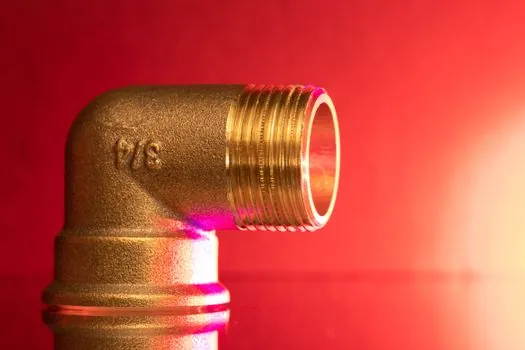
SP cannot be cold-bent on site; the installation rule is straight-run with threaded or grooved couplings, and any field cut must be sealed with the non-toxic room-temperature-curing glue supplied by the manufacturer to repair the damaged coating at the cut face [S4]. Threaded joints are the historical default and remain the cheapest option for residential retrofits, while grooved couplings are preferred in hotel and hospital renovations where welding is restricted by fire watch rules [S4][S6].
For comparison, all-plastic multilayer composite (PERT or PEX inner/outer with an aluminium core) bends without kinks, joints with brass press fittings, and routes around corners without elbows, but it cannot match SP for high-temperature sustained service or for fire-rated shaft risers [S5]. The full mechanical properties of the bare metal alternatives are catalogued in the steel pipe specification reference and the seamless steel pipe specification reference.
Renovation selection criteria vs all-plastic and bare steel
On four decision criteria, SP lines up as follows for renovation: corrosion resistance, inner plastic liner prevents the scaling and rust carry-over seen in legacy galvanised steel, and unlike all-plastic pipe it cannot be permeated by hydrocarbons from contaminated soil [S1][S4]. Strength, the steel substrate retains the same hanger spacing, wall-penetration sizing, and riser support as the original galvanised line, so demolition scope drops versus a switch to PEX/PE-RT [S4][S6]. Installation speed, SP still needs threading, grooving, or flanging plus skilled labour, so it is slower than push-fit PEX but faster than field-welded stainless replacement [S1][S4]. Service life, manufacturer design life of up to 50 years, contingent on the cut-end repair protocol being followed on every field modification [S4].
For a closely related institutional use case, the school piping spec SP selection guide walks through riser sizing, drainage stack transitions, and classroom-branch looping using the same substrate variants covered here.
Where SP is the right call, and where it is not
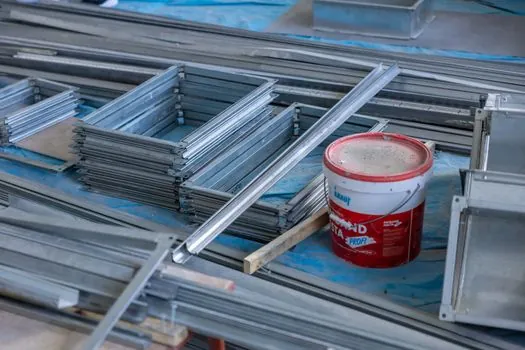
SP is the right call for hot-water risers in buildings taller than six storeys where plastic creep on PEX supports is a concern, for direct drinking-water laterals in hospitals and food plants, and for heating system pipes where oxygen diffusion would otherwise rust cast-iron boilers [S1][S4][S6].
SP is the wrong call for purely cold-water domestic branches where PEX or PE-RT with push-fit fittings cuts installation time by 30-50%, for buried soil and waste stacks where PVC or HDPE dominate on cost, and for any run that requires a tight factory-style bend, because the steel substrate cannot be field-formed [S3][S5]. The full material behaviour of all-plastic alternatives is in the plastic pipe material reference and the engineering plastic material reference.
Limitations, failure modes, and installer pitfalls
The dominant SP failure mode is coating breakdown at the cut face: if the room-temperature-curing glue is not applied, the exposed steel substrate corrodes beneath the plastic and the joint leaks within 5-10 years rather than reaching the 50-year design life [S4]. The secondary failure mode is thermal damage during adjacent hot work, plastic deformation begins above 130 deg C and the adhesive bond between steel and liner loses integrity above 80 deg C sustained [S3][S4].
Renovation crews also need to confirm local listing before specifying SP for fire-rated risers, since not all jurisdictions accept the plastic inner liner in life-safety dry or wet standpipes, even when the outer steel would otherwise qualify [S6]. A documented procurement spec that names the substrate variant (steel-belt, seamless, perforated, or steel-mesh skeleton), the liner material (PE, PEX, or epoxy), the joint system (threaded, grooved, or flanged), and the field-repair kit requirement is the cleanest way to lock in the 50-year performance window [S4].
Trackable signals to watch over the next sourcing cycle: manufacturer-published updates to the cut-end repair adhesive shelf life, and any code-listings expanding SP into fire-rated riser applications beyond the current food-processing and medical scope [S4][S6].