
PE4710 HDPE, with a 1600 psi hydrostatic design basis at 73°F and an MRS of 10 MPa, is the only PE cell class most cleanroom engineers should specify today, per the PPI Handbook of Polyethylene Pipe, second edition (third printing, Sept. 2022) [S1].
Outside the process envelope, in DI water distribution laterals, HVAC condensate, and non-contact floor drains, PE is competing with PP-R, PVDF, and 316L stainless steel, and it usually wins on installed cost, joint integrity, and corrosion resistance when fluid purity is moderate.
Why PE Gets Considered for Cleanrooms, and Where It Stops
Cleanroom piping is governed by the point-of-use purity requirement, not the room class on the wall; the same nitrogen line that ships as Type L copper in a Class 10,000 bay may need electropolished 316L in a Class 100 tool hookup [S2]. PE is rarely the right pick for ultra-high-purity process gas or solvent, because polymer permeation, extractables, and static-charge particle attraction all work against sub-ppb spec lines. For cleanroom support services, however, PE has three properties that engineers keep coming back to: fused joints with no gaskets or thread sealant, a smooth ID that resists biofilm, and zero corrosion in DI or chemical-clean environments. For service classification, sizing range, and DR basics on the broader building side, the PE pipe selection for commercial buildings guide covers SDR mapping and code limits in more detail. For the polymer category generally, the plastic pipe encyclopedia entry frames where PE sits among thermoplastics.
PE Cell Class, DR, and Pressure Rating: the Numbers That Drive Selection
PE4710 is the current high-performance designation; it is a high-density, high-molecular-weight, bimodal resin rated for higher pressure and better slow-crack-growth resistance than older PE3608 or PE3408 cell classes [S6]. Under the IPS convention, the OD of HDPE matches the OD of traditional carbon steel or black iron pipe, so it drops into the same hangers, sleeves, and wall penetrations as steel, an underappreciated advantage during cleanroom retrofits [S5]. For PE4710 at 73°F, the standard DR-to-pressure map is DR 7 = 333 psi, DR 9 = 250 psi, DR 11 = 200 psi, DR 13.5 = 160 psi, and DR 15.5 = 138 psi; cleanroom service lines almost always land at DR 11 or DR 13.5 [S5]. Two practical examples: 2" PE4710 DR 11 weighs 0.768 lb/ft with an average ID of 1.816 in, while 4" DR 11 weighs 2.757 lb/ft at 3.440 in ID [S5]. These are the values to put on the isometric before a fabricator quotes. Reference data on the full PE pipe family and on pipe fittings used to transition to valves or equipment is consolidated in the encyclopedia.
Jointing, Cleanliness, and the Cleanroom-Specific Constraints
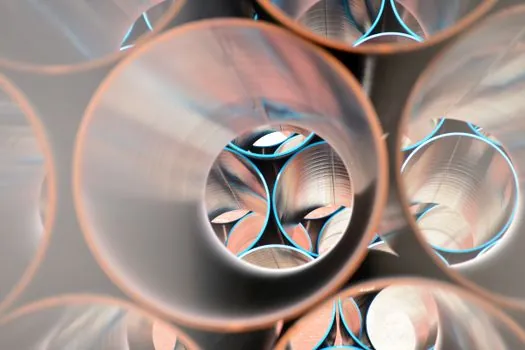
Butt fusion and socket fusion are the only jointing methods most cleanroom QA plans will accept for PE; both produce a homogeneous, gasket-free joint with no crevices to trap particles or biofilm, and both are detailed in the PPI handbook's installation chapter [S1]. Mechanical joints, including stab fittings and threaded adapters, introduce an elastomeric seal and a lubricant film, both of which are outgassing and particle sources, so they are typically confined to equipment terminals and isolation valves, not the trunk. HDPE ships in solid straight lengths or flexible coils; coiled formats reduce the number of field joints on long cleanroom-perimeter loops, which directly reduces the joint-cleaning burden [S7]. Field handling rules in the Performance Pipe Field Handbook (Bulletin PP-901, May 2019) limit UV exposure before installation and require capped ends during storage, both of which line up with cleanroom contamination-control thinking rather than against it [S3]. For hangers and penetrations, design the routing to avoid recesses in the wall or ceiling; recesses collect particles, complicate wipe-down, and are explicitly called out as something to design out in airtight-room guidance [S4].
Where PE Fits, and Where It Should Be Replaced
The defensible envelope for PE in a cleanroom is: DI water at or below 140°F, HVAC condensate, compressed air up to roughly 100 psi when oil content is controlled, and non-process drainage where the fluid is cleaner than what the room is exposed to, in other words, lines that would not fail a wipe test on the outside. Outside that envelope, PE loses to other materials for clear reasons. On ultra-high-purity nitrogen, argon, or any solvent, extractables and permeation push the spec toward 316L stainless or PVDF [S2]. On hot DI above 140°F or on recurrent steam exposure, the HDB derating at elevated temperature drives wall thickness up and the design becomes uneconomic; PP-R is usually the better call there, and the PPR pipe entry covers the operating window. On aggressive chemicals (concentrated acids, strong oxidizers) PE loses to PVDF or stainless. On any line that needs a cleanroom-fire-rated penetration, confirm the local code; PE is combustible and may need a fire-stop wrap or a non-plastic sleeve at wall crossings. Where static-charge-driven particle attraction is a concern on long dry runs, ionizers and grounding straps are the usual mitigation, and the ionizer vs grounding strap for insulated materials comparison is the right cross-reference.
Sourcing, Standards, and Audit-Ready Documentation
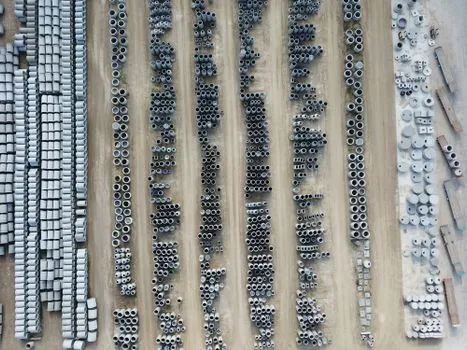
The two documents to put on the submittal shelf before any PE cleanroom install are the PPI Handbook of Polyethylene Pipe (second edition, third printing Sept. 2022) for design and the Performance Pipe Field Handbook (PP-901, May 2019) for receiving, handling, and field fusion QA [S1][S3]. The material designation code on every spool should be checked against the cell-class print; PE4710 is the only cell class most spec writers will accept, and older PE3608 or PE3408 designations indicate a legacy or downgraded resin [S6]. For installations outside North America, PIPA's POP guidelines cover the equivalent best-practice framework for PE pipe welding, storage, and pressure testing, and they are updated on a rolling basis rather than on a fixed multi-year cycle [S8]. Audit-ready paperwork should include the resin cell-class letter, the DR, the ASTM resin standard, the fusion procedure spec, and the bend-back or visual records from each butt-fusion joint, all of which the PPI handbook and PP-901 treat as the standard of care [S1][S3]. A trackable signal for the next planning cycle is the revision status of ASTM F2620 (the standard PE fusion procedure) and any updates to the PPI TR-4 listing of PE4710 resins, both of which govern what a cleanroom QA plan can accept on paper.