
The price spread between 304 and 316 stainless steel is expected to widen to approximately 51% in Q3 2026, while unpredictable costs and lead times for imported materials have increased the importance of predictable, traceable, and reliable supply lines.
The buying model now combines supplier monitoring, price validation, working-capital control, and compliance documentation rather than treating steel as a commodity bought on the lowest quoted rate [S1][S2][S4].
Price volatility changes the purchasing objective
The spread between 304 and 316 stainless steel widened from approximately 45% in early 2025 to 51% in the third quarter of 2026, making grade selection and substitution analysis more important than nominal price comparison alone [S6].
Nickel exposure, Indonesian supply conditions, and the EU Carbon Border Adjustment Mechanism are identified as market drivers for stainless pricing in 2026 [S6]. Buyers should therefore separate the delivered cost of each grade into raw-material exposure, conversion, freight, duties, inventory financing, inspection, and production-loss risk. A nominally cheaper grade can become expensive if it cannot meet corrosion requirements or triggers rework, replacement, or shutdown.
Buyers need a documented process for testing each increase against supplier cost movement, market benchmarks, working-capital effects, and contractual indexation. The defensible comparison is not only price per tonne, but total cost for the usable steel delivered to the correct point of use.
Domestic stock changes the supply-security equation
North American buyers face fluctuating costs and unpredictable lead times when importing stainless tube, pipe, and bar under extended US and Canadian steel and aluminum tariff measures [S3]. Materials already held onshore can avoid customs delays and international freight interruptions, while mill-direct production and cut-to-length processing address nonstandard dimensions [S3].
The comparison is straightforward. Domestic stock offers shorter lead times and better price visibility than just-in-time international shipping, but it ties more capital to inventory and carries obsolescence risk if demand changes. Make-to-order supply can reduce that exposure, although it may add production time and lose some stock-price advantage. Domestic stock and mill-direct production are relevant considerations as North American buyers evaluate strategies for navigating tariff-related volatility in stainless steel sourcing.
Domestic distribution is not automatically traceable or compliant. Procurement must verify the actual grade, dimensions, surface condition, heat or lot information, and required mill documentation for each shipment. Traceability and quality evidence remain necessary even when the source is domestic [S3].
Supplier intelligence becomes a daily control
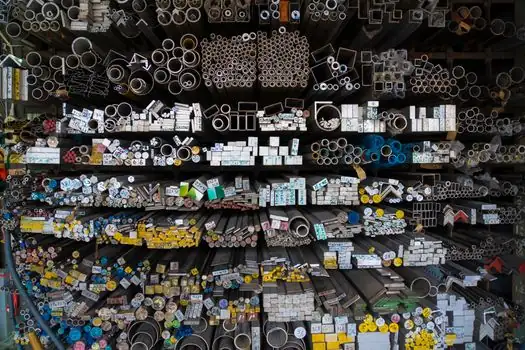
Supplier risk management is shifting from crisis-triggered reviews to always-on monitoring of financial health, operating performance, and geopolitical or regulatory exposure [S1]. That model applies directly to steel because mill availability, raw-material conversion, tariffs, transport, and distributor inventory can affect delivery independently.
AI can accelerate quotation comparison, risk detection, and supplier-data administration, but governed use and accurate data foundations remain prerequisites [S2]. Supplier relationships, talent capabilities, and intelligent data management are emerging as core foundations of procurement's competitive advantage as the definition of procurement value expands beyond cost savings and compliance.
One buying model does not fit every steel order
Stocked domestic material, mill-direct production, and international sourcing should be compared on delivered cost, lead-time certainty, traceability, and working capital. Stocked domestic steel normally wins on availability and schedule protection, mill-direct supply supports custom sizes and production planning, and international sourcing can offer access to grades or capacity unavailable through domestic channels [S3].
These options are not interchangeable. Stocked material can carry a price premium and obsolescence exposure. Mill-direct material can require minimum quantities, longer production intervals, and additional transport planning. Imported stainless steel can expose buyers to fluctuating costs, unpredictable lead times, and increased risk of project delays when international supply chains are disrupted. For project steel, mill test reports and exact dimensional conformity can outweigh a small quotation difference; for high-volume production, price stability and repeatability may dominate.
Contract form should follow the risk allocation. A project with a fixed delivery window and tightly defined specifications needs documented capacity and material traceability before award. A stable consumption program may gain more from indexed pricing, scheduled releases, and reserved inventory. A trial order can establish performance and lead-time evidence before a larger allocation, provided the approval remains valid for the actual production window.
Compliance evidence belongs in the quotation

Quality records are a sourcing condition rather than an administrative attachment. Full Mill Test Reports can verify that stainless material meets the specified grade and required properties for aerospace, energy, defense, or industrial applications [S3]. Domestic and DFARS-compliant stock can address projects with specific government or defense sourcing conditions [S3].
Buyers should define the required document package before comparing offers: mill test report, grade and dimension confirmation, heat or lot traceability, inspection status, and any applicable DFARS documentation [S3]. The quotation should also state who bears the cost of document verification and what happens if the delivered material does not match the purchase specification. Traceability without defined acceptance criteria does not prevent a disputed shipment.
No single procurement standard in the research governs every steel purchase. Project specifications, drawings, applicable codes, and contract clauses must define the exact material and documentation requirements. DFARS compliance applies only when the relevant contract or solicitation requires it, rather than as a universal commercial attribute [S3].
Total ownership cost exceeds the steel invoice
The purchase price is one component of steel cost. Inventory financing, freight, tariffs, inspection, cutting, waste, installation, maintenance, and production interruption determine the economic result. Procurement planning also links supplier choice to logistics, customs, and warehousing because landed cost and lead-time control are more meaningful than the mill quotation alone [S5].
Lower purchase price can increase total cost through longer replenishment cycles, higher safety stock, more administrative handling, or a higher probability of missed production. Conversely, carrying excessive stock can consume cash and expose the buyer to grade, size, and price obsolescence. Real-time inventory and historical data can improve replenishment timing, while supplier collaboration can support payment terms and material availability before stock is exhausted [S4].
Cost reduction should therefore be measured across at least 4 variables: purchase price, inventory days, delivered lead-time variability, and quality-related loss. A sourcing decision that improves only one variable may worsen the others. For corrosion-critical service, premature replacement and unplanned shutdown are material costs that belong in the commercial evaluation.
Procurement control needs measurable operating rules
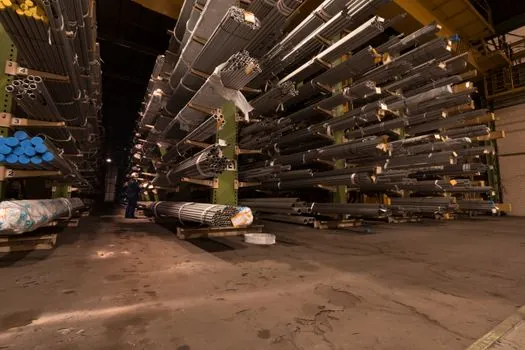
Steel procurement in 2026 succeeds when price decisions, supply continuity, and quality evidence are managed in one workflow. The operating baseline should include approved grade equivalency rules, 2 approved sources for critical categories, documented MTR requirements, live lead-time updates, escalation thresholds for price changes, and periodic review of dual-source allocation [S1][S2][S3].
For 2026 stainless comparisons, track the 304-to-316 price spread, tariff exposure, mill allocation status, domestic stock cover, and document-completeness rate [S3][S6]. A rising 51% grade premium is a trigger for engineering review, not an automatic switch away from 316. A missed delivery date is a trigger for rescheduling or reallocating approved demand, not relaxing traceability requirements.
The next procurement cycle should be tested against 3 measurable outcomes: shorter lead-time variance, lower emergency freight, and fewer material-related credit or rework events. Those metrics expose whether lower quoted steel prices are translating into lower production cost, rather than shifting risk into inventory, quality, or delivery performance [S1][S4].