
Asia Pacific captured 74.1% of the 2025 steel rebar market by value, the dominant regional concentration in a global book sized at USD 202.27 billion in 2026 and projected to reach USD 250.38 billion by 2031 at a 4.4% CAGR [S1].
Five producers are repeatedly identified as the high-tier "star players" across 2026 competitive-landscape studies: ArcelorMittal (Luxembourg), Nippon Steel Corporation (Japan), Nucor Corporation (US), Tata Steel (India), and NLMK Group (Russia), with China Baowu, POSCO, JSW, Gerdau, Steel Authority of India Limited (SAIL), and Commercial Metals Company (CMC) listed as additional principal suppliers in the same cohort [S1][S3][S5][S6].
Regional Concentration and Manufacturer Footprint
Asia Pacific's 74.1% 2025 share by value reflects the combined output of China Baowu, Nippon Steel, Tata Steel, POSCO, SAIL, and JSW, which collectively anchor supply for China, India, Japan, and Southeast Asia [S1][S3]. A separate 2026 dataset pegs the same region at 62.4% of 2025 value, illustrating the spread between volume-based and value-based reporting methodologies [S2]. North America is identified as the fastest-growing regional market, with one forecast citing a 6.41% CAGR for the 2026 to 2034 window, a tailwind primarily captured by Nucor and CMC, both US-based electric-arc-furnace (EAF) operators [S2][S3]. The US rebar market alone was valued at US$ 5.9 billion in 2021 and is projected to reach US$ 10.4 billion by 2030, a doubling of the domestic book over nine years [S8].
Star-Player Manufacturers: Who They Are and How They Differ
ArcelorMittal is the only supplier named in every competitive ranking reviewed, anchoring European and global accounts alongside its EAF-led decarbonization roadmap [S1][S2][S3][S5][S6]. Nippon Steel brings the largest Japanese integrated-mill footprint, with downstream rebar finishing tied to domestic seismic-grade demand; it is the only Japanese producer tagged as a "star player" in the MarketsandMarkets 2026 cohort [S1][S6]. Nucor is the dominant US EAF producer and the primary channel for scrap-fed, lower-carbon rebar; its inclusion in every top-tier list underscores the EAF route's growing share of new capacity [S1][S3][S5][S6]. Tata Steel (India) leads the South Asian subcontinent with both integrated and EAF assets, and is grouped with JSW and SAIL as the Indian supply backbone [S1][S3][S5]. NLMK Group (Russia) rounds out the top tier with a long-product portfolio heavy in billet and rebar; its inclusion reflects pre-2022 export positioning, and it is the only Russian producer named as a star player [S1][S2][S6]. For buyers cross-referencing material grade to steel rebar chemistry, this five-firm cohort represents the bulk of certified Grade 60, Grade 75, and seismic-grade billet supply globally.
Process Route, Bar Size, and End-Use Mix Behind the Share Numbers
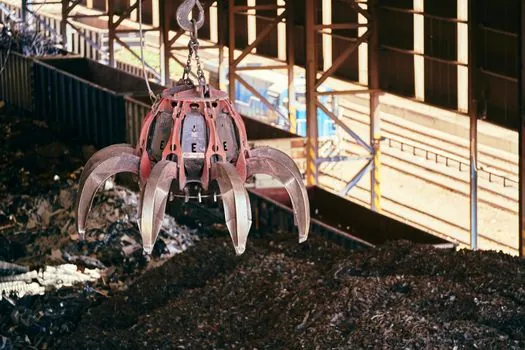
Basic Oxygen Steelmaking (BOS) retained 68.70% of 2025 production-process share, yet EAF-based output is the faster-growing route as scrap availability rises and decarbonization targets tighten [S10]. By bar size, #4 (≈13 mm) rebar leads the 2026 to 2031 forecast in value terms, consistent with its dominance in residential slab and beam reinforcement [S1]. The deformed segment outranks mild rebar in value across the same forecast window, and the #8 bar is the next largest size category, primarily consumed in columns and infrastructure piles [S1]. Construction accounts for approximately 52% of end-use share, with infrastructure and housing-industrial splitting most of the remaining volume [S1][S4]. Within construction, residential sub-segment is the single largest end-user at 24.8% of 2025 demand [S2]. For fabrication buyers, the shift toward higher-strength and corrosion-resistant rebar is reshaping specifications across the cohort, with grade 80, 100, 120, and 150 products becoming the growth tiers [S2].
Comparative Snapshot of the Top Five Manufacturers
Direct side-by-side comparison of the five star-player producers yields a clear buy-side map. ArcelorMittal offers the broadest geographic reach (EU, NAFTA, India via JV) and the deepest decarbonization program, suited to specifiers needing multi-region sourcing. Nippon Steel delivers the highest consistency on seismic-grade and JIS-compliant deformed bar, preferred for Japan-domestic and earthquake-zone export contracts. Nucor operates the largest US EAF rebar network, the lowest embedded-carbon profile among US suppliers, and is the primary channel for IRA-aligned low-carbon construction steel. Tata Steel combines Indian-domestic scale with UK and Southeast Asian finishing assets, offering the strongest Grade 75 to Grade 80 mix in South Asia. NLMK Group supplies a long-product portfolio concentrated in rebar and billet, with a cost base historically below Western European peers but constrained by current sanctions-related logistics on Western contracts. Procurement teams that specify rebar coupler compatibility, rebar bender tolerance, or rebar cutter cycle times will find that each of these five producers maintains distinct mechanical-property envelopes, so matching bar chemistry to coupler certification is the practical first step before brand selection. [S2]
Sourcing Standards, Limitations, and What the Data Cannot Tell You
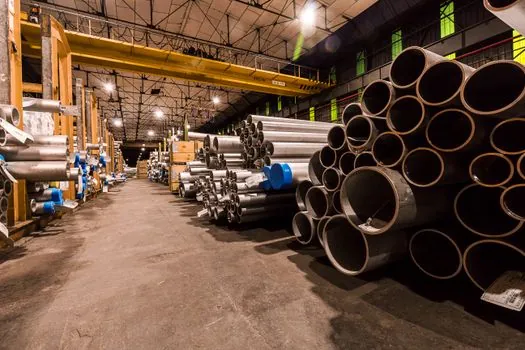
All five star-player manufacturers ship to ASTM A615, ASTM A706, BS 4449, and IS 1786 compliance as a baseline, with seismic-grade and corrosion-resistant variants (epoxy-coated, galvanized, stainless-clad) available on request [S1][S2]. The market reports do not disclose individual manufacturer share percentages; they confirm only that the top two firms hold the largest combined share and that the top ten account for the majority of global volume [S4][S5]. For buyers comparing firm-level pricing, the cited reports list revenue forecasts only at the market level (USD 250.38 billion by 2031 per MarketsandMarkets, USD 350.44 billion by 2034 per Straits, USD 377.6 billion by 2033 per Grand View), and individual producer tonnage remains undisclosed [S1][S2][S7]. The EAF-route growth narrative is consistent across sources but is most concretely supported in the US, where rebar straightener and cutting lines on EAF billet have shorter lead times than BOS-mill imports. Cross-referencing these share numbers against vanadium and other micro-alloy supply remains a separate exercise, since the vanadium market share by manufacturer and producer country, 2026 briefing tracks the micro-alloy side rather than the rebar fabricator tier.
One trackable signal worth watching is whether US rebar demand continues toward the US$ 10.4 billion projected for 2030, up from US$ 5.9 billion in 2021 [S8].