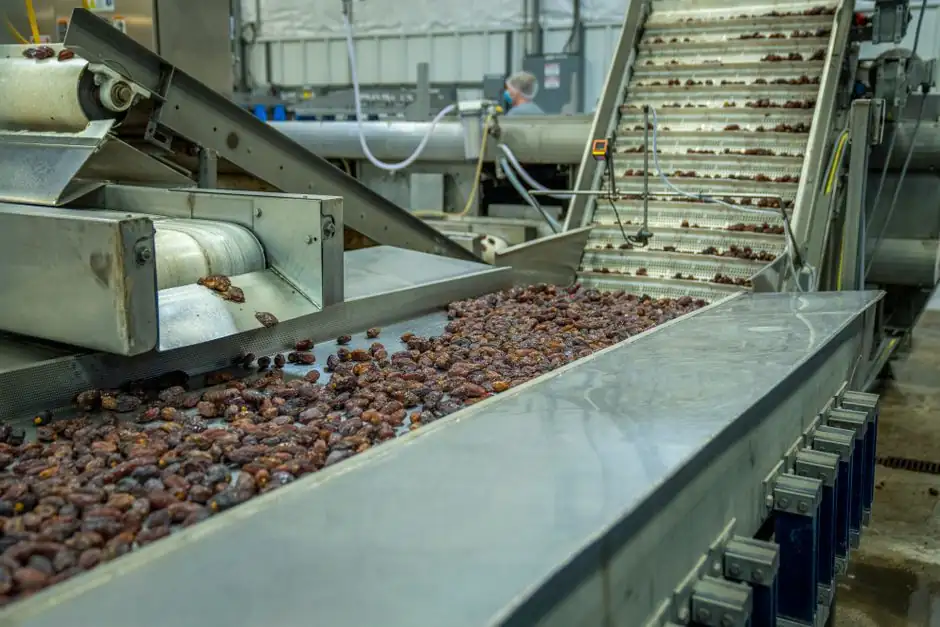
Aggregate demand for food processing and handling equipment is projected to rise from US$132.7Bn in 2026 to US$200.9Bn by 2033, a 6.1% CAGR, while the narrower hot-processing subset is expected to climb from US$27.64Bn in 2026 to US$34.89Bn by 2030 at 6.0% CAGR [S2][S5].
Three independent trackers converge within a tight band: a global food service equipment forecast adds US$14.05Bn between 2026 and 2030 at 6.1% CAGR [S1], food processing and handling equipment tracks at 6.1% to 2033 [S2], while the broader food processing equipment line expands at 5.61% to 2030 [S3] and the food processing machinery subset reaches US$66.37Bn in 2026 [S7].
Segment Breakdown: Processing, Packaging, and Service Equipment
Food processing equipment accounts for approximately 52.8% of the global food processing and handling market in 2026, making it the largest single product block and the natural anchor for capex planning [S2]. Food packaging equipment is forecast to be the fastest-growing of the three product groups, expanding at 6.7% CAGR through 2033 on demand for sustainable materials, automation, and extended shelf-life formats [S2]. Food service and handling equipment rounds out the triad, supported by quick-service restaurant rollouts and ghost-kitchen buildouts documented across the foodservice forecast [S1].
Within the hot-processing subset, the top three sub-segments by incremental revenue gain through 2030 are baking equipment at US$2.05Bn, pasteurization equipment at US$1.35Bn, and frying equipment at US$1.28Bn, together contributing roughly US$4.68Bn of new market value over the five-year window [S5]. Dehydrators, a preservation sub-class, are forecast to grow at 7.2% CAGR, the highest rate within the hot-processing family, on the back of shelf-life extension demand [S4].
Automation Tier and What It Means for Spec
Automatic equipment holds about 54.8% of the 2026 market by automation tier, while semi-automatic lines are projected to grow at 5.2% CAGR, fed by small and mid-sized processors seeking cost-effective productivity steps [S2]. The decision between semi-automatic and full-automatic is no longer a binary: most 2026 line builds use a hybrid topology, with automatic throughput at the heat-treatment and packaging ends, and semi-automatic islands at inspection and changeover stations. For plant-floor readers, this translates into flow meter sizing exercises on HTST pasteurization skids and pressure transmitter selection on retort and homogenizer circuits, both of which are typically paired with HART or IO-Link instrumentation on the automatic islands.
Manual equipment retains a residual share in emerging markets and in bakeries, but its relative weight is shrinking every year as labor costs climb and FSMA-style traceability pushes records into the machine [S2]. For a typical new build, expect a 60/30/10 split automatic/semi-automatic/manual by 2030, versus roughly 55/30/15 in 2026.
Application Mix: Beverages Lead, Fruits and Vegetables Grow Fastest
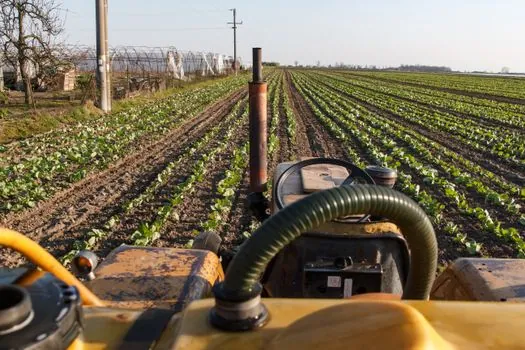
Beverages are the largest application segment at 19.3% of 2026 global revenue, reflecting the scale of dairy, juice, soft drink, and alcoholic beverage processing lines [S2]. Fruits and vegetables are the fastest-growing application, forecast at 7.1% CAGR through 2033 on the back of frozen, dried, and minimally processed produce demand [S2]. Other sizable application buckets include bakery and confectionery, meat and poultry, dairy products, seafood, and grain and cereals, each tied to distinct machinery configurations.
According to the Business Research Company, increasing demand for meat and poultry products is expected to propel the growth of the hot food processing equipment market going forward, driving demand for new fryers, ovens, and related processing skids [S5]. For plants converting or expanding a meat line, equipment choice interacts with materials and CIP, which is why washdown-rated components and lighting equipment and electric lamps rated for high-pressure wash zones are part of the same spec package. Shaft coupling selection on mixers, blenders, and pumps in these lines is a frequent failure point, and a spec-first walkthrough is laid out in Shaft Coupling Selection for Food Processing: Materials, Misalignment, and Washdown Specs.
Regional Demand: Asia Pacific Sets the Pace
Asia Pacific is the largest regional market in 2026 and is forecast to grow at 7.4% CAGR, the fastest of any region, driven by capacity additions in China, India, and Southeast Asia alongside packaged food demand [S2]. North America grows at 5.4% CAGR, supported by FSMA-driven compliance investments, automation upgrades, and brownfield capacity additions at existing meat and dairy processors [S2]. Europe tracks close to the global average, with energy efficiency and sustainability regulations pushing more heat-recovery and electric-process-heating retrofits than greenfield lines.
Latin America and the Middle East and Africa are smaller absolute markets but show higher relative growth in fruits and vegetables and in halal-certified meat processing, the latter often paired with traceable, automated batching. For buyers building a multi-region sourcing map, a useful parallel is the RV Reducer Capacity Planning: 2026 Sourcing Map, which walks through the same regional-supplier allocation logic for a different component class.
What This Means for 2026 to 2030 Sourcing Decisions
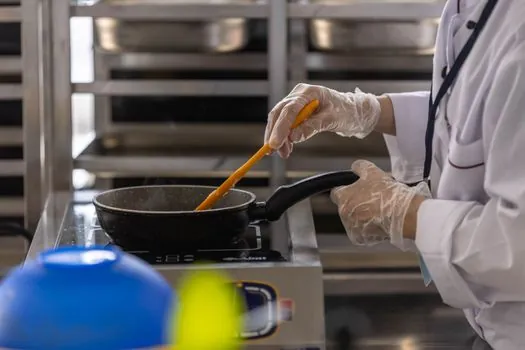
Spec-first procurement wins in this market because the capex envelope is dominated by a small number of high-value lines: baking, pasteurization, and frying for hot processing, plus aseptic fill and retort for packaging [S5]. Three criteria drive most 2026 line decisions: throughput in kg/h or bottles/min, energy per kg of finished product, and CIP time as a percentage of available production hours.
For buyers, the actionable signals to track in the next 6 to 12 months are: OEM lead times on baking tunnels (the segment adding the most revenue through 2030) [S5], regional capacity announcements in Asia Pacific, and any FSMA or equivalent traceability rule updates that re-time automation capex. Plants already planning a 2027 line should lock pasteurization and frying slots before mid-2027, since the segment growth rates above imply tightening supplier capacity in the back half of the forecast window.