
Foil strain gauges bonded to a metal carrier, read through a Wheatstone bridge, still dominate force, pressure, and structural-strain measurement in 2026, with bending-beam load cells at 2 mV/V sensitivity as the typical industrial workhorse [S2]. The 649 series bending-beam cell from TesT GmbH covers 10 kg to 1,500 kg rated load in 137 mm length, ships in stainless steel with IP67 sealing, and is offered in standard, OIML R60 C3, and C4 calibratable versions with an optional TEDS module in the plug [S2].
Selection in 2026 is no longer a single number on a data sheet. The pages on strain gauge operation and on force gauge calibration are useful reference starting points before shortlisting.
Operating principle and the four bridge configurations that drive accuracy
A foil strain gauge is a thin metallic resistive grid that changes resistance in proportion to mechanical strain, with the change resolved by a Wheatstone bridge circuit [S3]. One published BGA solder-joint study recorded micro-strain values from -320 to +366 micro-strain during screw-assembly of a plastic enclosure, climbing to -946 to +719 micro-strain on the top face during drop tests, which illustrates the +/- polarity and the magnitudes that PCBA-level strain gauges typically see [S3].
Quarter-bridge (one active gauge, three fixed resistors) is the cheapest and most common PCB-level configuration, while half-bridge (two active gauges, often one axial and one transverse for temperature compensation) and full-bridge (four active gauges) deliver higher sensitivity and far better common-mode rejection, which is why load cells almost universally use full-bridge internally. A 2 mV/V full-bridge cell at 10 V excitation delivers 20 mV full scale, a level that demands a low-noise instrumentation amplifier and a stable excitation source [S2].
Form factor comparison: bending beam, S-beam, canister, button, shear web
Bending beam cells like the TesT 649 (10 to 1,500 kg, 137 mm, 2 mV/V, IP67 stainless, OIML R60 C3/C4) are the platform-scale and tank-scale default in 2026, offered as beam-type, planar-beam, and small-beam variants [S2]. S-beam cells (e.g., TesT 307 and 332 series) handle tension and compression with higher capacities, while button (compression) and canister cells cover through-hole force paths, and shear-web/pancake cells target calibration rigs and high-cycle fatigue tests [S2].
The decision matrix below is what a 2026 specifier should run, not a brand shootout. (1) Capacity and headroom: target 60 to 80 percent of rated load in normal service for static weighing, derate further for dynamic or shock loading. (2) Accuracy class: OIML R60 C3 for trade-legal or batching, C4 or non-OIML industrial for in-process monitoring. (3) Environment: stainless + IP67 minimum for wash-down, ATEX/IECEx for Zone 1/2 hazardous-area chemical or fuel service. (4) Output: 2 mV/V raw for direct ADC integration, or 4-20 mA / 0-10 V / IO-Link when a transmitter is co-packaged. METTLER TOLEDO's strain-gauge beam load cell range is positioned specifically for weighing systems, tank scales, and conveyor scales in hazardous areas [S4].
Pressure transducers built on foil strain gauges: ranges and precision
When the sensing element is a metal diaphragm instrumented with bonded foil strain gauges (the BCM Sensor 700F series approach used in 725F up to 5,000 bar, 0.5 percent precision, -40 to +125 deg C), the result is a high-range, high-overpressure pressure transducer with amplified 0-5 VDC output [S1]. The Taber P4911 covers 0-690 bar at 0.25 percent precision over -40 to +93 deg C, while the lower-mass P5411 and radiation-hardened P5911 share the 0-345 bar / 0.25 percent envelope for space and aerospace duty [S1].
For polymer-extrusion and melt-pressure service, the MPT160/261/262/263 family operates up to 2,000 bar at 0.25 percent precision with 0.15 percent long-term stability, and the MPT263 measures both pressure and temperature of melt medium simultaneously up to 400 deg C [S1]. Buyers should treat the 0.15 percent long-term drift figure as the warranty ceiling and budget annual re-calibration against a dead-weight tester at the high end of the range.
Accuracy, OIML R60, and the C3/C4 trade-off
OIML R60 defines accuracy classes for load cells used in non-automatic weighing instruments, with C3 covering roughly 3,000 verification intervals and C4 covering 4,000, the latter requiring tighter combined error, repeatability, creep, and temperature coefficients. The TesT 649 in C3 and C4 calibratable versions is a typical entry point for trade-legal platform and batching scales, while standard (non-OIML) versions are sufficient for in-process force monitoring where legal metrology is not invoked [S2].
The comment trail on one published PCBA study notes that 450 micro-strain is the figure-of-merit boundary Intel has historically imposed for BGA solder-joint reliability, which is why many consumer-electronics specs land in the -450 to +450 or -500 to +500 micro-strain band [S3]. Engineers working to IPC-9704 should plan their gauge placement, channel count, and sample rate around that envelope rather than around the gauge's full +/- 2,000 micro-strain range.
Wiring, excitation, and signal conditioning pitfalls
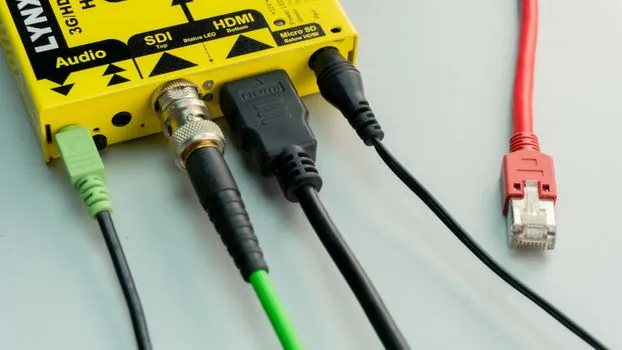
Bending-beam and S-beam cells are normally wired in six-wire form (sense + supply) when long cable runs risk excitation drop, with the sense lines feeding back to a ratiometric regulator to hold bridge excitation constant at the cell. Raw 2 mV/V outputs are very sensitive to lead resistance: a 0.1 ohm change in a 350 ohm bridge driven at 10 V causes a roughly 0.057 percent full-scale error, which is why four-wire sense connections are standard on weigh modules [S2].
TEDS (Transducer Electronic Data Sheet, IEEE 1451.4) plug-in modules, available on the TesT 649 on demand, store the cell's calibration constants so the indicator auto-loads them on power-up, removing a recurring source of field error [S2]. For hazardous-area installation, the cell itself is usually ATEX/IECEx certified as a simple apparatus with a Zener barrier or galvanic isolator in the safe area; METTLER TOLEDO's hazardous-area weighing line is the typical reference design for Zone 1/21 [S4].
Where strain gauges are the wrong tool
For static structural monitoring on very large civil structures (bridges, dams, wind towers), vibrating-wire and fiber-Bragg sensors often displace bonded foil gauges because of multi-year installation life and immunity to lead resistance drift. For sub-microstrain resolution at very low frequencies, semiconductor (piezoresistive) gauges offer 30 to 50 times the gauge factor of constantan foil but with much higher temperature sensitivity, which usually pushes the design toward active compensation. The decision rule of thumb in 2026: pick foil for general-purpose force and pressure, semiconductor for low-force or accelerometer-internal use, vibrating-wire for long-term structural health, and fiber-optic for EMI-hostile or high-voltage environments. [S1]
Buyers should also flag one common mistake. A strain gauge itself is not a calibrated instrument; it is a sensor element that must be paired with a known excitation, a calibrated amplifier, and (for legal metrology) a traceable calibration certificate. Specifying a "strain gauge" without naming the bridge completion, excitation voltage, amplifier model, and calibration standard leaves the quote ambiguous and almost always costs extra on the back end.
2026 shortlist logic and trackable signals

The shortest defensible shortlist for a 2026 buyer: (a) Define capacity, accuracy class, and environment first. (b) Pick form factor from the comparison above. (c) Decide raw 2 mV/V versus amplified output based on cable run and indicator input. (d) Require OIML R60 C3 or C4 certificate, IP rating, material certificate, and a documented combined-error / temperature-coefficient curve. (e) Confirm hazardous-area certification separately if the duty is Zone 1/2 or Division 1. The tensile testing machine price guide is a useful cross-reference for the load-frame side of any force-calibration rig that will host the chosen cell. [S2]
Trackable signals to watch over the next two quarters: more load-cell vendors offering IO-Link and IO-Link Wireless alongside 4-20 mA / HART, and a slow shift in OIML R60 documentation toward digital-output cells with built-in TEDS-class auto-configuration. The hopper scale buying guide is the natural next read for anyone planning to integrate the chosen cell into a batching or silo-weighing system.
Spec-level background on the components involved: linear guide.