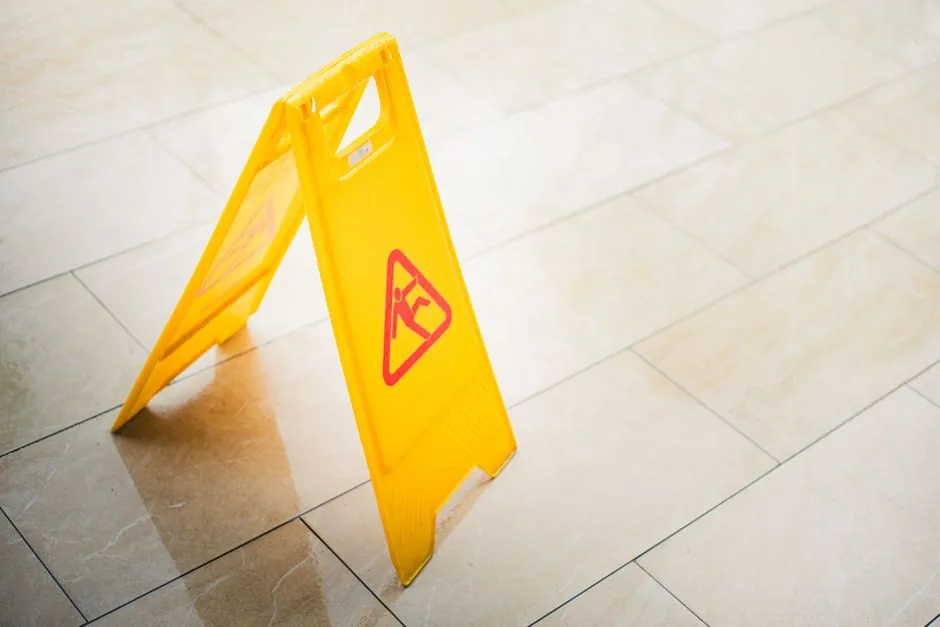
The two product categories sit in different domains: an ambulance or scoop stretcher is a load-bearing patient transport device rated for specific weight capacities and restraint counts, while a warning sign is a standardized visual communication governed by MUTCD W-series codes for roads and by OSHA/ANSI Z535 hazard-tier colors (Danger red, Warning orange, Caution yellow) for facilities [S1][S5][S7].
Selecting a stretcher is a mechanical, biomechanical, and clinical decision; selecting a warning sign is a regulatory and visual-recognition decision. Conflating the two (for example, using a stretcher as a warning barrier) violates both sets of standards. Both, however, intersect in facility-safety planning where a stretcher-location sign must be co-specified with the device itself [S6][S8].
Definition, Scope, and Governing Standards
A stretcher, in the medical-device sense, is a wheeled or carry-type patient platform with documented static and dynamic load ratings, restraint-strap count, and either fixed-height or adjustable-height frames; ambulance variants add vehicle-anchored fastener systems per EN 1789 and similar [S2]. A warning sign is a retroreflective or printed panel with a defined shape, color, and pictogram that calls attention to an unexpected condition on or adjacent to a roadway (MUTCD W1-1 Turn, W1-2 Curve, W1-3 Reverse Turn, W1-4 Reverse Curve, W1-5 Winding Road, W1-11 Hairpin Curve, W1-15 270-degree Loop) or to a facility hazard tiered by ANSI Z535 [S1][S5][S7].
The MUTCD requires that use of a warning sign be based on an engineering study or engineering judgment, with factors including the difference between posted and advisory speed, curve geometry, traffic volume (the 1,000 AADT threshold separates arterial/collector treatment from local-road treatment in Table 2C-5 of the 2009 MUTCD), and crash data [S1]. OSHA-aligned facility signage uses three hazard tiers: Danger (imminent hazard, red), Warning (serious hazard that CAN cause severe injury or loss of life, orange), and Caution (lower-level hazard, yellow) [S5][S7].
Selection Criteria by Use Case
Stretcher selection is driven by five mechanical and clinical criteria: patient weight capacity (typically 159-227 kg / 350-500 lb for bariatric-rated units), in-service height range, restraint count (a minimum 3-point is common, 5-point for pediatric and bariatric), vehicle-fastener compatibility (EN 1789-compliant floor locks for ambulances), and material (aluminum alloy frames, high-density polyethylene decks, anti-microbial vinyl mattresses) [S2]. Warning sign selection is driven by four regulatory criteria: hazard severity tier (Danger/Warning/Caution), viewing distance and letter height (ANSI Z535.6 table-based sizing), retroreflectivity class (ASTM Type IV, VIII, IX, or XI for roadway), and substrate (aluminum, photoluminescent, glow-in-the-dark, or metal tin for indoor) [S1][S5][S7][S8].
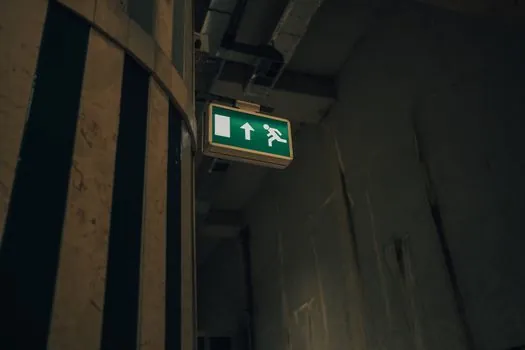
For roadway work, the MUTCD mandates a single W1-1, W1-2, W1-11, or W1-15 sign in advance of a single curve, or a W1-3, W1-4, or W1-5 sign in advance of a series; chevron alignment signs and advisory-speed plaques are added based on Table 2C-5 thresholds [S1]. For facility work, a stretcher-location sign is a location/equipment pictogram sign (green per ISO 7010 E003 where international compliance is required, or accuform-style "Stretcher" word + graphic placards in 8x12 in or larger sizes) used to identify where the device is stored so retrieval time is minimized [S6][S8].
Options Comparison: Stretcher Types vs Warning Sign Types
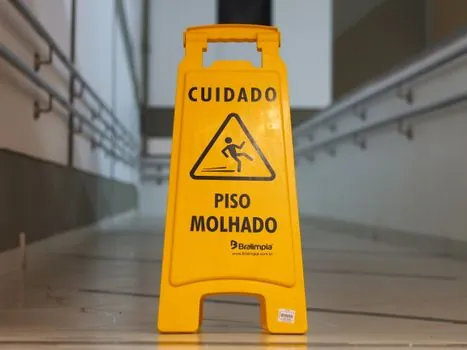
The stretcher category breaks into four main types, each with distinct cost, rating, and integration profiles. The warning sign category breaks into four MUTCD and three ANSI tiers, each with distinct placement and visibility profiles. A specifier comparing options against cost, rating/severity, lifetime, and integration effort sees the following pattern [S1][S2][S5][S7][S8]:
Stretcher option 1: Manual ambulance stretcher (e.g. self-loading cot with 159 kg / 350 lb rating, 2-3 operator load, EN 1789 fastener). Cost tier: mid. Lifetime: 7-10 years with annual hydraulic service. Integration effort: high (vehicle-floor locking, electrical charging, daily-load-cycle test). Stretcher option 2: Scoop stretcher (radiolucent, 159 kg / 350 lb rating, 2 operator carry, no wheels). Cost tier: low. Lifetime: 10+ years. Integration effort: low. Stretcher option 3: Bariatric stretcher (227 kg / 500 lb rating, wider deck, reinforced frame). Cost tier: high. Lifetime: 7-10 years. Integration effort: high (wider vehicle bay, heavier hydraulics). Stretcher option 4: Evacuation chair (stair-descent, 159 kg / 350 lb rating, tracked belt). Cost tier: mid. Lifetime: 10+ years. Integration effort: low.
Warning sign option 1: MUTCD W1-series advance warning (diamond, yellow-black, retroreflective ASTM Type IV min.). Cost tier: low ($50-150 per panel). Lifetime: 10-12 years. Integration effort: medium (post, foundation, MUTCD spacing tables). Warning sign option 2: MUTCD chevron alignment W1-8. Cost tier: low. Lifetime: 10-12 years. Integration effort: medium. Warning sign option 3: ANSI Z535 Warning (orange, "CAN cause severe injury or loss of life"). Cost tier: low. Lifetime: 5-10 years indoor, 7-10 outdoor. Integration effort: low. Warning sign option 4: Glow-in-the-dark or photoluminescent stretcher-location sign (accuform MLFX533 type, 8x12 in or larger). Cost tier: low. Lifetime: 5-7 years before luminance degrades below OSHA 1910.37(e)(4) miniluminance thresholds. Integration effort: low [S1][S5][S7][S8].
Who Each Product Is For (and Is Not For)
Stretcher is for: EMS services, hospital ED intake, industrial first-aid rooms, offshore platforms requiring patient evacuation, and any facility required to maintain a load-rated patient transfer device under OSHA 1910.151 or equivalent. Stretcher is NOT for: use as a general-purpose cart, a fall-protection anchor, or a substitute for fixed guardrails. A failing hydraulic cylinder showing "spongy pedals" or height drift under load is a documented end-of-life signal that mandates withdrawal from service, not field repair [S2].
Warning sign is for: any location where a recognized hazard exists and a posted/advisory speed differential exceeds MUTCD Table 2C-5 thresholds, or where a facility hazard falls into the Danger/Warning/Caution tier. Warning sign is NOT for: use as a structural barrier, a load-bearing support, or a substitute for machine guarding. A non-retroreflective indoor sign placed in a roadway environment fails the MUTCD and ASTM D4956 retroreflectivity requirements [S1][S5][S7].
Limitations, Failure Modes, and Maintenance
Stretcher failure modes cluster into four: hydraulic drift (slow loss of height under patient load, early indicator of seal failure), pedal sponginess (air in hydraulic line, immediate withdrawal flag), fastener wear (floor-lock spring fatigue after roughly 5,000 load cycles), and restraint-strap UV degradation (visible fray, mandatory replacement per manufacturer interval, typically 24 months) [S2]. Warning sign failure modes cluster into three: retroreflectivity degradation below ASTM Type IV minimum (10-12 year replacement cycle for roadway signs), photoluminescent luminance decay (5-7 year cycle for glow-in-the-dark stretcher-location signs), and substrate corrosion at post-mount interfaces in coastal or chemical atmospheres (aluminum sign life drops to 5-7 years in salt-spray zones) [S1][S5][S8].
A 2016 FHWA review notes that uniformity of MUTCD application alone often resolves curve-safety concerns without additional enhanced treatments; the same principle applies in facility settings, where consistent ANSI Z535 hazard-tier color use (red for Danger, orange for Warning, yellow for Caution) reduces worker recognition time more effectively than ad-hoc mixed signage [S1][S5].
Sourcing, Standards, and Cross-References
Stretcher sourcing channels divide between OEM direct (Stryker, Ferno, Stryker Performance-PRO variants), NHS-surplus medical-equipment resellers (SelfiMed Europe, 256-bit SSL checkout, next-day dispatch on orders before 1 pm Monday-Friday), and mass-market e-commerce for non-clinical lightweight carry boards. Warning sign sourcing channels divide between MUTCD-compliant roadway sign shops (using ASTM Type IV min. sheeting, typically 3M Diamond Grade or Avery Dennison OmniCube), OSHA/ANSI Z535 facility sign catalogs (Clarion, Accuform, Brady), and bulk print-on-demand (Signs.com, Shein 8x12 in metal tin) for non-regulated indoor word-only notices [S2][S4][S6][S8].
Standards cross-reference: MUTCD 2009 Table 2C-5 governs advance warning sign and chevron placement on freeways, expressways, and roadways above 1,000 AADT [S1]. ANSI Z535.2-2017 (referenced via the Signs.com 2026-06 guide) defines the Danger/Warning/Caution color and signal-word hierarchy [S5]. ISO 7010 E003 governs the green stretcher-location pictogram for international facilities. ASTM D4956 governs retroreflective sheeting types for roadway signs. EN 1789 governs ambulance stretcher vehicle-anchorage interfaces. A facility procurement plan that co-specifies a stretcher with its glow-in-the-dark location placard (e.g. warning tape and matching placards) closes the loop on retrieval time and is the single most common pairing in 2026 industrial first-aid-room builds [S6][S8].
Adjacent specification work: a 2026 procurement guide for industrial safety mats covers the floor-surface side of stretcher deployment, a chemical-plant warning tape substrate guide covers the perimeter-marking side, and a facility heat-detector selection guide covers the early-warning side of an integrated first-aid-room layout. Track the next revision of ANSI Z535.2 for any changes to the Caution/Warning color boundary, and watch for OSHA 1910.37(e) photoluminescent luminance amendments that govern glow-in-the-dark stretcher-location sign replacement intervals.
This topic is covered further in Safety Mat Price and Cost Guide for 2026 Procurement.