
The global synthetic resin market is valued at USD 541.8 billion in 2025 and is projected to reach USD 894.4 billion by 2035 at a 5.1% CAGR, with automotive manufacturing cited as one of three core demand channels alongside packaging and construction [S1].
Within that pool, commodity thermoplastics and engineering plastics already supply interior trims, under-hood housings, structural inserts, and exterior body panels, and the same report names BASF SE, SABIC, Covestro AG, Mitsubishi Chemical Group, LG Chem, Sumitomo Chemical, Arkema S.A., DSM-Firmenich, Dow Inc., and DuPont de Nemours Inc. as the top 10 players active in this supply base [S1].
Defining the Material Family and Its Automotive Role
Synthetic resins are man-made polymers produced via polymerization, distinct from plant-secreted natural resins such as rosin, amber, frankincense, and copal [S5]. The synthetic family splits into thermosets (epoxy, polyester, phenolic, polyurethane) and thermoplastics (polypropylene, polyamides, polycarbonate, ABS, PBT, polyacetal, and higher-end engineering plastics such as PEEK and PPS), with each branch behaving differently under heat, load, and chemical exposure.
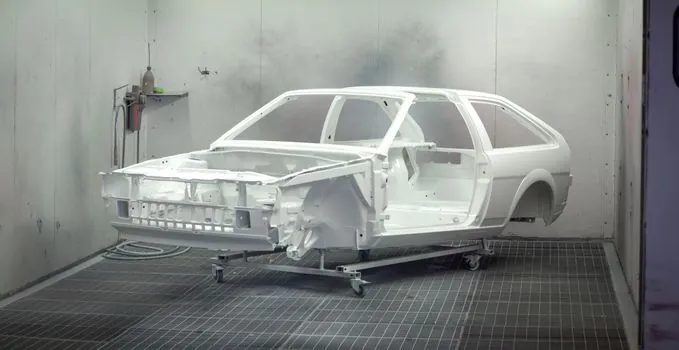
Density typically sits between 0.9 and 2.0 g/cm³, which is the core reason automotive part designers reach for these materials when they need to shed mass from a body-in-white, an under-hood bracket, or a closure panel [S2]. For context on the broader polymer selection logic that overlaps with this, see the engineering plastic spec map for electronics, which uses the same criteria-based framework on a different end-market.
Core Selection Criteria for Vehicle Applications
Selection in automotive starts with three numbers: continuous service temperature, tensile or flexural modulus, and chemical resistance against the fluids the part will see (fuel, coolant, battery electrolyte, brake fluid, road salt) [S2][S3]. On top of that, processability (injection molding cycle time, mold temperature, moisture conditioning for PA), recyclability targets under OEM take-back programs, and total cost per cubic centimeter of finished part all weigh in.
For under-hood and powertrain parts where continuous temperatures cross 150°C, polyamides (PA66 with heat stabilization, PA46), PPS, PPA, and PEEK are the realistic pool. A useful reference for high-end semi-crystalline materials is the PEEK selection spec map for marine engineering; the marine temperature and chemical envelope overlaps directly with demanding under-hood and EV battery pack applications.
For aesthetic interior parts and Class-A exterior panels, polycarbonate/ABS blends, PMMA, and reinforced polypropylene dominate, with molded-in-color capability to skip paint and cut VOC at the paint shop. For battery enclosures and structural inserts, glass-fiber-reinforced PA6 or PA66, long-glass PP, and compression-molded SMC (sheet molding compound, a glass-fiber-reinforced polyester thermoset) compete on stiffness per kilogram.
Comparing the Main Resin Families Against Decision Criteria
Epoxy resins are thermosets with strong adhesive behavior, high heat resistance, and good chemical resistance, and they are typically specified for coatings, adhesives, and composite matrices rather than for injection-molded trim [S5]. Polyester resins are also thermosets and are widely used in fiberglass, automotive parts, and marine hulls, where low tooling cost and room-temperature cure matter more than cycle time [S5]. Polyurethane resins are flexible and abrasion-resistant, and they show up in foams for seating, in suspension bushings, and in elastomeric coatings [S5]. Acrylic resins are used in paint formulations, coatings, and acrylic glass, supplying the optical clarity and UV stability of tail-light lenses and light guides [S5].
On the thermoplastic side, the ITOCHU engineering plastics product line includes grades marketed for high-impact resistance and heat stability in automotive interior and exterior parts, illustrating how engineering plastics compete with metals on a part-by-part basis rather than at the vehicle level [S3]. For lower-load commodity parts, polypropylene and HDPE remain the workhorse materials because of their low density, low cost, and easy processing [S1]. A full engineered-polymer comparison against moisture and temperature is laid out in the PA66/PA6 selection spec map for marine engineering, which uses the same wet-conditions logic that applies to wheel-well and underbody parts on a vehicle.
Who Synthetic Resin Selection Is For, and Where It Does Not Fit
Resin selection is a fit where weight saving, corrosion resistance, design freedom, and part consolidation via injection molding or compression molding matter more than absolute peak-temperature strength. It is not a fit for primary load-bearing crash structures where high-strength low-alloy steel, advanced high-strength steel, aluminum extrusions, or forged composites still win on energy absorption per kilogram. [S1]
Two failure modes drive the boundary. First, polymer aging under combined heat, UV, and glycol exposure: a PA66 charge-air cooler endcap can survive 160°C continuous service but will embrittle if glass-fiber stabilization is skipped, so the resin grade, not the resin family, decides fitness. Second, galvanic and thermal-expansion mismatch at the metal-to-plastic interface: a steel bolt in a PP bracket in a cold-climate vehicle behaves differently than the same bolt in a PA66GF bracket, and that delta drives clip design and fastener choice.
Use Cases Mapped to Resin Family
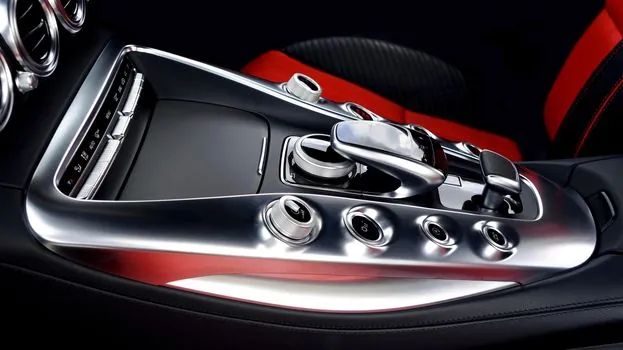
Under-hood housings (intake manifolds, resonators, coolant reservoirs) commonly use glass-fiber-reinforced PA66, PPA where peak under-hood temperature is higher, or PPS where dimensional stability at 200°C+ is non-negotiable. Interior trims (door panels, instrument-panel carriers, console structures) typically pair a polypropylene or talc-filled PP substrate with a thermoplastic elastomer overmold for soft-touch feel. Exterior body panels historically used SMC polyester thermoset, and the same resin class still shows up in compression-molded closures on commercial vehicles. [S3]
Battery electric vehicles add a new use case cluster: battery pack enclosures, module housings, busbar insulation, and thermal-barrier overmolds. The combination of flame retardancy (typically UL 94 V-0 rated compounds), dielectric strength, and compression-moldable sheet stock points to glass-reinforced unsaturated polyester SMC or phenolic SMC depending on the smoke and toxicity target. For EV traction-motor insulation and slot liners, epoxy and phenolic thermosets are the long-standing materials, and Shell Polymers markets polyethylene and polypropylene grades that feed into wire-and-cable and underbody component production for vehicle manufacturing [S4].
Limitations, Constraints, and What Engineers Watch For
Three constraints show up on every resin selection review. First, petrochemical feedstock price volatility, which the market report explicitly flags as a risk to cost stability [S1]. Second, plastic-waste regulation, which the same report names as a drag on growth and a driver for recycled-content and bio-based grades [S1]. Third, processing complexity: moisture conditioning of polyamides, curing cycles for thermosets, and mold-temperature control for polyolefins all add factory-side capital and cycle-time cost that pure per-kilogram resin price never reflects.
For commodity-volume thermoplastics the global industrial synthetic resin base is expected to grow from 27.47 million tons in 2025 to 45.16 million tons by 2035 at 5.1% CAGR, confirming that automotive and adjacent sectors are still in a volume-up, not a volume-down, trajectory [S6]. Recycled-content targets from European OEM take-back rules and the U.S. Inflation Reduction Act supply chain credits are pushing engineering plastics buyers toward post-consumer recycled PA66 and chemically recycled PP, and that constraint is now part of the grade-selection sheet rather than a separate procurement question.
Standards, Sourcing, and Trackable Signals

Key automotive material standards that govern resin selection include ISO 1043 for polymer marking, ISO 11469 for recycling identification, UL 94 for flammability rating of plastic parts, and OEM-specific specifications (Ford WSS-M, GM GMW, VW TL, Toyota TSM) that layer on top. For battery-electric applications, IEC 62660 series for lithium-ion cells and UN 38.3 for transport testing drive adjacent material choices on insulation, thermal runaway containment, and dielectric spacing. [S1]
Two signals worth tracking into late 2026: published updates to the global synthetic resin market forecast (Fact.MR currently anchors the base at USD 541.8 billion in 2025 and USD 894.4 billion by 2035) and any new grade launches from the top 10 named suppliers (BASF, SABIC, Covestro, Mitsubishi Chemical, LG Chem, Sumitomo, Arkema, DSM-Firmenich, Dow, DuPont) targeting battery-enclosure SMC, flame-retardant PA66, or bio-based polyamides for interior parts. For comparison against a different semi-crystalline engineering plastic with a similar temperature/chemical envelope, the POM selection spec map for marine engineering covers polyacetal behavior in wet and fuel-exposed service, which translates directly to fuel-system and HVAC-flapper automotive parts.
For the relevant spec sheets and selection criteria, see synthetic resin, additive manufacturing material, and peek.