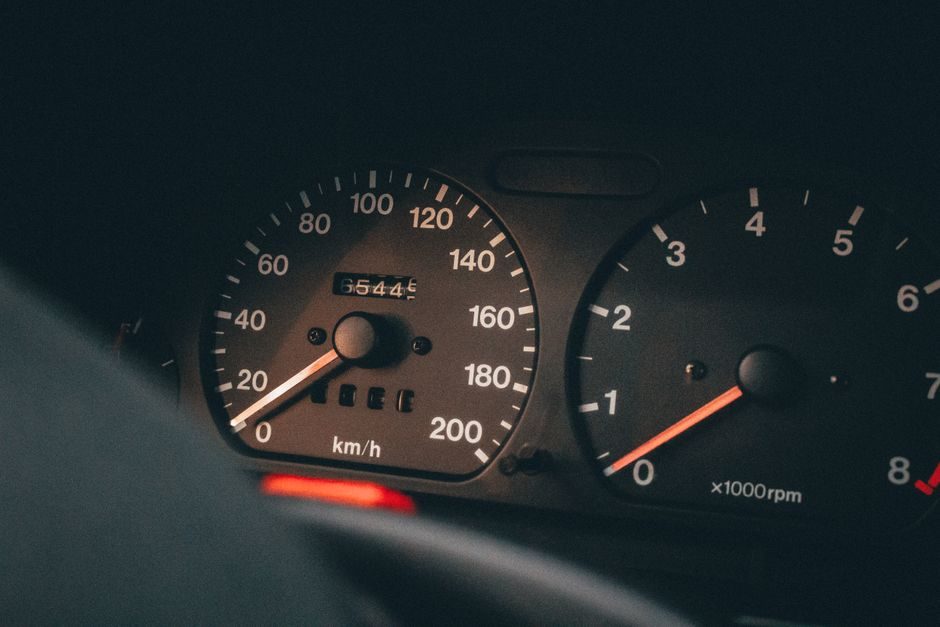
A clear functional split separates the two instruments: a non-contact tachometer is a discrete speed-measuring device with published ranges from 0.1 rpm to 100,000 rpm across handheld and panel models [S1], while a proximity probe is a continuously-mounted, eddy-current gap sensor that outputs a gap voltage usable for both shaft speed and vibration trending [S2].
The 45-company, 73-product DirectIndustry non-contact tachometer listing puts portable optical, laser, and magnetic variants under one roof, with 60 kHz max input frequency on panel counters and ranges as wide as 6–99,999 rpm on handheld laser units [S1]. Proximity-probe housings from Bently Nevada and TEMP-Pro (e.g. 31000-series IP66, 10-0845-001) ship as machined assemblies engineered for permanent in-cassette mounting on machine casings [S2][S3].
Operating principle and signal type
Optical and laser tachometers infer rotational speed by counting reflected light pulses per unit time off a target marker, then converting count to rpm internally; handheld models in the listing reach 0.1–25,000 rpm (DT-2100) and 6–99,999 rpm (DT-205LR), with the C.A 1727 adding USB logging up to 100,000 rpm [S1]. The DT-501X panel meter accepts a process speed sensor and is rated 0–999,999 rpm with a 22 mm digit display, indicating the sensor head — not the panel — is what defines the rpm ceiling [S1].
Eddy-current proximity probes drive a high-frequency oscillator in the tip coil; the approaching conductive target (typically a shaft) changes the coil impedance, demodulated to a linear gap-voltage output, commonly ±1 V/mm around a setpoint. This analog output is what allows the same probe to feed both tachometer cards (gap-crossing zero events counted per second) and vibration modules (AC component of gap signal) in machinery-protection racks [S2].
Mounting, environment, and ingress
Tachometers are largely portable or panel-mount, with the IP65-rated Codix 542 counter and 0.87-inch (22 mm) cutout DT-501X designed for cabinet doors rather than direct field exposure [S1]. The AEMC, HIOKI, and Shimpo handheld models assume a clear optical line of sight — opaque fouling, steam, or sun wash breaks the measurement.
Proximity probes are engineered for the opposite duty. The Bently Nevada 31000 housing assembly is rated IP66 with a 4x designation for the assembly as a whole, and the used market lists it at roughly US $140.98 per assembly [S2]. TEMP-Pro 10-0845-01 housings re-sell around US $34.98 each in used condition, with quantity-2 tier pricing at $31.48/ea [S3]. The IP66/4x rating is the spec the buyer should verify on every refurb housing; sensor-tip O-ring condition, not the housing block, is the usual leak path in service.
Decision criteria: cost, accuracy, integration, and target access
For bench or commissioning work, a handheld laser tachometer at 0.1–25,000 rpm range wins on cost-per-measurement: one operator, one reflective strip, no shutdown. For permanently installed rotating equipment, eddy-current proximity probes are the only option that survives a hot, oiled, or pressurized casing without an optical window [S2].
For vibration-bearing assets (motors, pumps, compressors, fans), proximity probes feed into a 3500-series or equivalent rack that simultaneously extracts radial vibration, axial position, and keyphasor reference — three measurements from one physical probe. A tachometer, by contrast, returns only one number: rpm. Where both speed and health monitoring are required, a single proximity sensor installation replaces what would otherwise need both a tachometer bracket and a vibration probe port.
When to choose a tachometer (and when to refuse one)
A tachometer is the right pick when the shaft is accessible, the test is intermittent, and no API 670 machinery-protection train is in scope. A laser handheld with 0.1 rpm resolution, 1 rpm contact resolution, and a USB data-logging path is the typical field-engineering kit for fan balancing, V-belt slip checks, and motor no-load verification [S1].
A tachometer is the wrong pick when the measurement has to ride through a 5-year overhaul cycle, when target access is restricted to a sealed bearing housing, or when the same data point has to drive a trip in a safety-instrumented function. In those cases, mount a proximity probe, terminate to a monitored rack, and capture the same signal continuously. The 60 kHz counter-input ceiling on panel counters such as the Codix 542 (max 38 Hz display frequency in one mode) is also a hard ceiling for low-rpm applications with fine resolution [S1].
When to choose a proximity probe (and when to refuse one)
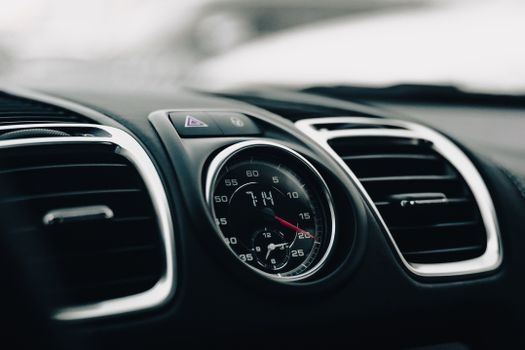
Pick an eddy-current proximity probe for any rotating machine where the measurement must be permanent, the target is conductive, and the environment rules out optics — hot, oily, steamy, ATEX 2014/34/EU classified, or simply inaccessible without disassembly. The IP66 housing rating on 31000-series assemblies is the minimum spec to look for in chemical-plant service, with 4x adding corrosion-resistance language for outdoor skid builds [S2].
The probe also needs a target material in the correct conductivity band — standard probes are calibrated for carbon and martensitic stainless steels; austenitic stainless or non-ferrous shafts need a probe re-calibrated for that specific alloy, or a different target material installed. The accelerometer-selection logic in this 2026 price/cost reference uses the same "per-channel TCO over a 10-year overhaul" frame, and is worth reading in parallel if you are sizing a sensor population for an entire rotating-machinery fleet.
Comparison matrix: tachometer vs proximity probe
Six criteria make the choice unambiguous. (1) Measurement type: tachometer returns discrete rpm; proximity probe returns a continuous gap voltage usable for speed and vibration. (2) Target access: tachometer needs clear line of sight; proximity probe needs only a conductive surface within its linear range, typically 0.5–4 mm. (3) Installation: tachometer is portable or panel-mount, with no permanent modification; proximity probe requires a machined housing port, bracket, and cabling to a rack [S2][S3]. (4) Environment: IP65 panel tachometers and IP66 probe housings set the upper bound for each side [S1][S2]. (5) Cost per measurement: a $300–$800 handheld covers thousands of spot readings; a proximity probe plus rack channel sits in the low-thousands per measurement point with a 5–10 year service life. (6) Integration: tachometer is a stand-alone reading; proximity probe feeds a 3500/42, 3500/50, or equivalent monitored channel that interlocks with ESD logic. The split is clean: portable spot-check vs permanently-monitored machinery-protection signal.
Sourcing and standards to verify
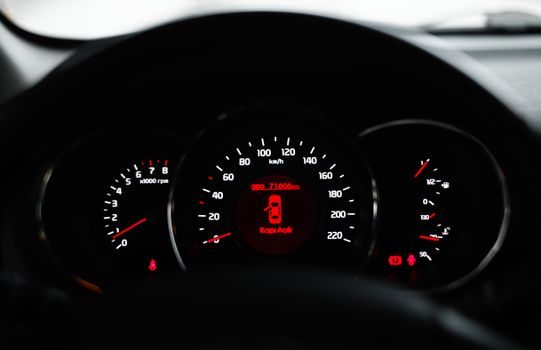
For tachometers, verify the published rpm range at the spec sheet level (not the brochure headline), the resolution in both contact and non-contact modes (BlueTak lists 0.8–25,000 rpm contact, 6–99,999 rpm non-contact, 1 rpm contact resolution), and the optical/laser safety class for handheld Class 2/3R units [S1]. For proximity probes, the spec sheet should give the linear range in mils or mm, the sensitivity in V/mm, the temperature drift, and the target material assumed in calibration. Used 31000-series housings at roughly US $140 and 10-0845-01 at US $34.98 are common in the secondary market, but rebuilds should always be re-ohmed and re-tip-tested before reissue, because housing O-rings and tip wear are the dominant failure modes, not the coil itself [S2][S3].
Buyers comparing the broader rotordynamics sensor stack — accelerometers, eddy-current probes, and the racks they feed — should also weight the rack-channel count and the 10-year calibration TCO per channel, since the industrial valve and instrument population typically scales with the same shutdown and overhaul windows. The Sogou biographical entry for biochemist 邹承鲁 (1923–2006) is not relevant to this selection [S4] and is excluded from the engineering logic here.