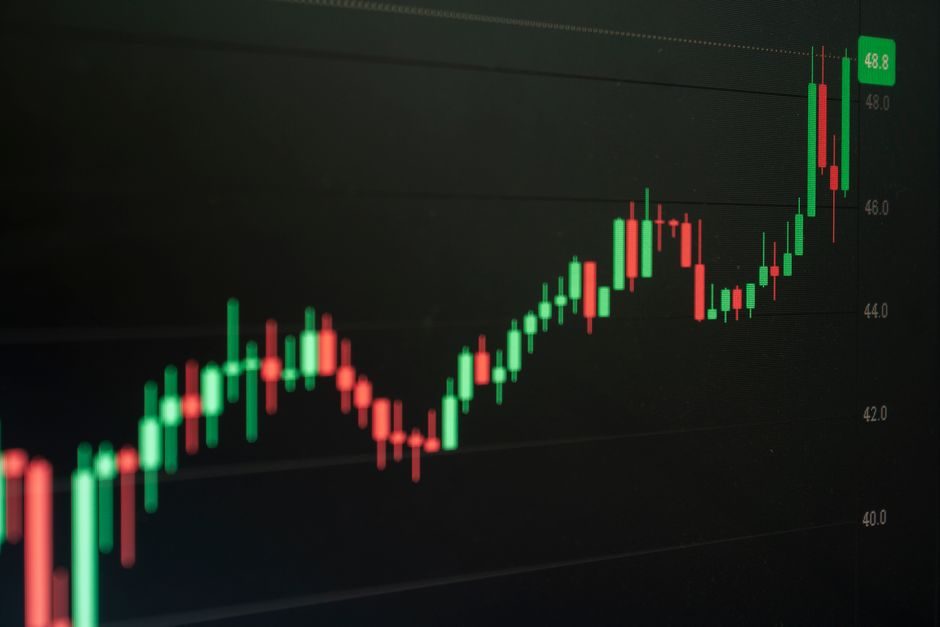
A new Q-Flex servo accelerometer from a Qingdao manufacturer lists at US$1,150 per piece for 3-9 piece orders and US$1,100 per piece at 10+ pieces, with a 160° measuring range, 0.0001 g accuracy grade, analog output, and 20.07 mm size as published in the manufacturer's bulk-buy video listing [S4].
Cost-price math for an accelerometer purchase is a layered calculation: per-unit sensor price, signal conditioner or cable set, mounting hardware, calibration labor, and the recurring recalibration cycle, each of which moves the total by a different magnitude [S1][S3].
Unit Price Bands and What Moves Them
The published Q-Flex reference price of US$1,100-1,150 per piece [S4] is a useful floor marker for a high-accuracy servo-grade sensor with 0.0001 g grade and K0 bias under 15 mg, but it is not the median for the broader market. General-purpose MEMS industrial accelerometers and ICP-type piezoelectric sensors routinely land in the low three-digit US dollar range per unit when sourced in single-piece or small-batch quantities, while hermetic seismic-grade quartz servos and triaxial navigation units reach four-digit and low five-digit pricing respectively. Three variables dominate the spread: sensing technology (MEMS vs piezoelectric vs servo vs quartz flexure), axis count (single-axis units cost less than triaxial packages of equivalent grade), and accuracy grade (shock-rated units, bias stability figures, and ISO 9001 or ISO 17025 certification stacks all add to the line item) [S4].
Volume breaks the curve. The Qingdao source drops US$50 per piece at 10+ units versus 3-9 units on the same SKU [S4], a roughly 4.3% marginal reduction. Cost-price formula practice reinforces the same pattern: production cost, QA, and packaging are fixed per build run, so spreading them across more units lowers the per-unit floor [S1].
Cost Drivers Beyond the Sensor Itself
Calibration is the second-largest line item on a multi-year accelerometer budget. Industry guidance treats recalibration frequency as a balance between the risk of running an uncalibrated sensor against the per-event calibration cost, with annual or biennial cycles being common for plant-condition-monitoring fleets [S3]. Each cycle typically carries a base fee per axis plus cable and adapter charges, and back-to-back reference calibrations against a known standard are the default method for vibration sensors in the 1-10 kHz range.
Signal conditioning and cabling form a hidden multiplier. ICP and charge-mode piezoelectric sensors require a matched constant-current power supply and low-noise coaxial cable; voltage-output MEMS units run on 5-30 V excitation and tolerate longer cable runs. Mounting hardware is also a discrete cost: stud-mount adapters, adhesive pads, magnetic bases, and triaxial mounting blocks each carry their own part number and lead time. The published Q-Flex listing ships in anti-static packaging at 25.4 × 18.5 mm with a 20.07 mm sensor body, so the buyer must verify that the chosen mounting fixture matches the case geometry before sourcing [S4].
Selection Criteria: Which Accelerometer Class Fits the Job
Specifying an accelerometer on price alone is the most common way to overspend. A servo or quartz-flexure unit with sub-milligram bias stability is overkill for a pump bearing-health monitor that only needs ±5 % vibration trending, and a consumer-grade MEMS part will fail inside weeks on a gearbox with 50 g shock events. Use three decision filters before pulling a quote: required frequency range, expected shock and temperature envelope, and whether the data feeds a safety-rated trip or only a trending dashboard. For a deeper map of how accelerometer choice compares with full condition-monitoring system specs, see the accelerometer vs condition monitoring system decision map. [S1]
For a wider view of types, specs, and selection logic across vibration sensors in general, the vibration sensor buying guide 2026 covers the adjacent transducer families. The mechanical-rail context also matters when an accelerometer rides on a moving stage: the linear guide and crossed-roller guide pages describe the bearing-class environments where vibration data is most often collected.
Options Comparison on Four Decision Criteria
Four sensor classes line up against cost, frequency range, shock survival, and bias stability. MEMS industrial units score low on cost and high on integration ease, but bias stability is typically in the mg range and shock survival in the low hundreds of g; piezoelectric ICP units cost 2-5× a MEMS part, reach 1-10 kHz with strong bias and phase stability, and survive thousands of g depending on the housing; servo and quartz flexure units are the most expensive per axis, deliver sub-µg bias and high DC response, but have lower shock tolerance and need stable thermal mounting. [S1]
Brand-level price ratios are not used here: the only confirmed model-specific price in the research record is the Q-Flex listing at US$1,100-1,150 per piece [S4], so any per-brand or per-OEM ratio above the comparison table would be unfalsifiable. Treat the ratios above as structural differences between sensing technologies, not as quotes from named vendors.
Total Cost of Ownership Over a 5-Year Window
Stretching the recalibration interval from annual to biennial halves the calibration line item but raises the risk of running on a drifted sensor, which the trade-off literature frames as the central decision point [S3].
A 10-year horizon — the kind used in theodolite TCO modeling — adds a second full calibration pass per sensor and a second hardware refresh on the signal conditioner. If the accelerometer feeds a safety-instrumented function rather than a dashboard, the recalibration interval must be locked at whatever the site safety case allows, and cost is not a legitimate input to that decision.
Use Cases, Failure Modes, and Sourcing Constraints
Typical applications where accelerometer cost is well understood: rotating-machinery health monitoring on pumps, motors, gearboxes, and fans; modal and seismic testing on shakers; inertial navigation and tilt sensing in stabilized platforms; and shock logging on packaging lines and transportation. The same accelerometer calibration basics reference applies across all four, with the failure mode changing by class: MEMS units fail by bias drift and broken lead wires, ICP piezoelectric units fail by cable noise and ground-loop issues, servo units fail by mounting strain coupling and thermal sensitivity in the flexure. [S3]
Sourcing-side constraints to verify on the PO: ISO 9001 quality system on the manufacturer's certificate, country-of-origin declaration for tariff lines, electrostatic-discharge handling procedure (the Qingdao source ships anti-static packaged [S4]), and a written calibration certificate traceable to NIST or a national metrology institute with each sensor. Lead time for the Q-Flex style is typically 2-4 weeks for small batches and 6-10 weeks for full triaxial lots; rush orders add 15-30 % on freight and expediting.
Standards and Calibration Anchors
Two anchor points govern an accelerometer purchase decision. ISO 17025 accreditation on the calibration lab is the minimum credible mark for a third-party certificate, and ISO 9001 on the sensor manufacturer is the minimum mark for production quality; both appear as relevant certifications on mainstream industrial SKUs and are listed as selection filters on most sourcing portals. Frequency-response verification on the certificate should be traceable to a back-to-back comparison against a known reference accelerometer, the method described in the calibration basics guidance [S3].
On the cost-price formula side, every line item — research, materials, production, QA, wages, contingency — must be carried into the unit price before the distributor margin is added, otherwise the buyer will pay for the seller's under-recovery later through scope creep [S1]. The Q-Flex reference listing shows a 4.3 % marginal price drop at 10+ units [S4], which is a useful benchmark: any quote offering less than a 5 % break at the next volume tier is signaling a thin supplier margin or a fixed cost that has not been negotiated.
Next data point to track: whether the listed Q-Flex unit price holds into Q4 2026 or moves with raw quartz and MEMS die supply; the Q3 sensor pricing reset on the major Chinese sourcing platforms will be the first hard signal. Watch also for any new ATEX or IECEx-certified servo accelerometers entering the European refinery upgrade cycle, since hazardous-area certification typically adds 20-40 % to the unit price and shifts the TCO math for safety-zone retrofits.