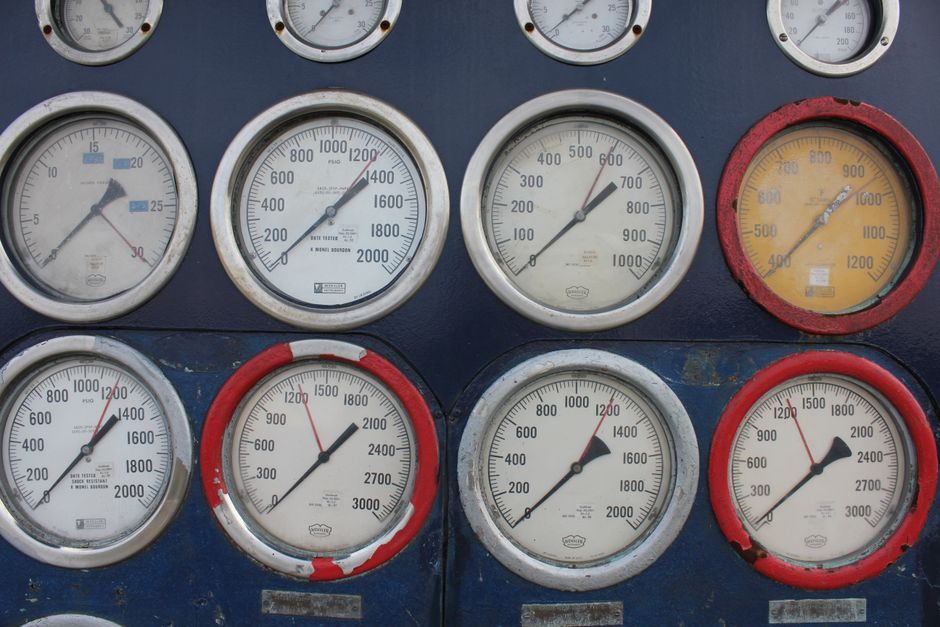
A 2026 portable vibration meter typically delivers acceleration, velocity, and displacement from a single piezoelectric ceramic probe, with selectable frequency bands and an AC signal output for headphone or analyzer feed [S1]. Pen-style models dominate spot-check use on motors, pumps, and HVAC; bench analyzers with FFT sit one tier up for predictive maintenance.
Core selection pivots on measurement range, frequency band, sensor type, and output interface. Buyers in mechanical manufacture, electric power, metallurgy, and general aviation specify the same three-axis capability but diverge on ruggedness, AC output, and probe geometry [S1][S2].
What a Vibration Meter Actually Measures
A vibration meter is a handheld instrument that converts mechanical oscillation into three readable quantities: acceleration (g or m/s²), velocity (mm/s, the ISO 10816 baseline unit for machine health), and displacement (mm, used on slow-rotating equipment) [S1][S2]. Wenzhou Sanhe's pen-style unit measures all three on a single probe by integrating the piezoelectric signal [S1].
Acceleration is the native output of a piezoelectric accelerometer because the ceramic generates charge proportional to dV/dt; velocity and displacement are derived by single and double integration inside the meter. This is why every portable vibration meter in the current market — including the GM63A and GM63B models stocked by ISweek — advertises all three parameters as a fixed feature, not an option [S2]. For a primer on the underlying transducer, see the vibration sensor entry; for instrument-class differences, the vibration analyzer page covers FFT and trending capability beyond a meter.
Selection Criteria: Range, Frequency Band, Probe Geometry
Selection hinges on four numeric thresholds: frequency band, acceleration range, velocity range, and probe reach. A 2026 catalog pen-style meter typically covers 10 Hz to 1 kHz (ISO 10816 machinery zone), with displacement up to 199.9 µm and velocity around 200 mm/s RMS on the high end [S1][S2].
Frequency-band switching is a hard requirement on rotating-machinery routes: low band (10–1 000 Hz) for imbalance on 1 500/3 000 rpm motors and pumps; high band (1 kHz–10 kHz) for bearing defect detection. The Sanhe unit lists "different vibration frequency selection" as item 5 in its feature block [S1], and the GM63A/GM63B pair is differentiated primarily by band configuration rather than sensor class [S2].
Probe geometry matters more than buyers expect. Long-reach probes access bearing housings inside fan cowlings; short, low-mass probes sit flat on a motor face for repeatable readings. The Sanhe datasheet ships both a long and short probe head in the standard kit, each tuned to a different surface-coupling situation [S1]. For broader guidance on accelerometer and sensor classes, the Vibration Sensor Selection Criteria article walks through the same selection logic one level deeper.
Pen-Style Meter vs Bench-Top Analyzer: Decision Table
Two form factors split the 2026 market: portable pen-style meters (Sanhe, GM63A, GM63B, PM633B) and bench-top / FFT analyzers (FLIR vibration-meter line and similar industrial imagers) [S1][S2][S3][S4]. The form-factor choice is driven by route-based vs stationary use, not by sensor quality.
Selection criteria lined up across the two form factors:
- Cost: pen-style $40–$300 retail; bench-top FFT analyzers start roughly ten times higher and scale with channel count. Entry-level eBay listings for a digital vibration meter / vibrometer tester analyser sit at US $245.00 in the 2026 aftermarket [S5].
- Output: pen-style meters expose a single AC signal output (headphone or scope) plus the LCD; bench-top units add USB / data logging and FFT spectra [S1][S3].
- Measurement parameters: both classes deliver acceleration, velocity, displacement; pen-style units usually add surface temperature for motor diagnostics, as the PM633B Amazon listing shows (frequency, acceleration, velocity, displacement, temperature) [S4].
- Use case: pen-style for route-based handheld spot checks on motors, HVAC, engines, generators, pumps; bench-top / continuous-monitoring units for permanent or semi-permanent machinery health programs [S3][S4].
For buyers comparing accelerometer-class instruments against full condition-monitoring systems, the Accelerometer vs Condition Monitoring System decision map lines up the same cost-vs-capability trade one tier higher.
Standards, Sensor Class, and What a Meter Will Not Do
Vibration meters map onto ISO 10816 (mechanical vibration evaluation of machines on non-rotating parts) for velocity severity zones, and onto ISO 10817 for gearbox measurement; the meter itself is the readout, the standard governs the limits you compare the readout against. Buyers should not expect a sub-$300 pen-style meter to perform certified ISO 10816-3 zone classification on Class II machinery — that requires traceable calibration and a defined mounting fixture, neither of which is in a portable spec sheet [S1][S2].
The sensor inside nearly every 2026 portable meter is a piezoelectric ceramic shear or compression element (the Sanhe datasheet explicitly cites "piezoelectric effect of artificial polarized ceramic" as the design basis), with a quoted high sensitivity probe for low-amplitude readings [S1]. MEMS accelerometers appear in lower-cost consumer-grade units, but piezoelectric ceramic still dominates where the spec sheet lists AC signal output and broad frequency range [S1][S2].
Limit buyers hit in the field: battery life on the LCD-backlit units is rated for intermittent duty, not 8-hour route work, so a low-power indication and auto power-off are standard features (Sanhe items 10 and 11) [S1]. AC output is uncalibrated raw voltage, not a 4-20 mA process signal — for plant integration you step up to a vibration sensor with industrial output, not a handheld meter.
Use Cases and Industry Fit

Mechanical manufacture, electric power, metallurgy, and general aviation are the four application areas named verbatim on both the Sanhe and ISweek product pages, and the same four segments dominate the Amazon best-seller list for mechanical vibration meters [S1][S2][S4]. On motors and pumps the standard check is velocity RMS against the ISO 10816 severity zone; on fans and compressors the displacement reading matters because shaft runout dominates; on bearing housings the high-frequency acceleration reading flags early defect frequencies.
For cost-driven sourcing the China-mainland pen-style category (Sanhe, GM63A, GM63B, PM633B) is the volume play, with 15-day delivery and AC output included. For North-American plant sites with locked-in FLIR/thermal-imaging fleets, FLIR's industrial-imaging vibration-meter category targets handheld asset condition monitoring as a complement to the thermal cameras, not as a replacement [S3]. Where a buyer needs a one-shot price reference for the underlying transducer, the Accelerometer Price and Cost Guide 2026 gives the unit-cost and calibration TCO figures a meter purchase sits on top of.
Shortlist Logic and Final Spec Check
Shortlist a pen-style vibration meter in 2026 on five numeric checkpoints: acceleration range (≥199.9 m/s² peak), velocity range (≥199.9 mm/s RMS), displacement range (≥1.999 mm peak-to-peak), frequency band (10 Hz–1 kHz minimum, with 1–10 kHz high band for bearings), and AC signal output (≥1 V RMS for headphone or scope feed). The Sanhe spec sheet hits all five; the GM63A/GM63B pair covers the same envelope with model-to-model variation in frequency band and probe ergonomics [S1][S2].
Do not pick a pen-style meter if the duty is permanent online monitoring of a Class II machine — that requires a fixed vibration sensor with 4-20 mA or bus output, periodic calibration, and a documented ISO 10816 zone-classification procedure. The portable meter is a screening tool, not a compliance instrument. For deeper specification work on the broader vibration sensor family and 2026 selection map, the Vibration Sensor Buying Guide 2026 covers what the meter does not.
Two trackable signals to watch: piezoelectric ceramic supply from China-mainland OEMs into European machinery MRO channels (Sanhe shipping 15-day from Wenzhou into Europe per the 2026 listing [S1]), and FLIR's continued bundling of handheld vibration meters with the thermal-imaging inspection route [S3].
For the relevant spec sheets and selection criteria, see vibration meter.
