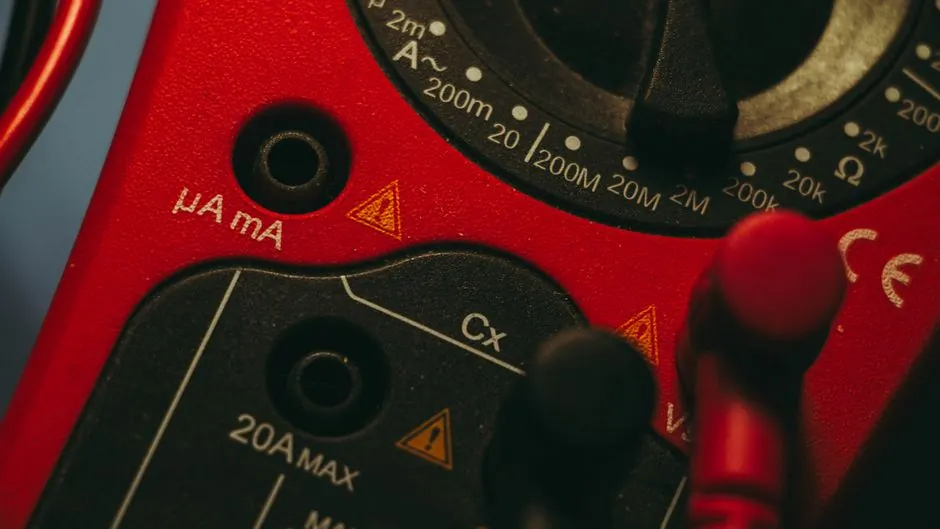
TDR level meters, also called guided-wave radar transmitters, dominate continuous level measurement for liquids, slurries, and bulk solids in tanks under 6 m in diameter where non-contact radar underperforms, with global OEM supply split between legacy instrumentation majors and specialized TDR houses [S1][S3].
Time Domain Reflectometry in this instrumentation context uses a low-power nanosecond pulse launched down a metal probe, with the return reflection time mapped to the media surface, delivering measurement independent of most foam, vapor, and turbulence conditions that defeat ultrasonic and capacitance probes [S3][S5].
OEM Landscape: Global Majors vs. Specialized TDR Suppliers
The TDR supplier base is bifurcated: tier-one process-instrumentation majors (Siemens, ABB, Honeywell, KROHNE) supply TDR alongside full level portfolios, while specialist suppliers (AMETEK Drexelbrook, Flowline, Fluid Components International) focus on narrower guided-radar or guided-wave product lines [S3][S4]. Thomasnet's TDR equipment supplier list for 2026 names KROHNE, Trek Equipment Corp., Advanced Test Equipment Corporation (ATEC), and Tech- as the recommended vendors for North American TDR procurement [S1]. AMETEK Drexelbrook markets the DR2000 series as a 2-wire guided-wave radar TDR for level, distance, volume, and mass of liquids, liquefied gases, pastes, powders, and slurries, with explicit IECEx hazardous-area variants [S5].
For the broader water-level category that overlaps with TDR, the 2025 top-10 list places Siemens, ABB, and Honeywell at the head of the international field, with Chongqing Gold Mechanical & Electrical Equipment Co. highlighted as a China-based manufacturer claiming ±0.1% accuracy across ultrasonic, pressure, and radar product lines, operating in a -20°C to 60°C window [S4]. Metoree's 2026 directory lists 38 water-level meter manufacturers including In-Situ Inc., ECT Manufacturing, and Eno Scientific, though most are portable hydrographic units rather than process TDR [S6].
Probe Architectures and Selection Criteria
TDR probes ship in three physical configurations: coaxial (rigid twin-rod inside a stilling well), single rigid rod, and flexible cable with a weight anchor, with coaxial giving the strongest return signal in low-dielectric media and cable probes extending measurement range up to 30 m in tall silos [S3][S5]. A comparison of the main TDR probe options against decision criteria:
Coaxial probe: highest signal strength in low-dielectric-constant liquids (εr down to ~1.4), immune to sidewall reflections, but probes up to only ~6 m and cannot handle heavy buildup. Single rigid rod: tolerates viscous and coating media, sidewall-aware installation, range typically to 4 m. Flexible cable with weight: longest reach to 30 m, suited to tall bulk-solid silos and deep sumps, requires a clear floor area for the weight. For differentiation against non-TDR level technologies, see the TDR level meter encyclopedia entry and the broader radar level meter overview.
Hazardous-Area Approvals and 2-Wire Loop Integration
The DR2000-LM IECEx certificate 9-13-115 Issue 1 (AMETEK Drexelbrook) defines three equipment protection levels: Ex ia for intrinsically safe loops, Ex dia / Ex ia tb for flameproof enclosure with intrinsically-safe outputs and dust ignition protection by enclosure, and Ex ic for non-incendive installations, with ambient and flange temperature classes specified per the IECEx drawing set [S5]. Loop-powered 2-wire operation (16–36 V DC typical, 4–20 mA + HART) is now the default for guided-wave radar because it cuts wiring cost in retrofit tanks and shares cabling with existing 4–20 mA infrastructure [S5][S2].
For process plants, the procurement decision between HART, Foundation Fieldbus, and PROFIBUS PA must respect that HART is a 1200/2200 Hz FSK signal superimposed on the 4–20 mA analog loop, whereas Foundation Fieldbus and PROFIBUS PA are fully digital protocols that do not carry HART; mismatched ordering is a common field error.
Field Application Patterns and Use Cases
Flowline's published TDR case-history set (2021–2024) shows guided-wave radar deployed predominantly in narrow-vessel, retrofit, and remote-site service: diesel day tanks at SOFI Stadium, food sanitization soak tanks, cell-tower backup-generator tanks, copper-mine water remediation, and university boiler tanks, with cable probes most often selected in the deep tank and sump applications [S2]. Soil-moisture and water-depth TDR is a parallel product family, exemplified by the PRI-ECO Plover portable TDR meter, which measures moisture, temperature, and electrical conductivity for environmental and agricultural monitoring rather than industrial level service [S8].
China-based TDR suppliers such as Cippus Sensor advertise factory-direct 4–20 mA + HART TDR radar level transmitters targeting competitive pricing on export orders, and the global OEM field for adjacent construction machinery and equipment often specifies the same instrument families for fuel and hydraulic reservoir service [S7].
Limits, Failure Modes, and Where TDR Is the Wrong Tool
Guided-wave radar does not read through metallic stilling wells unless the well is open-top or non-conductive, and bridging of bulk solids between probe and wall can produce a false-high reading; for open-channel flow and rivers, ultrasonic or radar air-space measurement is the lower-cost choice [S3][S4]. Coaxial probes are unsuitable for media above ~200 °C process temperature in standard builds, and high-pressure cryogenic service typically requires an engineered seal plus reduced probe length to keep the mechanical load on the process connection within ASME B16.5 flange limits.
Buyers should validate IECEx/ATEX marking matches the installed zone, confirm the dielectric constant of the media is above the probe's published minimum, and treat any TDR selection as a coupled decision with the control loop; an instrument specialist can be cross-checked against the sound level meter or lamps and light fittings procurement pages only as a side-discipline, not a substitute.
Procurement Signals to Track Through Q4 2026
Trackable next signals: (1) the next IECEx CoC reissue cycle for the DR2000 and equivalent KROHNE OPTIFLEX 1300 certificates, which is the binding document for hazardous-area plant audits; (2) published Q3 2026 procurement indices for the China OEM TDR segment against the Siemens/ABB reference lines, which historically diverge by 30–50% on list price; (3) any new Foundation Fieldbus-IS profile registration for guided-wave radar, which would close a long-standing gap versus 4–20 mA + HART. For unrelated adjacent buying signals this quarter, the Q3 2026 counter-meter buying-signal digest and the truck crane vs crawler crane mobility trade-off are worth scanning alongside any TDR specification cycle. [S4]