
A temperature recorder is specified by what it must prove later, not by the brand on the front panel. The 2026-06-16 update of plustrace.com lists three product families that map directly to selection branches: single-use loggers, multiple-use loggers, and real-time trackers [S1].
For U.S. lab and plant sourcing, Fisher Scientific's 2026-05-19 category page enumerates 10-day, 40-day, Celsius-chart, and Fahrenheit-chart mechanical chart recorders alongside electronic models from Dickson, Fisherbrand, Omega, Chemglass, Pendotech, and Petroleum Analyzer Corporation [S3]. The mix shows that "temperature recorder" still covers both paper-chart and solid-state devices in current catalogs.
Sensor and input channel configuration
Selection starts with the input: a recorder that accepts only an internal NTC thermistor cannot be retasked to a plant RTD loop without changing hardware [S3]. Multi-channel paper-chart recordders from vendors such as Dickson and Omega accept external thermocouple or RTD inputs via rear terminals, which makes them usable on reactor jackets and sterilizer penetrations where the sensing point is remote from the instrument case [S3].
Single-use chemical and pharma loggers use an onboard digital sensor sealed into the probe body, with the USB contact acting as both power and data port once the trip is complete [S1]. Engineers specifying a temperature recorder for cold-chain or sterilization work should map the sensor envelope (range, accuracy, probe length, IP rating) before considering sample interval or software.
Sample interval, memory depth, and trip duration
Sample interval and memory are tied by arithmetic: a 10-day paper chart on a 10-Day Recorder subdivides one revolution into fixed tick spacing, and 40-Day Recorder models do the same on a slower drum [S3]. Electronic loggers expose this as a configurable interval; the Fisher Scientific category page lists chart speeds and "replacement chart" consumables for paper units, signaling that duration and interval are coupled at the order stage, not the config stage [S3].
For audit-bound runs, the rule of thumb is that stored points must outnumber the duration divided by the shortest interval you might be asked to defend — typically 2x to 4x the theoretical minimum so that a later investigator can re-bin the data without gaps [S1]. A multi-use MTH logger with replaceable battery is the form factor plustrace positions for repeated pharma and healthcare shipments where the trip may run several weeks [S1].
Output medium: paper chart, USB PDF, or wireless stream

Output drives both acceptance and cost. Paper-chart recorders produce a physical artifact that QA reviewers can sign, which is why Dickson and Fisherbrand chart units remain in regulated labs alongside electronic loggers [S3]. Their consumable — replacement charts in Celsius or Fahrenheit — is part of the lifetime cost line and must be stocked [S3].
Single-use USB loggers generate a one-shot PDF or CSV when plugged into a host, with no cable or reader required; the Plustrace 2026-06-16 catalog frames these as drop-in for produce, pharma, and parcel lanes [S1]. Real-time trackers push data over cellular or LoRa to a dashboard, which fits container fleets and warehouse maps rather than benchtop proof-of-cycle work [S1]. A paperless recorder is the right form when the paper trail itself becomes a compliance liability (ink fade, missing charts, signature gaps) and the host system can archive the encrypted file.
Environmental and mounting class
Mounting class — portable, panel, wall, or probe-in-product — drives enclosure rating. Lab bench units such as the Chemglass and Pendotech entries on Fisher's 2026-05-19 list are intended for controlled-room use and carry modest IP ratings, while cold-chain and outdoor pharma shipments need IP65 or higher probe bodies [S3].
Real-time trackers are typically sealed to a higher IP class because they stay with the load; the 2026 Plustrace real-time line is described as a "real-time temperature tracker" suitable for fruit, vegetable, and pharma transport where condensation and rough handling are routine [S1]. Pairing a temperature humidity recorder is the call when both water activity and temperature must be trended, e.g. for produce and for some biologic returns.
Decision criteria: which recorder fits which job
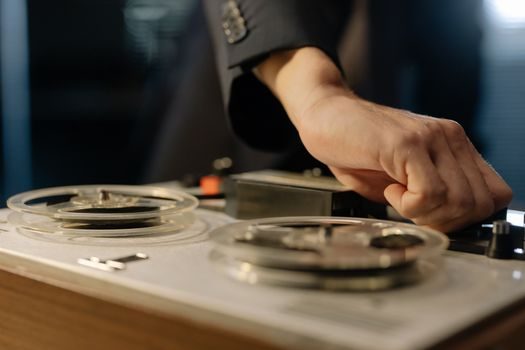
Three criteria line up the main options for sourcing. (1) Audit posture: paper chart (Dickson, Fisherbrand) for legacy FDA/GLP signatures; USB single-use (Plustrace) for one-trip cold-chain PDFs; real-time wireless (Plustrace real-time line) for fleet visibility [S1][S3]. (2) Re-use vs single-use cost: multi-use MTH and chart units carry a higher unit price but lower per-trip cost once the chart paper or battery amortizes; single-use units flip that ratio [S1][S3]. (3) Trip duration: 10-day and 40-day chart recorders cover short autoclave and stability runs; electronic loggers cover anything from a few days to multi-year shelf-life studies [S3].
Engineers should also distinguish recorders from controllers. A recorder only logs; a temperature controller closes a loop. Specifying a recorder where a controller is required — or vice versa — is one of the more common errors in retrofit jobs, alongside pulling a paper-chart unit into a wireless SCADA retrofit where no chart paper can be loaded.
When a recorder is the wrong tool
Record-grade proof is not the same as control. A recorder cannot hold a setpoint, so a chamber that drifts during a run will be logged faithfully as drift. If the application is to *prevent* excursion, specify a controller plus a separate recorder or a temperature monitor with relay output. [S1]
Sensor mismatch is a second failure mode. Forcing a recorder with a fixed internal NTC onto a Pt100 loop gives plausible-looking but wrong numbers; the fix is a recorder with a universal input or a discrete temperature sensor matched to the recorder's input. Related selection logic for Pt100 chains and transmitter pairing is covered in RTD vs transmitter loop design and is worth a parallel read when the recorder must coexist with a 4-20 mA loop.
Validation, calibration, and standards traceability
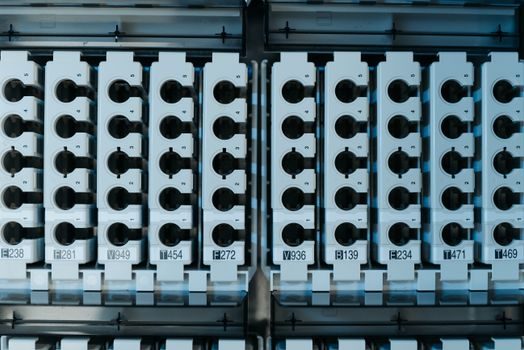
For steam-sterilizer and dry-heat oven validation, the recorder's probe, logger, and reader chain must be calibratable against a reference standard with certificate traceability; 21 CFR Part 11-style expectations apply to electronic records and signatures in pharma and blood-bank work, and chart records must be stored against the same change-control discipline [S1]. Engineers running F0 calculations on saturated steam loads should pair the recorder spec with a thermocouple penetration study; the same logic appears in sterilizer recorder selection.
A final cross-check: a recorder that produces data the QA group cannot read is a recorder that will be re-specified. Confirm file format (PDF, CSV, encrypted binary), viewer licensing, and chart-paper supply before signing the PO — the 2026-05-19 Fisher page still lists "Replacement Chart" as an active consumable category, which means paper supply is a standing line item, not a one-time buy [S3].
Next signal to track: how single-use USB loggers and real-time wireless trackers split the cold-chain and pharma lanes through 2026 — the 2026-06-16 Plustrace release treats them as parallel product lines rather than substitutes, suggesting both formats will keep separate SKUs into the second half of 2026 [S1]. A second watch-item is whether chart-paper SKUs from Dickson and Fisherbrand stay stocked through 2026 or compress, since chart-recorder replacements often precede electronic-retrofit decisions by one budget cycle [S3].