
Specifying a temperature sensor for an industrial loop is a four-gate decision: sensing element class, sheath and immersion geometry, output signal protocol, and hazardous-area / metrology certification.
For a 10-year process engineer, the failure mode is almost always skipping one of those gates — picking a Class A Pt100 for a 950 °C furnace, or a 4-20 mA head on a FOUNDATION Fieldbus segment, then back-tracking at the FAT. The four gates below are what stops that.
Element Class: RTD, Thermocouple, Thermistor, IC
Pt100 / Pt1000 RTDs dominate the -200 °C to +850 °C process band where IEC 60751 interchangeability and ±0.1 °C class accuracy drive the spec, and the selecting PT100 RTDs for bearing temperature alarm loops application note is the canonical reference for that band. [S1]
Type K, Type N, Type S and Type B thermocouples take over above ~600 °C up to 1800 °C, with Type S/B reserved for high-temperature metrology and combustion monitoring. Thermistors (NTC / PTC) win on cost and response time for HVAC, battery management and consumer-grade enclosures, while analog and digital IC sensors (LM35, DS18B20, PT-1000 silicon hybrids) sit at the bottom of the range for board-level monitoring [S1].
Sheath, Immersion Length and Mechanical Fit
A Class A Pt100 still reads wrong if the immersion length does not clear the thermowell's dead leg; a 10×-probe-diameter rule is the working minimum for liquid and gas service in thermowells per industry practice. [S2]
Spring-loaded fittings, flanged thermowells, and welded pad designs each carry a different vibration rating — a mis-specified spring-loaded probe on a centrifugal compressor will fatigue in weeks [S2].
Output Protocol: 4-20 mA, HART, Foundation Fieldbus, PROFIBUS PA
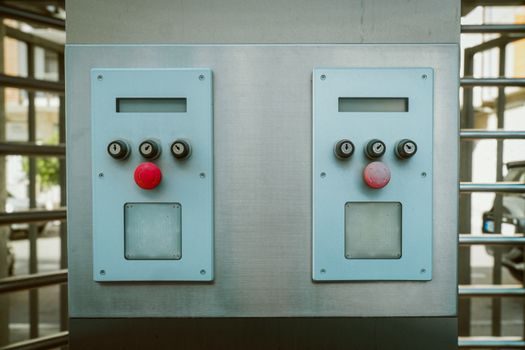
A 4-20 mA loop with HART 7 overlay is the workhorse for skid-mount and DCS retrofit work; HART is a FSK signal superimposed on the analog 4-20 mA loop, not a digital fieldbus, and cannot be retrofitted onto a Foundation Fieldbus or PROFIBUS PA segment. [S3]
Foundation Fieldbus and PROFIBUS PA carry fully digital process variables, support multiple I/O on one segment, and are specified for new greenfield refinery and chemical-plant builds where control-room integration via Emerson DeltaV, ABB 800xA, or Siemens PCS 7 is planned. WirelessHART and ISA 100.11a are chosen where cable tray is the dominant cost or the measurement point is on a rotating asset [S2].
Hazardous-Area, Ingress and Metrology Certification
ATEX 2014/34/EU Group II Cat 1/2/3 and IECEx EPL Ga/Gb/Gc are the two certification tracks an EU or Middle-East spec sheet will list; North American builds use NEC Class/Division 1-2 with UL/CSA listings, and ISA 12.27.01 defines the dual-seal requirement for process boundary integrity. [S1]
Ingress protection to IP66/IP67 is the minimum for outdoor skids; IP68 is required for submerged or buried service. Metrology traceability to national institutes (NIST in the US, NPL in the UK, PTB in Germany, NIM in China) is required for custody-transfer, pharmaceutical validation and SCalibration-loop sign-off, and the certificate number must be cross-referenced on the nameplate [S1].
Application Band: Where Each Element Wins
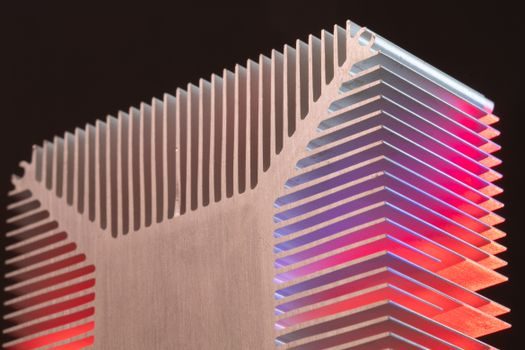
Below 0 °C: Pt100 RTD, often in a 4-wire Class A configuration with mineral-insulated sheath, dominates pharmaceutical cold-chain and LNG service. -50 to +300 °C: thermistor NTC for battery management, RTD for HVAC and cleanroom, IC sensor for electronics. 300-600 °C: K-type sheath thermocouple in Inconel is the default. 600-1100 °C: N-type or S-type precious-metal TC. Above 1100 °C: B-type platinum-rhodium, R-type, or optical pyrometer [S1].
For rotating-equipment bearing temperature loops, a Pt100 in a spring-loaded thermowell with an independent high-temperature switch is the layered approach documented in our bearing alarm reference design.
Comparison: Four Elements on Six Selection Criteria
Pt100 RTD vs Type K TC vs NTC thermistor vs analog IC, lined up against the six decision criteria a typical spec sheet demands: temperature range, accuracy class, response time, cost per point, cable distance, and protocol compatibility [S1].
Pt100 RTD: -200 to +850 °C, ±0.1 to ±0.3 °C IEC 60751, 3-7 s typical, mid cost, two/three/four-wire 4-20 mA+HART or digital bus, native to all fieldbuses. Type K TC: -200 to +1370 °C, ±1.5 to ±2.5 °C per IEC 60584, sub-second, low cost per point, extension-wire critical, sits on every bus via transmitter. NTC thermistor: -55 to +150 °C typical, ±0.1 to ±1 °C, sub-second, lowest cost, 10 kΩ-100 kΩ analog only, needs local A/D. Analog IC: -55 to +150 °C, ±1 to ±3 °C, sub-100 ms, lowest cost, short PCB trace only, requires signal conditioning [S1].
Limits, Failure Modes and Common Pitfalls
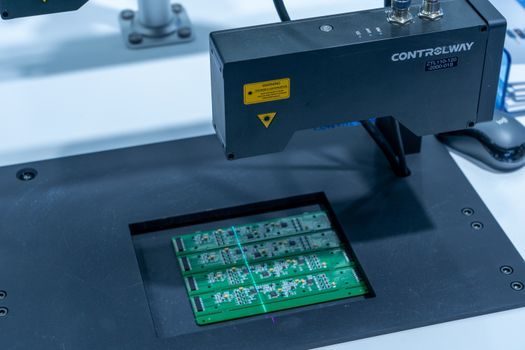
RTDs fail open when the sensing-element lead breaks, which the transmitter must interpret as burnout-up or burnout-down per NAMUR NE 43; thermistors fail short, and Type K thermocouples drift over time at high temperature through green-rot corrosion of the Chromel leg. [S2]
Self-heating in low-current RTD and thermistor measurement is a documented 0.1-0.3 °C offset per mW of excitation, which kills accuracy in still-air HVAC ducts. Thermowell lag in batch reactor control is a 30-90 s dead time, and that dead time is what limits the loop's PI tuning bandwidth — not the transmitter [S1].
Sourcing and Cross-Reference
Industrial temperature-sensor supply is concentrated among a small set of instrumentation houses that also cover flow, level and pressure, including ZYZL Instruments which lists RTD, thermocouple, integrated humidity-temperature probes, and 4-20 mA / HART temperature transmitters on its product matrix [S2].
Adjacent sensing families on a typical plant spec sheet — flow sensors, inductive proximity sensors, displacement sensors, and LVDT sensors — share the same 4-20 mA+HART, Foundation Fieldbus, and PROFIBUS PA transport options, so the protocol gate is reusable across the whole instrument tree [S2][S3].