
A 2026 spec sheet for a temperature transmitter is shaped by four binary choices — input type, output protocol, mechanical housing, and hazardous-area approval — and misaligning any one of them forces a redesign at the cabinet or junction-box level [S3][S4].
The live catalog in 2026-06 covers fixed-range 4-20 mA Pt100 units such as the ProSense XTH-0100F-PT1 (0 to 100 °F fixed, isolated, 4-20 mA output) [S3], programmable 4-wire RTD heads like the OMEGA M12TX (-50 to 500 °C programmable, 4-20 mA, IP67 M12) [S5], 2-wire HART 7 heads (PR Electronics 5437A/5437B/5437D, 6437A/6437D) [S4], Foundation Fieldbus and PROFIBUS PA models (PR 5450A/5450B/5450D) [S4], and dual-channel USB data-logging heads (CTI Inc) [S2].
RTD vs thermocouple input: when to spend the extra cost
RTD inputs — almost always Pt100 / 100 Ω platinum — dominate process-loop specs in 2026 because they deliver better linearity, better long-term stability, and tighter conformity than base-metal thermocouples in the -200 to +600 °C band where most chemical, HVAC, and tank-level work lives [S3][S5].
PR Electronics' 2-wire programmable 5334A explicitly targets the RTD/TC head-mount form factor used inside DIN B-head enclosures, and the 5437A/6437A HART 7 family is engineered for the same role with HART 7 EDDL revision support [S4]. Thermocouple inputs are still warranted above ~600 °C, in high-vibration engine and turbine exhaust ducts, and where miniature MI-sheathed probes beat any RTD on physical size — Schweitzer Engineering's SEL-2600, for example, takes up to 12 RTD inputs plus a contact status for transformer, breaker, motor and generator monitoring [S1].
4-20 mA vs HART vs Foundation Fieldbus / PROFIBUS PA
4-20 mA analog is the cheapest, lowest-risk output and remains the dominant analog protocol for new installations in 2026, but it carries only one process variable and no diagnostic bandwidth beyond the 4 mA fault-current convention [S3][S5][S6].
HART 7 overlays a digital signal on the same two wires, enabling remote range reconfiguration, dual-variable transmission (e.g. PV + sensor temperature) and predictive-diagnostics, which is why the PR 5437A/5437B/5437D and 6437A/6437D families are positioned as the workhorse for refinery and skid retrofits [S4]. Foundation Fieldbus and PROFIBUS PA, represented by the PR 5450A/5450B/5450D line, are fully digital and run on a bus segment instead of a point-to-point loop — they are the right call only when the host DCS already has a FF or PA segment, the segment has spare capacity, and the plant's lifecycle plan keeps that DCS for the next 10+ years [S4]. HART does NOT run natively on a Foundation Fieldbus or PROFIBUS PA segment: they are physically and protocol-wise separate buses, so picking a FF/PA head on a HART-only DCS wastes its digital layer and forces a host upgrade [S4].
Housing, IP rating and field mounting
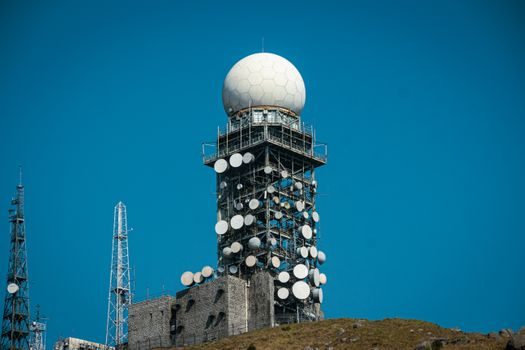
IP67 or higher (often IP68) is now a baseline for any transmitter mounted in a washdown, outdoor, or marine environment; the OMEGA M12TX ships with a moulded M12 connector rated IP67 and the M12 thread replaces the legacy conduit entry to save panel space [S5].
Form factor splits into three families: DIN B head-mount (the 5334A, 5437A/B/D, 6437A/D, 5450A/B/D all fit inside a standard connection head) [S4], field-mount remote enclosures with conduit entries (typical for SEL-2600 substation panels) [S1], and integrated probe-with-transmitter heads where the M12 connector at the probe tip is the only field interface (OMEGA M12TX) [S5]. For process skids, DIN B head-mount is cheapest and easiest to calibrate against a dry-block; for wet/corrosive outdoor sites, specify a stainless head with an IP68 cable gland plus surge protection on the loop.
Hazardous area and certification scope
Explosion-proof requirements are governed by IEC 60079 family of standards (gas/vapour) and the parallel ATEX 2014/34/EU framework in the EU, with IECEx as the IEC scheme accepted globally — any head specified for Zone 1/Zone 2 must carry a valid Ex rating matched to the actual gas group and temperature class of the process, not a generic 'Ex approved' label [S4].
PR Electronics' 7501 field-mounted HART 7 head is the example to copy when designing for hazardous-area work: it is engineered to mount directly in the field on a probe, removing the long capillary run between sensor and safe-area transmitter that drives noise and drift. For common projects the pattern is: pick an intrinsically safe (Ex i) head for Zone 1 sensor mounting, a flameproof (Ex d) enclosure for Zone 1 cabinet-side electronics, and a non-incendive (Ex nA) head for Zone 2 where ignition probability is low. This mirrors the decision logic used in the pressure transmitter guide — sensor-mount IS vs cabinet-mount Ex d — and is the most common source of project re-specs when it is skipped [S4].
Selection criteria, side by side
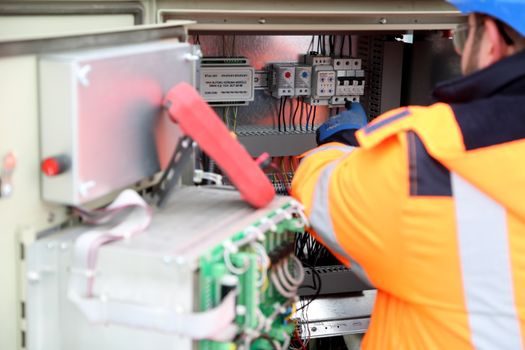
Use the table below to shortlist in under five minutes. The four columns are the four binary choices that drive BOM cost and lead time, and they line up with the temperature transmitter decision logic in our encyclopedia entry. [S1]
4-20 mA fixed-range, Pt100 (e.g. ProSense XTH-0100F-PT1): best for OEM skids, retrofit spares, when the controller input is analog only and calibration is done in the controller — cheapest path, no host config needed [S3]. 4-20 mA programmable RTD head (e.g. OMEGA M12TX, PR 5334A): right call when the measurement range is not yet frozen or the same SKU is used across multiple process points; PC-configurable, supports both RTD and TC inputs in one unit [S4][S5]. HART 7 head (PR 5437A/B/D, 6437A/D, 7501): the default pick for any plant with a HART-capable DCS, asset-management software, or a need for remote re-range and predictive diagnostics; cost is roughly 1.5–2× the fixed-range analog unit [S4]. PR 5450A, 5450B, and 5450D are listed as PROFIBUS PA temperature transmitters, offered as a distinct product line from the 2-wire HART 7 temperature transmitters (e.g., 5437A, 5437B, 5437D, 6437A, 6437D) in the same manufacturer's family [S4]. Multi-channel panel-mount (CTI dual-channel USB, SEL-2600 12-RTD): used at the substation or lab bench for parallel measurements, not for a single-loop field install [S1][S2].
What a temperature transmitter is NOT, and who should skip it
If the requirement is local indication only with no analog or digital signal back to a controller, a temperature monitor or a panel meter is the cheaper, simpler device — a transmitter adds nothing the indicator does not already do [S3].
Standalone data acquisition over USB for lab or bench work is also outside a transmitter's scope: CTI's 2-channel USB data-logging head is positioned as a logger, not as a process-loop transmitter, and it should not be specified for a 24 V loop-powered DCS card [S2]. Finally, the Sbwz-Pt100-class ultra-low-cost 4-20 mA/0-10 V head sold on generic B2B portals is not the right pick for any safety-instrumented function (SIF) or for SIL-1+ loops — the documentation depth, traceability and EMC/emissions testing behind units like the ProSense XTH series, PR 5437A and SEL-2600 is the differentiator that lets a transmitter live on a SIF loop at all [S3][S4][S1].
Failure modes and limits to plan for
The most common field failure on a 4-20 mA head is lead-compensation error on long thermocouple runs: a TC-only head like the PR 3101 needs the correct cold-junction compensation, and an RTD used as the CJC sensor at the terminals is the usual fix [S4].
Second, loop-powered 2-wire HART 7 heads (PR 5437A/B/D, 6437A/D) require a minimum loop voltage of typically ~12-13 V at the head terminals to power the analog section plus the HART modem — a long cable run with 250 Ω of loop resistance plus a 4-wire receiver can drop the head below its brown-out threshold, which presents as intermittent loss of the digital signal while the analog 4-20 mA value stays valid. Third, IP67 is not IP68: the OMEGA M12TX is rated to IP67 for short-term immersion only, so any spec sheet that says "submersible" needs an IP68 rating, not an IP67 rating, and that is a common submittal error [S5].
Standards, sourcing and a trackable next step
Specifying a temperature transmitter in 2026 is governed by a tight set of documents: IEC 60584 for thermocouple tables, IEC 60751 for Pt100 RTD characteristics (the basis of the Pt100 input range used by ProSense XTH-0100F-PT1, OMEGA M12TX, PR 5437A and SEL-2600), IEC 60079 series plus ATEX 2014/34/EU plus IECEx for hazardous areas, and the HART/Foundation Fieldbus/PROFIBUS PA protocol specifications themselves [S1][S3][S4][S5].
For next-step tracking, watch the published PR Electronics configuration files for the 5437A/6437A/7501 HART 7 family — DD/EDDL revisions are the cleanest signal of which firmware the host DCS will accept, and a SIF loop will not accept a head whose DD revision is older than the DCS expects [S4]. A second trackable signal is the AutomationDirect catalog status of the XTH line: the XTH-0100F-PT1 was filed as a retired SKU on 2026-06-03, so any new project that planned to use that exact part number should pick a current-generation Pt100 head and re-verify lead time before locking the BOM [S3].
For a deeper dive on loop-power, SIL and explosion-proof selection logic, the pressure transmitter buying guide 2026 uses the same four-decision framework for pressure and is a useful cross-check before you freeze the I/O list. For installation discipline in the field, the strain gauge 8-point field data sheet covers the same wiring and shielding care that an RTD loop demands, and the electronic load vs data logger for temperature limits piece is a useful sanity check if the spec is being driven by a thermal-limit test rather than a process loop.