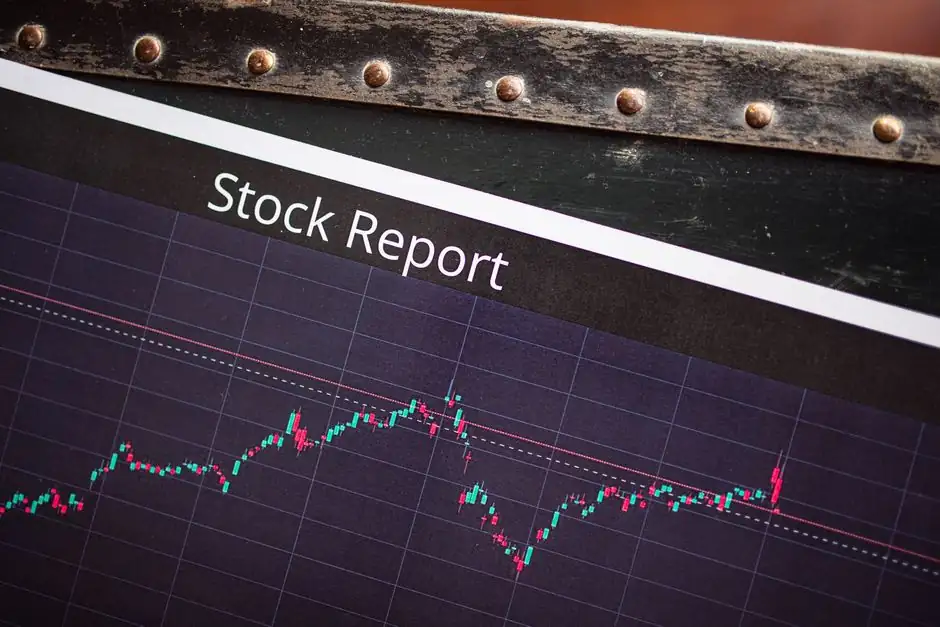
The average price of rare earth oxides in 2025 was around US$1,010 per kilogram, while China imposed restrictions on exports of metals and compounds containing terbium in April 2025.
The market combines a small volume base with concentrated processing, volatile logistics and exposure to electric vehicles, wind turbines, industrial motors, electronics and solid oxide fuel cells [S1][S2][S3].
Terbium oxide pricing diverged sharply across 2026 benchmarks
Terbium oxide traded at $803.96/kg on a domestic China basis and $1,182/kg FOB China in March 2026, while a separate metal benchmark put terbium at $2,090/kg EXW China on April 4, 2026 [S4][S7]. These figures describe different products, locations and delivery terms, so they cannot be treated as a single continuous price series.
China imposed restrictions on exports of metals and compounds containing terbium in April 2025, highlighting vulnerability in the heavy rare earth supply chain. By November 2026, one Northeast Asia quotation stood at $1,027.71/kg, down 2.8% for the listed movement [S6].
The $4,593.75 per kilogram figure for November 27, 2026 was the retail price for private investors, while bulk purchases required a quotation. It represented a 131.61% gain from $1,983.40/kg one year earlier, after a 42.03% annual increase in 2025 [S2]. Buyers should reconcile product form, purity, geography and payment terms before comparing this figure with oxide benchmarks.
Magnet demand supplied the strongest demand signal
Permanent magnet manufacturing was a principal market driver during Q3 2026, with electric vehicles, wind energy equipment and advanced electronics adding regular consumption [S1]. Terbium is used in heat-resistant permanent magnets and is important for extreme-condition performance.
China's industrial production grew 5.5% year over year in September 2026. These industrial indicators do not quantify terbium consumption, but they establish the manufacturing environment supporting magnet purchases during the period.
The functional role of terbium is more demanding than a volume comparison with neodymium or praseodymium. Magnet buyers value thermal stability and reliable high-temperature performance, while the total quantity of terbium required for a given magnet grade depends on the alloy specification and operating temperature [S1][S2]. Procurement should therefore model alloy recipes and performance requirements rather than infer demand from vehicle production alone.
Supply concentration and export controls explain the price pressure
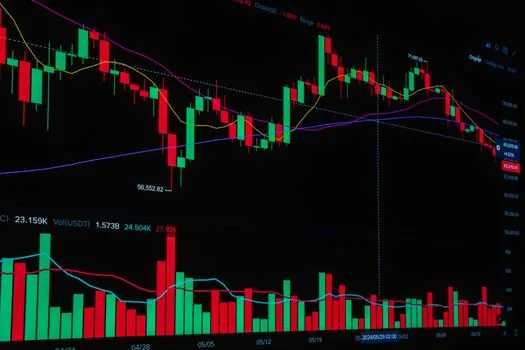
Refining terbium requires extraction, separation and purification stages that depend on specialised facilities and processing expertise, limiting flexible supply when high-purity material is needed [S1]. China imposed restrictions on exports of metals and compounds containing terbium in April 2025, and continued controls on seven rare earth elements were associated with tighter global supply and higher critical-element prices by June 2026 [S5].
The supply side remained constrained through Q3 2026. European market data cited dwindling Western inventories and under-supplied ex-China heavy rare earth supply, while China faced constrained raw material inventories and higher production costs [S3]. Terbium production costs increased in Q3 2026 as thermal coal prices surged to a three-year high.
Terbium prices showed a steady upward trend during Q3 2026, with September recording further increases. The restrained quarterly movement contrasts with the much larger rise captured by the separate June 2026 benchmark and November 2026 retail series, which is evidence of volatile, benchmark-specific pricing rather than one uniform global oxide market [S1][S2][S5].
Cost drivers rank purity, processing and availability above nominal volume
The first cost driver is feedstock and separation intensity, because high-purity material requires several processing stages and constrained access to suitable ore or intermediate stocks [S1]. The second is processing energy and operating cost, with China and Germany both recording rising producer-price inflation during Q3 2026 [S3].
The third driver is regulatory and logistical friction, including Chinese export controls, tighter ex-China availability and the need for buyers to replenish inventories carefully [S1][S3][S5]. The fourth is volume and contract structure: industrial buyers reported a mixture of planned stockpiling and purchases matched to immediate production needs, so a large one-off order could affect quotations more than a broad rise in end-user consumption [S1].
Total cost of ownership must include more than the oxide purchase price. Magnet manufacturers also incur inventory financing, safety stock, segregation and handling costs, yield loss during alloy manufacture, requalification risk after supplier or specification changes, and the downstream cost of magnet failure in high-temperature motors [S1][S2]. A lower unit quotation can therefore be more expensive if it carries weaker purity guarantees, longer delivery uncertainty or inconsistent lot-to-lot performance.
Industrial buyers should separate index data from executable quotations
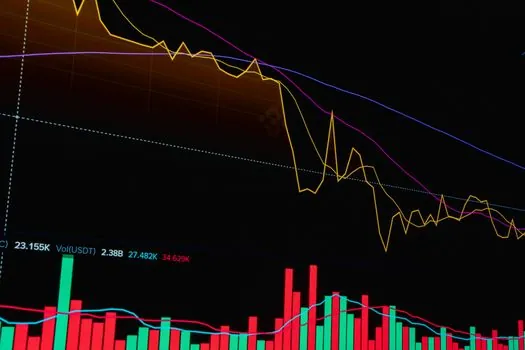
Domestic Chinese, FOB Chinese, EXW metal, Northeast Asian and retail quotations answer different procurement questions. The March 2026 pair covered domestic and FOB oxide prices, the April 2026 figure covered metal, and the November 2026 values represented a Northeast Asian listing and a private-investor retail benchmark [S2][S4][S6][S7].
On unit price alone, the $4,500/kg June oxide assessment was the highest sourced figure in this comparison. On purity and availability, the March 2026 domestic and FOB oxide quotations provided the clearer industrial reference points. On headline momentum, the November retail benchmark showed a 131.61% annual gain, but it was not a bulk purchase quote [S2][S4][S5].
This comparison also identifies who the market serves. Permanent magnet makers, NdFeB alloy producers, high-temperature motor suppliers and advanced component manufacturers are the primary industrial users, while small buyers without access to bulk quotations face a less representative retail benchmark [S1][S2]. The market is not a simple choice between one chemical grade and another: metal, mixed oxide and other terbium compounds are different inputs, and equivalent price labels do not guarantee equivalent purity or processing suitability [S4][S7].
Use contracts to manage volatility rather than chase spot prices
Procurement teams should request the oxide grade, purity specification, incoterm, delivery window, volume band and price-adjustment mechanism from every supplier. The 99.9% to 99.99% range identified for the April 2026 metal benchmark illustrates why a written specification is essential when quotations describe different terbium forms or purities [S7].
Magnet manufacturers can also split exposure between production-critical quantities and planned strategic inventory, then define approval thresholds before spot prices move. Supplier allocation and replenishment behavior supported prices during Q3 2026, while adequate inventories among some traders and cautious downstream buying limited sharper gains [S1]. That mix suggests disciplined contracting can improve availability without treating every price increase as an immediate procurement emergency.
Two signals merit monthly tracking: the spread between Chinese FOB oxide assessments and non-China regional quotations, and the direction of high-purity inventory availability in Europe, the United States and India [S1][S3]. A sustained narrowing of that spread would indicate improving traded liquidity, while persistent ex-China scarcity would keep allocation risk and qualification lead times elevated.