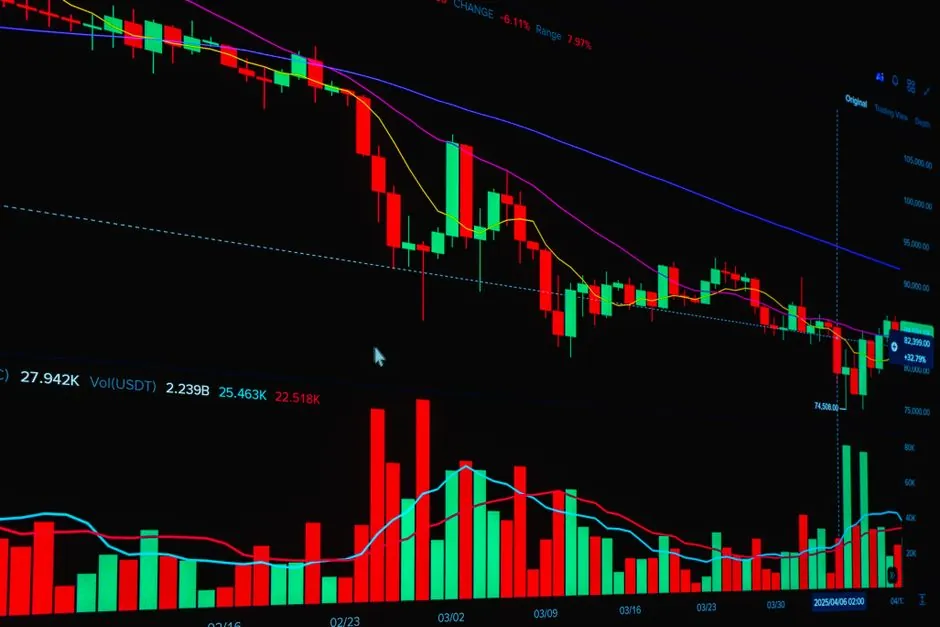
China’s silicone DMC mainstream transaction average was 12,800 RMB per metric ton on November 24, 2026, while the assessment increased 0.11% from the previous day [S3].
In Q1 2026, silicone (DMC) prices reached USD 2,703/MT in the United States and USD 2,823/MT in China, while Germany’s price was USD 2,179/MT [S1].
What Silicone DMC Price Measures
Dimethylcyclosiloxane, or DMC, is a cyclic siloxane intermediate made by hydrolyzing chlorosilanes derived from silicon metal and methyl chloride; it is the core building block for silicone polymers, elastomers, fluids, and sealants [S4].
SMM’s November 24 assessment specifies a maximum total ring-content mass fraction of 99.8%, a refractive index of 1.396–1.397, and a maximum color value of 10 Hazen; the quoted price includes 13% VAT and a 13% tax rebate rate [S3].
That grade definition matters because industrial buying is not limited to a single commodity number. Silicone fluid, sealant, and silicone rubber producers need consistent purity because contamination or batch variation can affect downstream polymerization and finished-product performance [S1].
How the 2026 Price Path Developed
China’s reference DMC price was 13,775 RMB/ton on January 15, 2026, up 150 RMB/ton, or 1.10%, from 13,625 RMB/ton on January 1; domestic quotations then clustered around 13,700–14,000 RMB/ton [S2].
The first-quarter pattern was geographically uneven. US DMC reached USD 2,703/MT in March, China USD 2,823/MT, Germany USD 2,179/MT, Canada USD 2,795/MT, and Japan USD 3,077/MT [S1]. Another methodology placed the Q1 averages at USD 3.22/KG for the US, USD 2.65/KG for China, USD 3.78/KG for Germany, and USD 3.18/KG for India [S4].
The price basis differs materially among assessments, including USD per metric ton, USD per kilogram, and RMB per tonne. Buyers should therefore compare like-for-like delivery terms, tax treatment, grade specification, and contract basis before treating quoted levels as interchangeable.
Regional and Product-Level Comparison

China was the lowest-cost tracked sourcing market at USD 2.56–2.84/KG in the 2026 forecast range, while Germany was highest at USD 3.68–3.96/KG because of higher feedstock and energy costs [S4].
On a four-factor comparison, China combined the lowest projected 2026 price with large domestic DMC capacity; Germany combined the highest price with high feedstock and energy costs; the US ranged from USD 3.08–3.36/KG with demand supported by silicone and personal-care applications; and India ranged from USD 3.08–3.36/KG with construction demand supporting firmer pricing [S4].
Product premiums are visible downstream. On April 23, DMC was quoted at 14,700–14,850 RMB/ton, 107 adhesive at 15,000–15,500 RMB/ton, and raw silicone rubber at a listed base of 15,500 RMB/ton [S7]. By October, mainstream DMC quotations were 14,400–15,000 RMB/ton [S5].
Supply, Demand, and Cost Drivers
Early-January strength was supported by the absence of a significant increase in domestic producer operating rates and maintenance-driven reductions in some market supply [S2].
By March, silicone (DMC) prices in the United States had moved upward as downstream demand for silicone fluids, sealants, and elastomers improved in construction, automotive, and personal-care segments [S1]. Disruptions affecting Middle East silicon-metal exports later tightened chlorosilane feedstock availability and supported higher regional DMC prices [S4].
Demand improved in construction, automotive, and personal care, with medical-grade products and related applications also supported by cited market commentary [S1][S4][S5]. On November 24, China’s mainstream DMC transaction average was RMB 12,800/MT, the downstream offer was RMB 12,500/MT, and trading was sluggish as downstream buyers maintained a wait-and-see stance [S3].
What Drives Cost Beyond the DMC Quote

DMC is the largest controllable commodity input in the basic silicone chain, but a converter’s realized cost also reflects volume tier, grade, certification, delivery terms, inventory, and production scheduling [S5]. US DMC prices averaged USD 3.22/kg in Q1 2026, up 5.6% from Q4 2025, as silicon-metal supply disruptions tightened feedstock availability while recovering sealant and construction-sector demand supported buying [S4].
Total cost of ownership extends beyond the purchase price. Extrusion or molding equipment, energy consumption, cycle time, waste, cleaning, changeover, maintenance, and the labor required for batch verification all affect cost per accepted part. Premium grades add costs where formulation, curing method, viscosity, hardness, molding performance, and supporting documents must be controlled [S5].
For engineering plastic converters replacing silicone with a polymer alternative, the comparison should include density, processing temperature, cycle time, rework rate, tooling wear, and part qualification rather than DMC price alone. Liquid silicone rubber, EPDM rubber, and fluororubber also differ in viscosity, cure behavior, temperature service, and application qualification, so nominal price comparisons can be misleading.
Procurement Limits and Failure Modes
The November 24 assessment recorded a 0.11% daily increase, but described mainstream transactions as stable and trading as sluggish; producers were slightly raising quotations while downstream buyers resisted deals [S3]. That combination makes a quoted increase a poor proxy for achieved spot pricing.
Three procurement failure modes were visible in 2026: mistaking a producer quotation for a completed transaction, comparing prices with different VAT or rebate treatment, and changing material during trial molding or production transfer without controlling process parameters [S3][S5].
Large Chinese DMC capacity can restrain the price floor, while persistent silicon-metal supply disruption can support the ceiling [S4]. Indian CIF DMC pricing for Q3 2026 was 3.00% below the previous quarter, demonstrating that regional demand and import structure can weaken even while other markets remain firm [S8].
Choosing a Sourcing Strategy

A practical buying rule is to price one grade on one delivery basis across at least 3 candidate sources, then test whether a 1% monthly price movement changes the order economics; no single monthly forecast can substitute for executable quotations [S2][S3][S4].
For general-purpose molded products, spot-oriented buyers can use the China benchmark of 12,800 RMB/ton as a reference, but acceptance should require confirmation of the 99.8% maximum total ring-content specification and the 1.396–1.397 refractive-index band [S3].
For delivery-sensitive, industrial rubber, or certified applications, schedule around order delivery, inventory, grade consistency, test reports, and production capacity rather than chasing a small spot-price move [S5]. Close monitoring should focus on the 12,800 RMB/ton China transaction average, upstream and downstream offers around 13,100 and 12,500 RMB/ton, and the 14,400–15,000 RMB/ton October mainstream band [S3][S5].