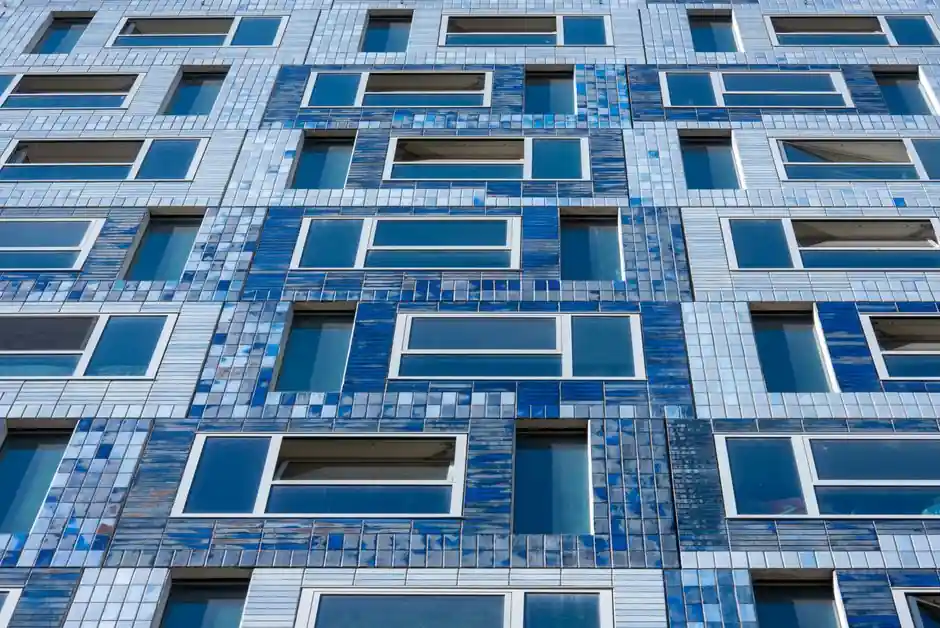
In 2026, a thermally broken aluminium casement window leaves a Chinese factory at USD 140–190/m² FOB, a 40–55% premium over the same window without a thermal barrier at USD 90–130/m² [S1][S4].
That single line hides seven identifiable cost lines: profile, PA66 polyamide strip, glass, hardware, gaskets, assembly labour, and export packaging, and roughly half of every thermal-break quote is held by the polyamide-plus-glass-plus-hardware block [S1][S3].
Thermal break vs non-thermal break: the polyamide cost line
A thermal break is a PA66 GF25 polyamide strip mechanically inserted through the aluminium profile, interrupting the heat-conduction path between the inner and outer frame; on ALPES AW90 passive-grade systems this delivers K-values as low as 1.3 W/m²K, with wall thickness from 1.8 to 2.5 mm in 6060-T66 alloy [S5]. On a cost build-up, the strip itself adds 8–12 USD/m² in mid-range assemblies and 15–22 USD/m² on high-end units, or 5–8% of the total thermal-break price, while the entire profile line (alloy plus extrusion plus surface treatment) still commands 30–35% of the quotation [S1][S3]. When a supplier quotes a standard window at thermal-break pricing, the missing 8–22 USD/m² is almost always the strip line, not a discount.
Imported PA66 strips run about 2,000 RMB/ton above domestic equivalents, which translates to roughly 18 RMB/m² on a 1500 × 1500 mm window, or 3.6 RMB/m² after the 0.2 window-to-wall ratio is applied; in practice the imported strip matters on cold-climate passive-house jobs where K-value documentation, not purchase price, is the procurement gate [S3].
Glass package: the largest single share
Glass accounts for 25–35% of the total thermal-break price, the single largest share in any quote, and the gap between a 5 + 12A + 5 mm double-glazed unit and a Low-E laminated unit is 20–30 USD/m² in the Chinese factory model [S1]. Wintenic's 2026 global guide puts the glass-driven range of a thermal break window between 300 and 700 USD/m², a spread almost entirely explained by the glazing specification rather than the frame [S4].
European Aluprof MB-79N tilt-and-turn units (36 in × 72 in, double-glazed) ship to the US at roughly $860 per window landed, while Polish domestic listings start at $57/sqft (~$613/m²) for tilt-and-turn and $32/sqft (~$344/m²) for a fixed unit, both of which already include factory-fitted insulated glazing and branded hardware [S2]. For a 2026 buyer, the rule is: read the glass line before the frame line, because a $50/m² glass upgrade wipes out any saving from a thinner profile.
System type and opening style: where the per-m² spread opens up
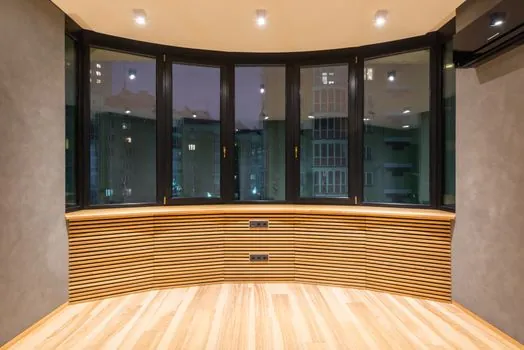
Fixed, casement, sliding, and bi-fold systems carry materially different price points even at identical thermal-break grade: a 2026 Chinese FOB table puts fixed thermal-break units at USD 90–130/m², casement at USD 140–190/m², and bi-fold at USD 250–340/m², with MOQs of 50, 50, and 20 m² respectively [S1]. Wintenic's parallel global table widens the band further: thermal break sliding runs $300–550/m² and high-end minimalist systems climb to $700–1,500/m², which is consistent with the same opening style picking up heavier hardware and larger insulated glass units on the European side [S4].
For spec-driven comparison, three opening styles versus four decision criteria line up as: casement (mid cost, best airtightness, multi-point locking, K-value 1.3+ on AW90), tilt-and-turn (higher cost, best ventilation control, European premium hardware, $400–800/m² entry tier [S4]), and bi-fold (highest cost, lowest MOQ, widest panel per leaf, USD 360–500/m² on the high-end FOB tier [S1]). If the build is under 50 m², bi-fold is the cheapest system to sample, because the MOQ is the lowest of the six standard systems [S1].
Hardware, surface treatment, and the landed cost multiplier
Hardware adds 15–50 USD/m² depending on brand tier, with German names (Siegenia, Roto, Winkhaus) sitting at the upper end and Asian or domestic OEM fittings at the lower end; this single line is 10–17% of the total price, and is also the line most often quietly downgraded between quote and contract [S1][S5]. Surface treatment runs from anodising through powder coat to PVDF fluorocarbon in increasing cost, with each 1 µm increase in oxide film adding about 100 RMB/ton of profile processing cost [S3].
Once the unit leaves the factory, shipping, customs, and installer mark-up stack on top. debesto's 2026 data shows that a US spec builder can save up to 50% by sourcing through Polish thermal-break aluminium instead of US-made windows, with a real documented case moving a PVC quote of $220,000 to a Polish aluminium quote of $245,000 for a stronger material at a marginal cost increase [S2]. Homewyse's May 2026 install cost sits at $560–857 per window for a thermal-break unit fitted in a US single-family home, a number that bundles the window plus labour, trim, and disposal rather than the bare product [S7].
Real use cases, limitations, and total cost of ownership
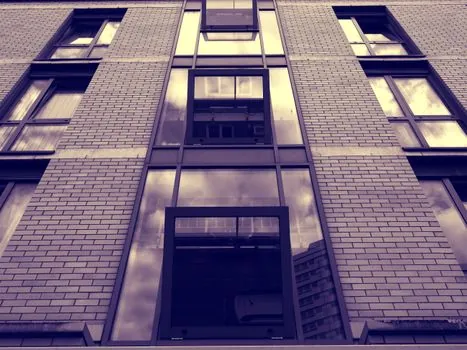
Thermal-break aluminium is the right pick for cold-climate residential builds, high-rise facades with aluminum window wind pressure rating for high-rise facades requirements, and any project where K-value documentation is a procurement gate, including passive-house and most EU public tenders. It is the wrong pick for interior partitions, low-cost housing where a standard non-thermal-break casement at $80–150/m² satisfies the brief, and any installation where the frame cost exceeds 8% of the total build value [S4][S5].
Total cost of ownership on a 30-year horizon is dominated by heating/cooling savings and hardware replacement, not purchase price: a thermal-break casement with multi-point locking and Low-E glass recovers roughly 60 RMB/m² of glass upgrade in 3–5 years of heating load at typical northern-China gas tariffs, and the polyamide strip itself does not degrade under normal UV exposure when PA66 GF25 is specified [S3]. The procurement trap to avoid is the single-line price below the build-up total: any thermal-break quotation under USD 120/m² in 2026 is either a non-thermal-break unit mislabelled, a profile below 1.4 mm wall thickness, or a stripped hardware tier [S1][S3][S4]. Trackable signals over the next quarter: LME aluminium spot movement (LME, reference price for primary aluminium [S1]), the next revision of aluminum window-door U-value thresholds in EU building codes, and the next published Chinese factory price list refresh from the supplier set covered in HIMOLON's September 2026 table.