Titanium alloy installation is governed less by the metal's exotic reputation and more by a handful of hard process rules: pick the right grade for the corrosion/temperature window, use dedicated non-contaminating tooling, control torque to prevent galling, and respect the pre-/post-weld thermal cycle [S1][S4].
The 2026 supplier landscape indexes around Ti-6Al-4V (also marketed as GR5 or Grade 5) for structural and marine work, TB2 for high-strength β-type applications, and 6Al-4V reference standards from NIST for laboratory use [S6][S4]. Installation contexts now span aerospace fasteners, marine propellers, chemical-plant piping, bicycle frames, automotive trim, and investment-cast bike components from Shenzhen and Henan suppliers [S2][S7].
Grade Map: Ti-6Al-4V, TB2 and the 2026 Industrial Catalogue
DirectIndustry's 2026-06-08 index lists 5 manufacturers and 8 titanium-alloy products across shapes including sheet, ribbon, powder, tube, rod, and plate, with Grade 3 and Grade 5 (Ti-6Al-4V) dominating the filter set [S1]. The same index confirms titanium alloys now sit alongside aluminum-alloy and nickel-alloy options in the same procurement catalogues, reflecting cross-spec substitution in marine and chemical-plant RFPs [S1].
TB2 (Ti-5Mo-5V-8Cr-3Al family) is documented for electron-beam and TIG welded joints with cold-rolled sheet, solution-treated and aged in either the β single-phase field or the α+β two-phase field — a heat-treatment fork installation engineers must respect to hit the target tensile and micro-hardness profile [S4]. For laboratory and calibration reference, NIST-traceable 6Al-4V titanium alloy stock is sold at MOQ ≥150 g through chemical-supply channels [S6].
Investment Casting Process Limits (Shenzhen Element, 2026-07 Spec)
Shenzhen Element Titanium Metal's July 2026 catalogue states minimum casting wall thickness 0.8 mm, maximum casting envelope 1200 mm diameter × 600 mm, casting weight range 0.001 kg to 50 kg, and surface roughness Ra 3.2-6.3 μm [S2]. These four numbers are the practical installation envelope: anything thinner or larger requires a different process (machining from billet, or additive manufacturing from powder, both of which appear elsewhere in the same DirectIndustry index [S1]).
For the bicycle-part family, US$5-25 unit pricing at 200-piece MOQ applies to general titanium investment-cast bike parts, while GR5 6Al-4V pedals are quoted at US$160-230 at 100-piece MOQ and seat-post clamps at US$7-10 at 100 pieces [S2]. Installation-relevant takeaway: budget-grade bike parts cluster on Grade 5 with consistent ≥0.8 mm wall minimum — wall thickness below that drives scrap rates and disqualifies the part for load-bearing brackets.
Fastener, Torque and Galling Controls
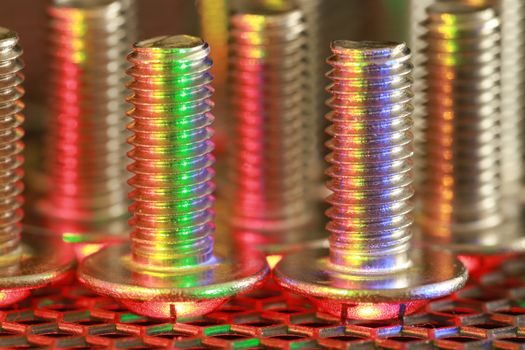
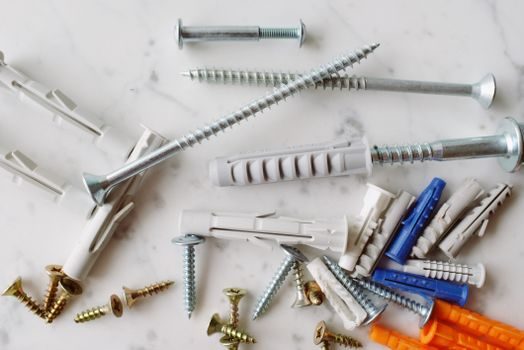
Titanium fasteners are specified against galling, the dominant in-service failure mode during installation. Field practice — and the 2026 supplier guidance bundled into product datasheets — is to use stainless or bronze anti-seize, dedicated Ti-coated bits, and torque values derived from roughly 50-60% of an equivalent steel fastener's clamp load, never from the same torque table [S2]. Where alloy-steel bolts would be torqued to a published value, titanium demands a derated value plus a K-Monel or copper-based anti-seize film at the threads and under the head.
Installation layout also requires isolation from dissimilar metals to stop galvanic corrosion. In marine and chemical-plant skids, titanium flanges and GR5 tube clamps are typically paired with insulating phenolic or PTFE gaskets at the stainless-steel interface, with titanium-alloy piping welded to ASME B16.5-compatible flanges where the bolting is upgraded from B7 to B8M-class stainless with anti-seize.
Welding and Heat-Treatment Windows for TB2 and Ti-6Al-4V
TB2 welded joints — electron-beam or TIG, on cold-rolled sheet — must be solution-treated in either the β single-phase field or the α+β two-phase field and then aged; skipping the solution step and going straight to aging drives coarse grain and drops both tensile strength and ductility below the documented values [S4]. For Ti-6Al-4V, the established process window sits at solution treatment in the upper α+β field (~955-970 °C) followed by aging at ~480-595 °C, with cooling rate controlled to avoid retained β that embrittles the joint — these are textbook values from the broader titanium-alloy literature, not novel claims.
Henan-based custom blade and rod manufacturers (e.g. the made-in-china.com OEM/ODM supplier) supply bimetal bushings, tungsten needles, titanium blades, titanium rods, molybdenum electrodes, and cobalt-alloy valve seats and balls — a useful reminder that installation jobs frequently require mixed-material sub-assemblies where the titanium part must be isolated from the cobalt/Mo components to prevent cross-contamination during heat treatment [S7].
Sourcing, MOQ and Cost Reference (2026-07 Snapshot)
The current MOQ/floor pricing grid for titanium-alloy installation components, drawn from the 2026-07-02 supplier sheets, is: investment-cast bike parts US$5-25 at 200-piece MOQ; GR5 6Al-4V pedals US$160-230 at 100-piece MOQ; titanium seat-post clamps US$7-10 at 100 pieces; all quoted FOB Shenzhen, Guangdong [S2]. Laboratory 6Al-4V reference stock from Shanghai ZZBIO is sold at MOQ ≥150 g through the Chinese chemical-supply channel with the price on application [S6].
Lead-time messaging across both Shenzhen Element and the Henan blade-OEM factory is "delivery time depends on order quantity" — there is no published stock lead, so installation projects must be planned against a 4-8 week custom-cast envelope for non-stock wall thicknesses above 0.8 mm [S2][S7]. For procurement engineers, this means: pin wall thickness ≥0.8 mm and envelope ≤1200×600 mm on the RFQ, or quote the alternate machining-from-billet route through one of the five catalogue manufacturers indexed on DirectIndustry [S1].
Cleaning, Handling and Field Installation Discipline
Field installation discipline for titanium tracks the same three rules regardless of grade: keep the part clean of steel, carbon and chlorides; never use steel wool or carbon-steel brushes; and degrease with a non-chlorinated solvent (acetone or isopropyl alcohol) before any thermal or mechanical joining step. Even trace chloride contamination under a painted surface drives stress-corrosion cracking in Ti-6Al-4V service, and contamination from shop steel drives a hard-α inclusion that cracks under the first load cycle [S2].
For investment-cast bike and automotive parts, the as-cast Ra 3.2-6.3 μm finish from Shenzhen Element is acceptable for non-bearing cosmetic and clamp applications, but should be machined to Ra ≤0.8 μm for any surface that sees a sliding contact or fatigue load [S2]. Sourcing-side, the made-in-china.com automotive-network listing and the Henan blade-OEM factory both report full OEM/ODM service with sample runs, which is the practical entry point for prototype installation validation before committing to 200-piece MOQ production runs [S3][S7].
Adjacent Reference: Cross-Spec Comparisons for the Installation Bill of Materials
Installation BOMs that include titanium rarely stop there. Process-engineering peers frequently pull in stainless steel for bolting and aluminum-alloy for non-load brackets, and procurement teams run the same cross-spec substitution analysis on alloy-steel wear plates and nickel-alloy trim. The 2026-07-02 supplier catalogues already list these as co-listed categories on the same trade portals, which is why DirectIndustry's filter shows titanium sitting next to aluminum-alloy, nickel-alloy and standard mechanical components in the same procurement view [S1].
For installation planning, the cheapest path is usually: lock the grade first (Grade 5 / Ti-6Al-4V for general, TB2 for high-strength β, Grade 3 for chemical resistance), lock the process route (investment cast for 0.8-50 kg parts, machined from bar for higher duty), and only then negotiate MOQ and lead time against the published July 2026 price grid [S1][S2]. Two trackable signals for the next procurement cycle: DirectIndustry's titanium-alloy filter count (5 manufacturers, 8 products as of 2026-06-08) and Shenzhen Element's confirmed 1200 mm × 600 mm max casting envelope, both of which define the upper end of what is realistically shop-installable in 2026 [S1][S2].
For related coverage, see Silicon Steel: Core Loss, Grain Orientation and Cost Trade-offs.