Pure C11000 copper conducts electricity at roughly 100% IACS and rejects heat at about 391 W/(m·K) at 20 °C, which is why it dominates busbars, magnet windings, coaxial signal cores and heat-pipe envelopes across industrial B2B procurement [S2]. Its 8.94 g/cm³ density and ≈16.5 µΩ·cm resistivity, however, are double and roughly 60% those of aluminium respectively, so the metal is not a free-lunch choice on weight- or cost-sensitive builds.
Engineers evaluating copper material typically balance five axes: conductivity, thermal transfer, formability, corrosion behaviour in the service environment, and total cost of ownership including copper price volatility. The rest of this article walks the spec gates on each axis, lines copper against its three main substitutes, and flags the failure modes that show up in service.
Electrical and Thermal Performance: Why Copper Stays the Baseline
Annealed C110 / C11000 (ETP copper) reaches ≥101% IACS, with oxygen-free C10100 pushing toward 102% IACS for high-vacuum and high-frequency uses where oxide inclusions would otherwise impair performance [S2]. The same chemistry drives thermal conductivity in the 380–391 W/(m·K) band at 20 °C, which is why copper water tubes, heat-pipe wicks and induction coil formers are rarely substituted without a thermal-budget redesign. In contrast, aluminium 1350 lands near 61% IACS and 230 W/(m·K) — usable in long-span overhead lines, but a real derate in compact power electronics.
Coaxial cable design illustrates the trade-off cleanly: a single stiff copper core inside a braided copper shield carries analog CATV at 75 Ω (RG-59), Thin Ethernet at 50 Ω (RG-58) and 10Base5 backbone runs at 50 Ω (RG-11), with one coax line carrying roughly 10,000 voice circuits on legacy telecom and 600 Mbps on digital spans [S2]. The copper shield is what gives coax its noise immunity advantage over twisted pair; substituting a cheaper braid material collapses that EMI margin almost immediately.
Mechanical, Manufacturing and Joining Behaviour
Copper’s face-centred cubic structure gives it a room-temperature elongation above 30% in the annealed temper and a tensile strength in the 200–250 MPa range, climbing to 350–400 MPa when hard-drawn for spring contacts and trolley wire. That combination — high ductility plus reasonable strength — is the reason stamped copper lugs, deep-drawn motor commutators and bent refrigerant tube sets can be produced in a single cold-forming step. Brass (CuZn) and phosphor bronze (CuSnP) are the standard upgrades when a part needs better spring behaviour, fatigue life or dezincification resistance; the conductivity tax for moving from pure copper to 30% Zn brass is roughly a 70% drop. [S1]
Joining copper is generally forgiving: lead-free soft solder at 220–250 °C, silver-bearing brazing alloys (e.g. AWS BCuP-2) at 600–800 °C, and TIG with ERCu or ERCuSi-A filler all give leak-tight joints on copper tube and busbar. The catch is galvanic compatibility: copper coupled directly to aluminium in a wet or humid environment accelerates aluminium corrosion per standard galvanic-series ordering, so bimetallic lugs with tin, nickel or brass barriers are mandatory at every Cu/Al interface.
Corrosion, Oxidation and Service-Limit Failure Modes
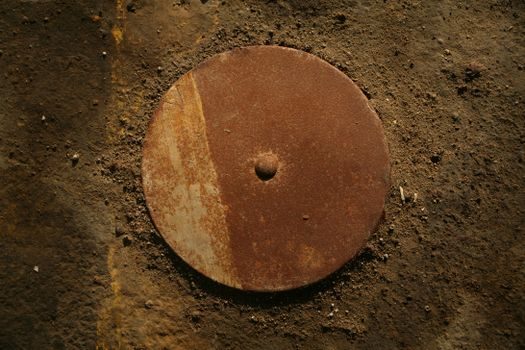
Copper forms a thin, adherent Cu₂O / CuO layer that slows further attack in clean air and in fresh water; that is why copper water service lines routinely deliver 50+ year service lives. The metal is, however, attacked by ammonia and amine-bearing atmospheres, by oxidising acids (HNO₃, H₂SO₄ hot/concentrated), and by sulphide-rich reducing environments that turn the surface black and impair contact resistance. In seawater, copper-alloy selection needs to follow Cu-Ni 90/10 or 70/30 rules; admiralty brass and aluminium brass are the typical condenser-tube choices, and components in magnetic material coil assemblies that run in humid saline conditions usually need plating or sealing to prevent creep corrosion at terminations. [S2]
Another practical limit is creep at elevated temperature. Copper’s softening temperature sits around 200 °C and drops with sustained load, so sustained-current busbar joints are typically derated or use silver-plated, bolted connections with controlled torque. For high-temperature coil windings above 200 °C, designers either step up to copper-clad aluminium, silver-plated copper, or shift to Litz wire constructions tuned for skin-effect losses at the operating frequency.
Cost, Weight and Substitution Gates Against Aluminium, Brass and CCA
At 8.94 g/cm³, copper is roughly 3.3× denser than aluminium at 2.70 g/cm³, and its per-kilogram price has run 4–6× the aluminium price across recent market cycles — a ratio that historically widens further during supply-driven copper spikes. The substitution gate is therefore straightforward: if the design constraint is mass (overhead conductor, EV traction cable) and the conductivity derate is tolerable, aluminium 1350 or aluminium-magnesium-silicon 6201 wins; if the constraint is connection reliability, contact resistance or thermal transfer in a confined envelope, copper wins regardless of cost. Copper-clad aluminium (CCA) sits in the middle — about 40% lighter than pure copper, with conductivity around 60–68% IACS — and is widely used in coaxial and signal cable where the 50/75 Ω impedance geometry is preserved while saving weight [S2].
A criteria-based read of the three main options:
Electrical conductivity: pure copper (≈101% IACS) > CCA (≈60–68% IACS) > aluminium 1350 (≈61% IACS).
Thermal conductivity: pure copper (~390 W/(m·K)) > aluminium 1350 (~230 W/(m·K)) > CCA (~180 W/(m·K), bound by core).
Density: aluminium 1350 (2.70 g/cm³) < CCA (~3.3 g/cm³) < pure copper (8.94 g/cm³).
Cost per ampere-metre at rated current: aluminium < CCA < copper; but the relationship inverts when joint maintenance and replacement intervals are priced in.
Typical Industrial Applications and Common Spec Forms
Copper appears in industrial B2B catalogues in five dominant forms: C11000 sheet, strip and bar (busbar, switchgear, heat sinks); C12200 phosphorus-deoxidised tube (refrigeration, plumbing, medical gas); C11000 rod and profile (electrical machined parts); C11000 magnet wire with polyurethane, polyester or polyimide-imide enamel (transformer and motor windings); and C110/Cu-ETP stranded or Litz constructions for high-frequency coils. The same material shows up as the inner conductor and the braided shield of RG-series coax, where its mechanical stiffness and EMI shielding keep impedance stable from DC to several GHz [S2].
For instrumentation, copper is also the conductor of choice inside pressure transmitter and flow meter signal chains, where its low resistance and thermal stability keep the 4–20 mA loop error budget tight across −40 °C to +85 °C ambient. Where field wiring has to traverse hazardous areas, copper’s ductility and well-understood termination behaviour also simplify the ATEX / IECEx certified cable gland specification on each enclosure entry.
Specification Pitfalls, Standards and Sourcing Notes
Most industrial copper specs pull from ASTM B49 (rod), B152 (sheet/strip/plate), B75 / B88 (tube) and B286 (conductor), while the European equivalent is EN 1652 / EN 13599 for high-purity electrical grade. For sour-service and offshore use, NACE MR0175 limits the residual cold-work and material pairing on copper-alloy components exposed to H₂S; for fire-resistive cable, IEC 60332-3 and UL 1666 set the flame-propagation gate that copper-jacketed constructions have to clear. Designers should always confirm the temper designation (H00, H01, O60, etc.) and the oxygen content class (ETP vs DHP vs OFHC) match the forming, brazing and vacuum service plan — a wrong grade is the single most common reason a copper part fails incoming inspection. [S3]
Sourcing signals worth tracking on 2026-07-15: copper cathode spot prices remain the dominant input to busbar and magnet-wire quotes, and several OEMs are dual-sourcing CCA alongside C11000 to hedge against price swings. Two trackable signals for the next planning cycle are (1) cathode premium spreads in CMTL and LME warehouses, and (2) the spread between C11000 rod and aluminium 1350 rod on a per-amp basis — the wider that spread gets, the more substitution risk shows up in B2B RFQs.
For related coverage, see Shot Sleeve Installation: Concentricity, Interference Fit and Pre-Heat Gates.